Those black streaks running down your shingles aren’t dirt — they’re a living algae colony, and they’re slowly eating your roof. I’ve spent enough years around exterior remodels and the damage that follows neglected roofs to give you the straight story on roof cleaning: what actually causes the stains, which cleaning method is safe for shingles (only one is), what pros charge, what you can responsibly do yourself, and when cleaning stops making sense and replacement starts. Done right, cleaning adds years to a roof. Done wrong, it takes years off — sometimes in a single afternoon.
Part of our Roofing guide — explore the full guide →
- What's Actually Growing Up There
- Soft Washing: The Only Method I Endorse for Shingles
- Why Pressure Washing Destroys Roofs
- What Professional Roof Cleaning Costs
- DIY Roof Cleaning: What's Reasonable and What Isn't
- Keeping It Clean: Prevention That Actually Works
- Cleaning vs. Replacement: Reading the Signs
- Hiring It Out: How to Vet a Roof Cleaner
What’s Actually Growing Up There
Black streaks are Gloeocapsa magma, a cyanobacteria that feeds on the crushed limestone filler in asphalt shingles. It spreads downhill with rainwater, which is why streaks run vertically, and it thrives on north-facing slopes and in humid states — the entire Southeast, Mid-Atlantic, and Pacific Northwest are prime territory. Beyond ugly, the colony holds moisture against the shingle and slowly consumes the granule bed.
Moss is worse. It grows in shaded, damp areas, and its root-like rhizoids pry up shingle edges, letting wind-driven rain get underneath. Left alone for a few years, moss shortens shingle life dramatically and can cause active leaks.
Lichen — those gray-green crusty circles — bonds directly into the granule surface. Rip it off dry and the granules come with it. It needs to be killed chemically and released slowly.
Soft Washing: The Only Method I Endorse for Shingles
Soft washing means applying a cleaning solution at low pressure — under 100 PSI, basically garden-hose force — letting the chemistry kill the growth, and rinsing gently. The industry-standard solution is sodium hypochlorite (pool-grade or household bleach) diluted to roughly 25–50 percent strength for roofs, mixed with a surfactant so it clings to the slope instead of running straight off. This is the method endorsed by ARMA (the Asphalt Roofing Manufacturers Association), and it’s what every legitimate roof-cleaning outfit uses.
What soft washing does: kills algae on contact — streaks lighten immediately and disappear over the following weeks of rain. Kills moss and lichen — they brown out and release over 2 to 8 weeks, dropping off with weather. A proper soft wash keeps a roof clean for 4 to 6 years in most climates.
Why Pressure Washing Destroys Roofs
A pressure washer at 2,500+ PSI strips the protective mineral granules off asphalt shingles — the granules that block UV and shed water. I’ve walked roofs after an enthusiastic homeowner “cleaned” them, and the gutters were full of granules, which is the roof’s remaining lifespan lying in a trough. Pressure washing also drives water under shingles and can void your manufacturer warranty outright; most shingle warranties specifically exclude high-pressure cleaning damage. The rule is absolute: no pressure washing on asphalt shingles, ever. Concrete tile and metal roofs tolerate controlled low-to-moderate pressure in experienced hands, but even there, soft washing is the smarter default.
What Professional Roof Cleaning Costs
| Roof Type / Job | Typical Cost |
|---|---|
| Asphalt shingle soft wash (avg. home) | $300–$600 |
| Per square foot pricing | $0.20–$0.60 |
| Steep, complex, or 3-story roofs | $600–$1,200+ |
| Heavy moss removal + treatment | $500–$1,000 |
| Tile or metal roof cleaning | $400–$1,000 |
| Gutter cleaning add-on | $100–$250 |
A typical 2,000-square-foot single-story home with moderate streaking lands around $400–$500 in most US markets. Get quotes from companies that explicitly say “soft wash” and carry both liability insurance and workers’ comp — ask for certificates. Anyone who shows up proposing to pressure-wash your shingles should be sent home, whatever they’re charging.
DIY Roof Cleaning: What’s Reasonable and What Isn’t
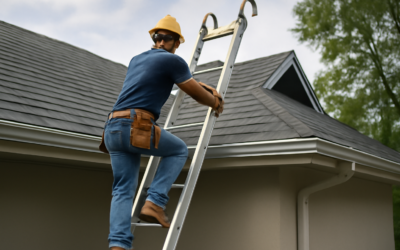
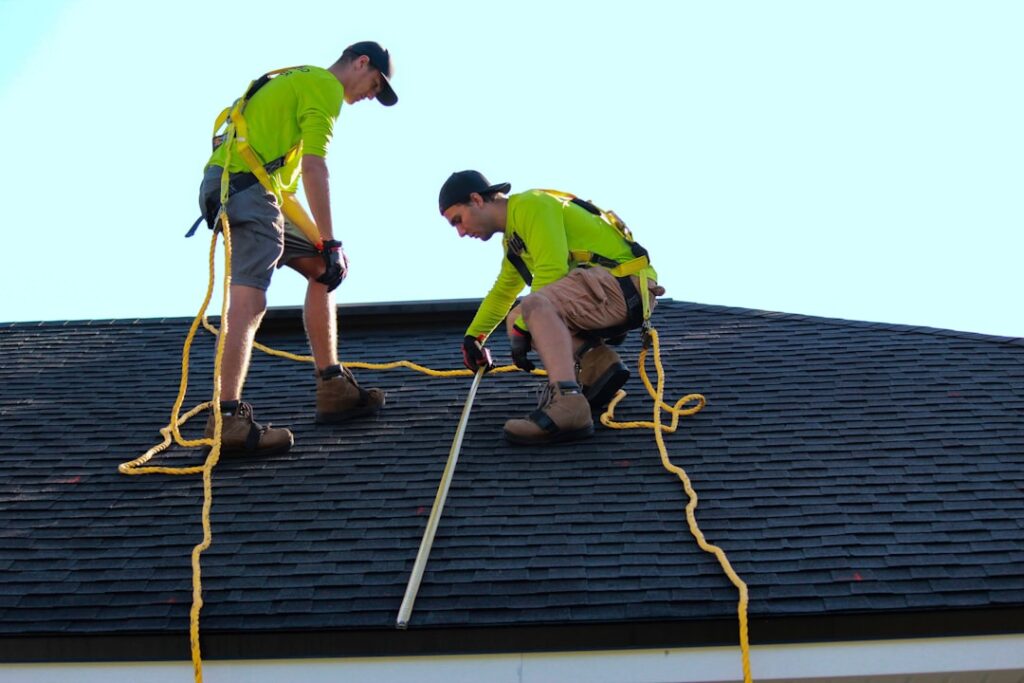
I’ll be honest about the risk profile: roughly 500,000 Americans are treated for ladder-related injuries yearly, and wet, chemically slick roofs are exactly how it happens. My rule: DIY is reasonable on a single-story home with a walkable pitch (6/12 or less) if you can work mostly from the ladder or the ground. Two stories, steep pitch, or any hesitation — hire it out. Four hundred dollars is cheap compared to any fall.
If your situation qualifies, here’s the responsible process:
- Buy or mix a cling-type roof cleaner. Ready-made hose-end products (roughly $20–$40 per treatment) work on light streaking. For serious growth, the pro mix is 1 part household bleach (6%) to 1 part water plus a splash of dish soap or a dedicated surfactant.
- Protect everything below. Wet down all plants, shrubs, and grass in the runoff path before, during, and after — bleach overspray kills landscaping fast. Move vehicles, cover koi ponds, and redirect downspouts away from beds.
- Pick a cloudy, calm day so the solution doesn’t flash-dry, and apply from the ridge down with a pump sprayer, working from a ladder or safely tethered position — never stand on wet treated shingles.
- Let it dwell 15–20 minutes, then rinse with a garden hose from above, letting water run down-slope the way rain does. Never spray up under shingle edges.
- Leave moss and lichen alone after treatment. They’re dead; weather will drop them over the coming weeks. Scraping or brushing them off aggressively pulls granules. A soft brush on loosened moss weeks later is the most contact I’d allow.
Keeping It Clean: Prevention That Actually Works
- Zinc or copper strips installed along the ridge release metal ions with each rain that suppress algae growth down-slope. Cost: $50–$150 in materials; best installed during roof work. Copper is more effective; both help.
- Trim overhanging branches. Shade plus debris equals moss. Opening a roof to sunlight is the single best moss preventive there is.
- Keep gutters clean so water doesn’t back up under the bottom courses, and blow debris out of valleys once or twice a year.
- Buy algae-resistant shingles next time. Most major manufacturers now sell AR-rated shingles with copper-infused granules and 10-to-25-year algae warranties. If you’re in a humid state, this is worth every penny at replacement time.
Cleaning vs. Replacement: Reading the Signs
Cleaning restores the look of a roof with life left in it. It cannot fix a roof that’s structurally done. Before paying anyone, check for these — from the ground with binoculars is fine: shingles that are curling, cupping, or losing granules in bulk (bald dark patches); cracked or missing shingles across multiple slopes; and age past 20–25 years for standard architectural asphalt. If two or three of those describe your roof, put the cleaning money toward the replacement fund — a $450 wash on a roof with three years left is bad math. Conversely, a 10-year-old roof with black streaks and sound shingles is the perfect cleaning candidate, and the wash will genuinely extend its service life by keeping the algae from eating the granule bed.
Hiring It Out: How to Vet a Roof Cleaner
The roof-cleaning trade has a low barrier to entry — a truck, a tank, and a pump — so the quality spread is enormous. My screening questions, in order: “What method do you use?” (the only acceptable answer for shingles is soft washing with a sodium hypochlorite solution; anyone who says pressure washing on asphalt is disqualified on the spot). “Are you insured for this work specifically?” (ask for the liability certificate and workers’ comp — a fall on your property without comp coverage can become your problem). “How do you protect landscaping?” (a real outfit describes pre-wetting, tarping, runoff dilution, and a post-rinse without being prompted; plants are the most common damage claim in this trade). “What’s your dwell-and-rinse process and how long should results take?” (streaks fade fast; moss and lichen brown out and release over weeks — a company that promises instant moss removal plans to scrape it, which costs granules). Finally, get the price in writing with the square footage and any steep-pitch or story surcharges itemized. A legitimate soft-wash outfit will happily do all of this; the guy who hedges on method or insurance is cheap for a reason you’ll discover later.
Frequency, for planning: humid Southeast and Gulf states, every 2 to 4 years; Mid-Atlantic and Pacific Northwest, every 3 to 5; arid West, often never beyond debris blowing. Zinc or copper strips stretch every one of those intervals.
Final advice from someone who’s seen both extremes: soft wash only, respect the chemistry and your landscaping, respect the ladder more, and treat black streaks as the early maintenance warning they are rather than a cosmetic annoyance. A $400 professional soft wash every four or five years is one of the cheapest forms of roof insurance you can buy — and dramatically cheaper than the $12,000 replacement that neglect eventually schedules for you.