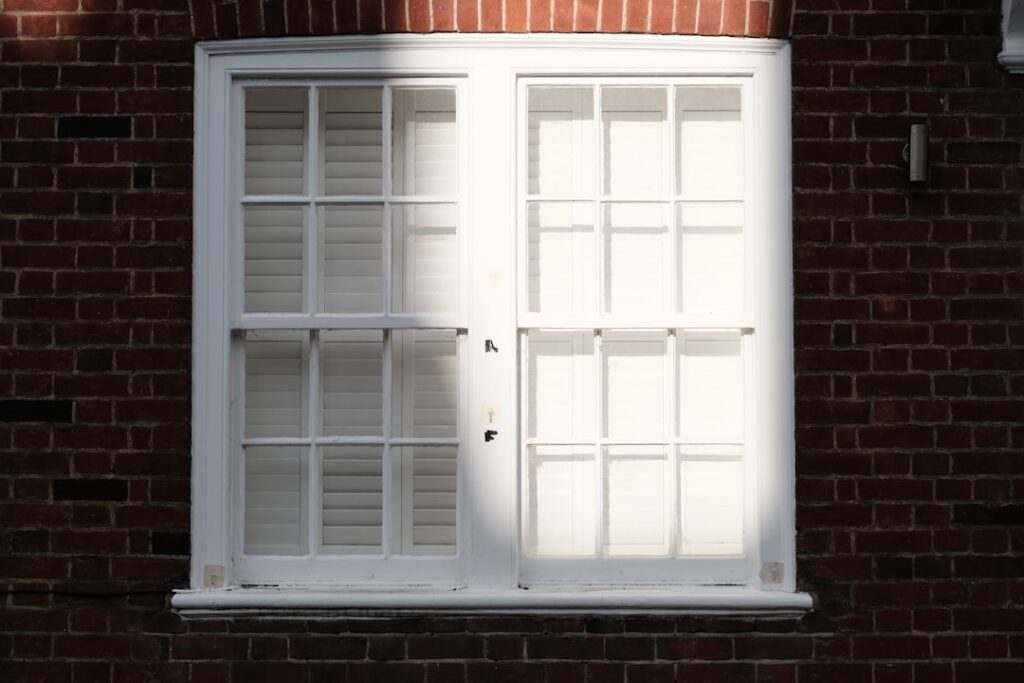
Frameless plantation shutters install directly into the window recess without a surrounding decorative frame, giving you the cleanest, most built-in look a shutter can offer. Instead of a visible border of trim wrapping the panels, the shutters hinge from a slim mounting strip hidden inside the reveal, so the louvers appear to float within the opening. For deep, square windows this is the most architectural, high-end result you can get, and it is increasingly what designers spec in modern and minimalist homes. But frameless is not the right call for every window, and this guide explains exactly when it shines and when a framed shutter is the smarter choice.
What “Frameless” Actually Means
A traditional plantation shutter comes mounted in a frame, an L-shaped, Z-shaped, or decorative border that the panels hinge from and that hides gaps around an imperfect opening. A frameless shutter skips that border. The panels attach to a minimal hanging strip fixed inside the window recess, and the edge of the panel sits close to the plaster or reveal. The result is a flush, trim-free appearance where the window opening itself becomes the frame.
Because there is no border to disguise irregularities, frameless shutters demand a square, true, and deep-enough recess. If your opening is out of square by more than about a quarter inch, gaps will show, and that is the single biggest limitation to understand before you buy.
Choosing Your Louver Size
Louver width sets the entire character of the shutter, so choose it deliberately. The three standard American sizes each have a clear personality.
- 2.5-inch louvers: The traditional, tighter look. More slats per panel means a more classic, cottage-style appearance, but also a busier face and slightly less view-through when open. Best for smaller windows and period homes.
- 3.5-inch louvers: The most popular all-rounder. A good balance of clean lines, light control, and view. If you are unsure, this is the safe default for most rooms.
- 4.5-inch louvers: The contemporary, wide-slat choice. Fewer, larger louvers give the most unobstructed view when open and the most modern face. Ideal for large windows and minimalist interiors, though they can look oversized on a small window.
Scale the louver to the window: bigger windows carry wide louvers gracefully, while small windows look best with 2.5 or 3.5-inch slats. Also decide between a visible front tilt bar and a hidden rear tilt rod. The hidden tilt keeps the clean, uncluttered face that suits the frameless aesthetic and is what I recommend for this style.
Materials and What They Cost
Material drives both price and durability. Here is how the common options compare, with realistic 2026 US pricing per square foot for the shutter itself, before installation.
- Basswood (real hardwood): The premium choice. Lightweight, paintable, holds crisp lines, and allows the largest panel spans. Roughly $30 to $45 per square foot. Not ideal for wet, humid rooms.
- Engineered wood / MDF core with poly coating: A durable mid-tier that resists warping. About $22 to $32 per square foot. Heavier, so panel widths are more limited.
- Vinyl / PVC (faux wood): The value and moisture-proof option, ideal for bathrooms and kitchens. Around $18 to $28 per square foot. Some vinyl uses an internal aluminum insert to allow wider panels.
Installed, most homeowners spend $200 to $450 per window for quality custom frameless shutters, with large or specialty-shaped windows running higher. Because frameless installs demand precision, professional measuring and fitting is money well spent here, more so than with forgiving framed units.
Measuring and Installation
Precision is everything with a frameless install. The recess must be deep enough (typically at least 2.5 to 3 inches for the louvers to rotate without hitting the glass or a handle) and reasonably square. Follow the process below or hire a pro to do it.
- Check the depth. Measure from the glass or window handle to the front of the reveal. Insufficient depth means louvers cannot open fully, and you may need a shallower louver or a face-fit framed option instead.
- Measure width and height in three places. Top, middle, and bottom for width; left, center, and right for height. Order to the smallest dimension, because the recess is rarely perfectly square.
- Fix the mounting strips. Slim hanging strips are screwed into the sides of the recess, leveled and plumb. This is the critical step; any lean here shows as a gap.
- Hang and adjust the panels. Panels hinge onto the strips. Fine-tune with the hinge screws until the reveal gaps are even and the panels close flush against each other.
- Test operation. Confirm louvers rotate fully and panels latch cleanly with a magnet catch.
Frameless Versus Framed: The Honest Comparison
Neither style is universally better; they solve different problems. Weigh these trade-offs against your actual windows.
- Appearance: Frameless wins for a clean, built-in, minimalist look. Framed adds a decorative border that some traditional and detailed interiors actually want.
- Tolerance for imperfect openings: Framed wins decisively. The frame hides out-of-square recesses, uneven plaster, and gaps. Frameless exposes every flaw.
- Light and privacy gaps: A framed shutter seals the perimeter better, blocking more light leak. Frameless can leave small edge gaps if the recess is imperfect.
- Cost: Roughly comparable at the panel level, but frameless can cost more in labor because it demands a precise install and a suitable opening.
- Suitable windows: Frameless needs deep, square recesses. Framed handles shallow recesses, face-fit situations, and irregular openings that frameless cannot.
Pros, Cons, and Common Mistakes
The upsides of going frameless are real: an ultra-clean look, maximum glass and view exposed, no bulky trim to collect dust, and a genuinely custom, architectural feel that lifts a room. The downsides are equally real. They are unforgiving of crooked openings, they need adequate recess depth, and they can show more light gap at the edges than a framed unit.
The mistakes I see most often start with ordering frameless for a shallow or badly out-of-square opening, which guarantees disappointment. Measure the depth first, always. Another is choosing 2.5-inch louvers on a large modern window, which looks fussy, or 4.5-inch louvers on a tiny window, which looks clumsy. People also forget to account for window handles and cranks that protrude into the recess and block louver rotation; measure to the handle, not just the glass. Finally, do not put basswood in a steamy bathroom; use vinyl or PVC there and save the real wood for dry living spaces.
Cleaning and Long-Term Care
One quiet advantage of the frameless look is that there is less trim to trap dust, but the louvers still need attention. Wipe the slats every couple of weeks with a dry microfiber cloth or a soft duster, running along the length of each louver rather than across it. For painted basswood, an occasional pass with a barely damp cloth lifts kitchen film or fingerprints; never soak real wood, and dry it immediately so the finish does not lift at the joints.
Vinyl and PVC shutters are the most forgiving here. They shrug off a damp cloth, mild soap, and the humidity of a bathroom without warping, which is exactly why they belong in wet rooms. Check the hinges and the magnet catches once a year and snug any loose screws. Because frameless panels rely on precise alignment, a single sagging hinge is what eventually opens an edge gap, and caught early it is a two-minute fix with a screwdriver rather than a service call.
Is Frameless Right for You?
If your windows sit in deep, square recesses and you want the most modern, built-in look available, frameless plantation shutters are hard to beat and will make the window feel like part of the architecture. If your openings are shallow, uneven, or you simply like a bit of traditional trim, a framed shutter will look better and install more forgivingly. Measure your recess depth and check for square before you fall in love with the frameless look, choose a louver size that matches your window scale, pick a material suited to the room’s moisture, and budget for a precise professional fit. Get those decisions right and you will have shutters that look tailored, last for decades, and add real value to the home.