White plantation shutters are the window treatment that never goes out of style, and after fitting them in everything from beach condos to century-old farmhouses, I still recommend them more than any other hard treatment. Crisp white plantation shutters add architecture to a plain window, boost resale value, and last decades where fabric shades wear out in five years. But material and louver size make an enormous difference in price and performance, so let’s break down how to buy them the way a pro would.
What Makes a Shutter “Plantation” Style
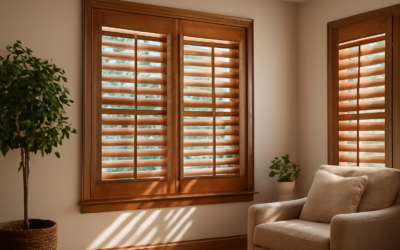
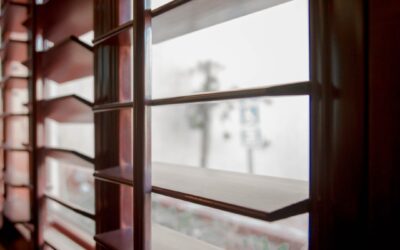
Plantation shutters are interior shutters with wide, adjustable louvers set in a solid frame that mounts to your window opening. You tilt the louvers with a tilt rod (or a hidden rear tilt) to dial in light and privacy, and swing the whole panel open on hinges for full glass access. The wide louver is the defining trait; classic colonial shutters used narrow 1.25-inch slats, while plantation louvers run 2.5 inches and up for that clean, airy look. The name traces back to the grand plantation-era homes of the American South, where wide louvers let breezes flow while blocking harsh sun and prying eyes. Unlike blinds or shades, a shutter is a permanent architectural fixture that mounts to the window frame, which is why buyers and appraisers treat quality shutters as an improvement that stays with the house rather than a soft furnishing you take when you move.
Louver Sizes and How to Choose
Louver width changes both the view and the personality of the window:
- 2.5 inch: Traditional and tidy. Good for small windows, cottages, and rooms where you want a more detailed, layered look.
- 3.5 inch: The most popular size by a wide margin. It balances a generous view-through when open with strong light control when closed, and it suits most standard windows.
- 4.5 inch: Bold and modern, best on large windows and doors. Fewer louvers means the biggest unobstructed view, though very small windows can look overwhelmed.
My default recommendation is 3.5 inch unless the window is unusually small or you’re covering a big slider, where 4.5 inch shines. Consider ceiling height too: in a room with 9- or 10-foot ceilings, the larger 4.5-inch louver keeps the window from looking busy, while a low 8-foot ceiling room usually feels more balanced with 3.5-inch slats. Also think about the tilt mechanism. A traditional front tilt rod runs down the center of the panel and is what most people picture, but a hidden rear tilt (sometimes called a clearview or invisible tilt) puts a slim bar behind the louvers so nothing interrupts the view. Hidden tilt costs a bit more and adds a clean, contemporary look that pairs especially well with the wider 4.5-inch louver.
Materials: Basswood vs. Faux Wood vs. Vinyl
This is the decision that most affects durability and cost.
- Basswood (real wood): Premium choice. Lightweight, straight-grained hardwood that takes paint beautifully and allows the largest panels and widest louvers because it’s strong yet light. Best furniture-grade finish, highest cost.
- Composite / faux wood (engineered wood core with a poly wrap): The value sweet spot. Extremely stable, resists warping, and holds a smooth white finish. Slightly heavier, so very wide panels may need an extra hinge or a divider rail.
- Vinyl / poly (solid or hollow PVC): The budget and high-moisture option. Impervious to water, but hollow versions can flex on wide spans, so they’re limited in panel size.
One factor buyers forget is weight and how it affects the frame and hinges. Real basswood is the lightest of the three, so a single tall panel swings freely and the hinges stay tight for years. Composite is denser; on a panel wider than about 36 inches, a good manufacturer adds a divider rail (a horizontal bar splitting the panel into an upper and lower louver bank) so the shutter stays rigid and each half can be tilted independently. Solid poly is heaviest of all, which is why vinyl shutters cap out at smaller panel sizes before they need a divider or a T-post between two panels. None of this is a dealbreaker; it just means the material you pick quietly shapes the layout of louver banks and mullions you’ll see on the finished window.
Humidity Resistance for Baths and Kitchens
Real basswood can swell and the paint can crack in a steamy bathroom over time. For baths, kitchens, laundry rooms, and anywhere near a shower or sink, spec composite or solid poly shutters. They won’t warp, the finish won’t peel, and you can wipe them down without worry. Save premium basswood for living rooms, bedrooms, and dining rooms where humidity stays moderate. This one substitution prevents the most common shutter callback I see.
Paint Durability and the White Finish
Quality white shutters are finished with a UV-stable, baked or sprayed poly coating rather than a brushed house paint, which is why they resist yellowing and chipping. Look for a finish warranty; reputable makers back the white against yellowing for 20-plus years. Pure bright white suits modern and coastal rooms, while a soft white or off-white (think warm ivory) blends better with older trim and cream walls. Bring a sample chip to your window and check it against the existing casing in daylight before you commit, because “white” spans a surprising range.
Measuring for Plantation Shutters
Precision matters more here than with soft treatments, since the frame has to fit the opening. For an inside mount, the cleanest look, you generally need at least 2 to 2.5 inches of flat window depth so the louvers clear the glass and any cranks. Measure the width at top, middle, and bottom and the height at left, center, and right; use the smallest width and, for most frames, the tallest height, then let the manufacturer apply their deduction. Check that the opening is square by measuring both diagonals. If depth is too shallow or the window is badly out of square, an outside mount with a decorative frame covers the opening and hides irregularities. When in doubt, have the dealer’s installer measure; a mis-measured hard treatment is an expensive mistake.
Cost Per Window and What Drives It
Expect roughly these ranges, professionally measured and installed:
- Vinyl/poly: $200 to $300 per standard window.
- Composite/faux wood: $250 to $380 per window.
- Basswood: $300 to $450+ per window, higher for large or specialty shapes.
Add-ons that raise the price include specialty shapes (arches, angles), hidden rear tilt instead of a front tilt rod, divider rails, and premium hinges. A typical 3-by-5-foot window in composite runs about $300 to $350 installed. To keep a whole-house project on budget, remember that price scales with square footage and the number of panels, so a few oversized windows can cost as much as several small ones. Getting quotes on the exact same specification from two or three dealers is worth the afternoon; I’ve seen identical composite shutters quoted 30 percent apart in the same town. And factor in lead time: custom shutters are built to order and typically take 4 to 8 weeks from measure to install, longer for real basswood or specialty shapes, so order well before a holiday or a home sale.
Cleaning and Long-Term Care
Upkeep is refreshingly simple. Dust louvers weekly with a microfiber cloth or a soft duster, tilting the slats halfway so you catch both faces. Every month or two, wipe with a barely damp cloth; on faux wood and vinyl you can use a mild soap solution, while real wood prefers a nearly dry cloth to protect the finish. Tighten louver tension screws with a screwdriver if slats start to droop over the years. Twice a year, run a vacuum brush along the top frame and hinge line where dust collects, and check that the panels still latch and close flush; a loose hinge screw is a two-minute fix with a hand screwdriver. Treated this way, a good set of white plantation shutters will look sharp for 20 to 25 years and outlast every other window covering in the house, which is exactly why they remain the treatment I steer most homeowners toward when they want to buy once and be done.