Of all window treatments, plantation shutters for windows are the one homeowners rarely regret. They’re built-in furniture more than they’re a covering, they add resale value, and unlike blinds or drapes they don’t wear out in five years. But they’re also the biggest upfront investment, so it pays to understand louver sizes, materials, and pricing before you sign an order.
Part of our Windows & Doors guide — explore the full guide →
Here’s what to know before measuring a single window.
What Makes a Shutter a Plantation Shutter
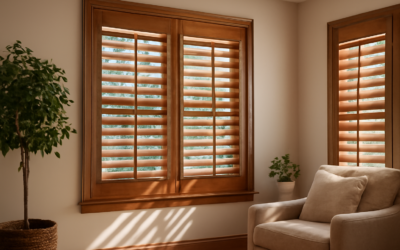
Plantation shutters are interior shutters with wide, adjustable horizontal louvers set into a solid frame. You tilt the louvers to control light and privacy, and swing the panels open on hinges for a full view or to wash the glass. The look is architectural and tailored, which is exactly why they read as a permanent upgrade rather than an accessory.
They’re distinct from old-fashioned cafe shutters or narrow colonial louvers. The “plantation” style specifically means the wider louvers, typically 2.5 inches and up, that define the clean, modern-traditional look most people want today.
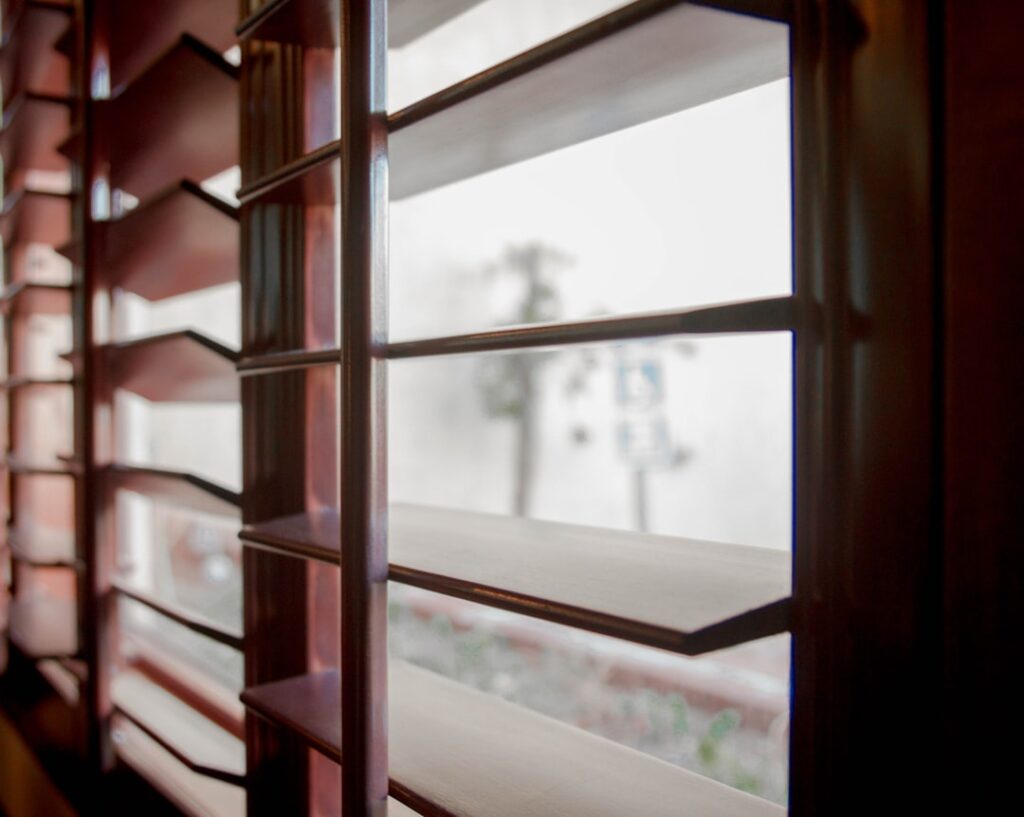
A few construction details are worth knowing because they show up on every order form. The tilt rod is what you push to angle the louvers. A traditional front tilt rod runs down the center of the panel; a hidden or “clearview” rear tilt rod tucks the mechanism behind the louvers for an unobstructed look, and it’s the more popular choice today. Tall panels usually get a divider rail, a horizontal bar that splits the panel so you can tilt the top and bottom louvers independently, which is handy for privacy on the lower half while light streams in up high. Frames come in styles like L-frame, Z-frame, and deco, each suited to a different mount and trim situation, so don’t be surprised when a good installer asks about your window casing before quoting.
Louver Size: 2.5″, 3.5″, and 4.5″
Louver width is the first decision, and it’s mostly about proportion and view. Wider louvers mean fewer of them across the panel, a bigger gap of glass when open, and a more contemporary feel.
- 2.5-inch louvers: The traditional choice. Best for small windows and cottage or historic homes where the scale fits. More louvers means slightly less view when open.
- 3.5-inch louvers: The most popular size and the usual default. It suits the majority of standard windows and gives a balanced, timeless look.
- 4.5-inch louvers: The widest common size. Ideal for large windows, sliders, and modern homes. You get the clearest view and the least visual clutter, but on a small window they can look oversized.
When in doubt, match the louver to the window scale. A 4.5-inch louver on a tiny bathroom window looks off, and 2.5-inch louvers on a big picture window feel busy.
Materials: Basswood, Faux Wood, and Vinyl
Material drives both price and where the shutter can go. There are three main options, and each has a clear best use.
- Basswood (real hardwood): The premium pick. Lightweight, strong, takes paint and stain beautifully, and allows larger panels without sagging. Best for main living areas and stained finishes. Costs the most and can warp in constant high humidity.
- Composite / faux wood: An engineered wood core wrapped in a durable finish. Nearly as good-looking as basswood, more resistant to moisture and warping, and cheaper. The go-to choice for most homes, especially bathrooms and kitchens.
- Vinyl / PVC: Fully waterproof and the most affordable. Great for very humid spots and rentals. The trade-off is that heavier panels may need a center divider rail, and it doesn’t have the same refined look up close.
For a whole-house order on a budget, faux wood delivers about 90% of the look of basswood for meaningfully less money. Save the real basswood for the rooms where people linger and notice details.
Weight is the practical reason material matters beyond looks. Basswood is strong for its weight, so it can span a wide window in a single panel without sagging. Vinyl and some composites are heavier and weaker, which forces the manufacturer to either add a center divider rail or split a wide window into more panels, both of which change the appearance. If you have a big picture window and want the cleanest look with the fewest panels, basswood earns its premium there. In a steamy master bath, though, waterproof vinyl or a moisture-rated composite is the better choice over basswood, because real wood in constant humidity eventually cups or peels no matter how good the finish is.
What Plantation Shutters Cost per Window
Shutters are priced per window and, honestly, they aren’t cheap. Here’s what typical quotes look like for a standard window around 36 by 60 inches:
- Vinyl: $150 to $250 per window.
- Faux wood / composite: $200 to $350 per window.
- Basswood: $300 to $450+ per window, more for stains or specialty shapes.
- Professional installation: typically $50 to $100 per window, sometimes bundled into custom pricing.
Specialty shapes like arches, angled tops, and large sliders push costs higher. A whole-house shutter project frequently lands between $5,000 and $20,000 depending on window count and material. It’s a lot, but spread over the 20-plus years these last, the annual cost undercuts blinds you’d replace three times over.
Pros and Cons Worth Weighing
Before you commit, here’s the honest ledger.
Pros:
- Add real resale value and appeal to buyers.
- Excellent light and privacy control with a simple louver tilt.
- Extremely durable; no cords, no fabric to fade or fray.
- Provide meaningful insulation, trimming drafts and cutting summer heat gain.
- Easy to wipe clean, which allergy-sensitive households appreciate.
Cons:
- Highest upfront cost of common treatments.
- Long lead times, often three to six weeks for custom orders.
- Panels swing into the room, so they need clearance.
- Not fully room-darkening; some light leaks between closed louvers.
- Harder to change later, since they’re semi-permanent and cut to your openings.
How to Measure for Plantation Shutters
Accurate measuring is everything with shutters, because they’re built to your exact opening. Decide first between an inside mount, which sits flush in the frame for that built-in look, and an outside mount on the wall, which suits shallow frames.
For an inside mount, measure the width at the top, middle, and bottom and record the smallest. Measure the height at left, center, and right and record the shortest. Check the frame depth too, since flush-mounted louvers usually need around 2.5 to 3.5 inches; shallower frames may require a frame extension or a “Z-frame” build-out. Note any obstructions like handles, cranks, or tile that could interfere with the louvers or hinges.
Because a fraction of an inch can bind a panel or leave an ugly gap, a professional measure for shutters is strongly recommended even if you plan to install them yourself. Most retailers roll that visit into the price, and a mismeasured custom shutter is an expensive mistake with no returns.
Care and What to Expect Over Time
One reason shutters are easy to recommend is that maintenance is close to nothing. Dust the louvers every couple of weeks with a microfiber cloth or a soft duster, tilting them fully open and then closed to reach both faces. For a deeper clean, a barely damp cloth handles kitchen grease or bathroom film; just avoid soaking real basswood. Every year or so, check the tension screws on the louvers, since they can loosen over time and let louvers drift out of position. A quarter-turn with a small screwdriver restores the snug hold that keeps closed louvers from sagging open.
Set expectations on the finish, too. A quality painted or stained shutter holds its color for decades because there’s no fabric to fade, but direct, unrelenting sun can still chalk a cheap finish over many years. Buying from a maker with a real lifetime warranty on the finish is the hedge. Done right, plantation shutters are the rare treatment you install once and simply live with, which is exactly why they read as a permanent home upgrade rather than a decorating expense.
Are They Right for Your Home?
If you plan to stay in the house a while, want a low-maintenance treatment that looks like part of the architecture, and can absorb the upfront cost, plantation shutters for windows are one of the best long-term buys in home improvement. Pick 3.5-inch louvers and faux wood for the everyday rooms, upgrade to basswood where it shows, and get a pro to measure. Do that and you’ll have windows that still look sharp two decades from now.