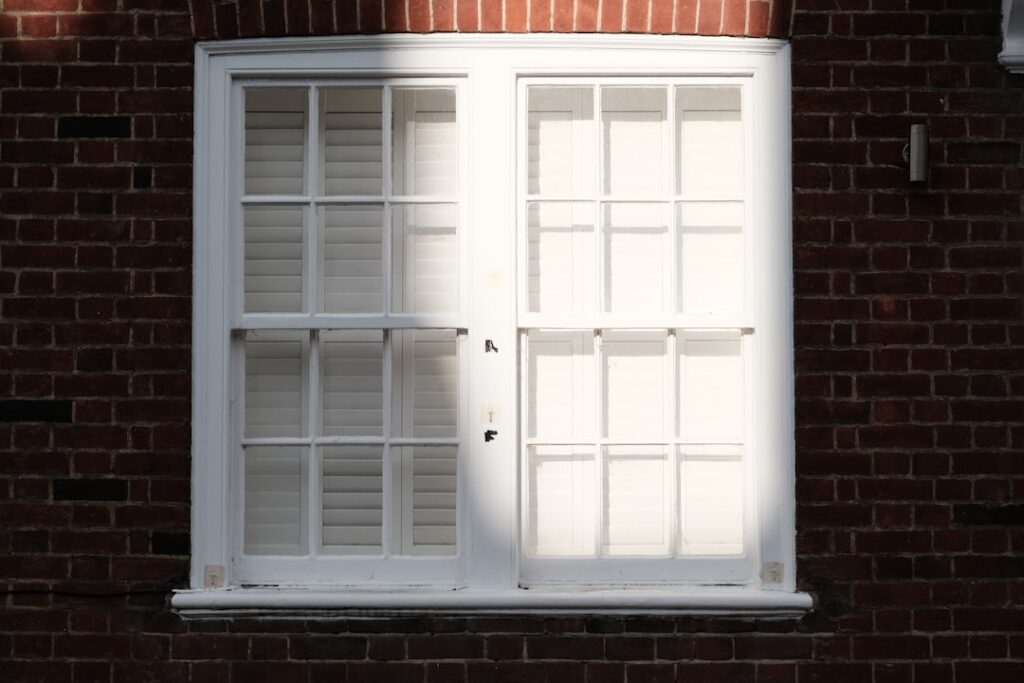
If you have ever watched real wood shutters warp above a steamy shower, you already understand why faux plantation shutters have taken over the window treatment market. Built from engineered polymer or composite instead of solid basswood, faux plantation shutters shrug off humidity, resist fading, and cost noticeably less than their hardwood cousins. For most bathrooms, laundry rooms, and high-traffic living spaces, they are the smarter buy. This guide walks through materials, louver sizing, pricing, measuring, and the install decisions that actually matter.
- What “Faux” Actually Means
- Why Moisture Resistance Is the Real Selling Point
- Choosing the Right Louver Size
- What Faux Plantation Shutters Cost
- Measuring for Inside vs. Outside Mount
- DIY Installation vs. Hiring a Pro
- Frame Styles and Tilt Options
- Common Measuring Mistakes to Avoid
- Keeping Them Looking New
- The Bottom Line
What “Faux” Actually Means
The term covers two related constructions. Solid composite shutters are made from a wood-and-resin blend, sometimes called engineered wood, and feel dense and substantial. Hollow vinyl or PVC shutters wrap a foam or aluminum core in a smooth polymer skin, which keeps weight down on wide windows. Both are finished in a baked-on paint that will not yellow the way painted wood eventually does.
Do not confuse faux with cheap. A quality composite panel weighs almost as much as basswood and carries a lifetime warranty from most manufacturers. The trade-off is color: faux shutters come in whites and off-whites, occasionally a few grays or tans, but you cannot get a rich walnut stain the way you can with genuine hardwood. If you want a natural wood grain in a formal study, real wood still wins. Everywhere else, faux is the practical choice.
Why Moisture Resistance Is the Real Selling Point
Bathrooms and kitchens are where faux earns its keep. Solid basswood absorbs moisture, swells, and eventually cracks its paint line at the joints. Polymer and composite shutters do none of that. You can wipe them down with a damp cloth, install them a few feet from a tub, and never worry about a warped louver.
Faux panels also tolerate direct sun far better. South- and west-facing windows bake window treatments daily, and painted wood chalks over time. The UV-stable finish on faux shutters holds its color for a decade or more, which matters if you are covering a sunroom or a wall of glass.
Choosing the Right Louver Size
Louver width changes both the look and the view. Manufacturers offer three common sizes, and picking correctly is the single most impactful design decision you will make.
- 2.5-inch louvers: The traditional, tighter look. Best for small windows, cottage styling, and rooms where you want a classic feel. They block a bit more light when closed because there are more slats.
- 3.5-inch louvers: The most popular all-around size. They balance a clean sightline with a timeless proportion and suit the majority of American homes.
- 4.5-inch louvers: The modern, wide-open look. When tilted open they nearly disappear, giving you the clearest view. Reserve these for larger windows; on a small window they can look oversized.
As a rule of thumb, match the louver to the window scale. A 24-inch-wide bathroom window looks fussy with 4.5-inch slats, while a 60-inch living room window looks dated with 2.5-inch slats. When in doubt, 3.5 inches is the safe default.
What Faux Plantation Shutters Cost
Budget between $200 and $350 per window for quality faux shutters, measured and made to fit. Small windows under 30 inches wide can come in closer to $150, while wide or arched openings that need multiple panels can push past $500. Motorized tilt and specialty shapes add more.
Those figures typically cover custom-sized panels but not professional installation, which runs another $50 to $100 per window if you hire it out. Big-box retailers advertise stock-size shutters for $80 to $120, but stock sizes rarely fit standard American windows without gaps, so most homeowners end up ordering custom. Compare that with real wood plantation shutters at $300 to $500 per window, and the savings are real.
Measuring for Inside vs. Outside Mount
Getting the measurement right is 90 percent of a clean install. First decide on mount type.
An inside mount sits within the window frame for a built-in, tailored look. It requires at least 2.5 inches of usable depth so the closed louvers clear the glass and any hardware. Measure the width at the top, middle, and bottom of the opening and use the smallest number. Do the same for height. Order to the exact opening; a reputable shutter maker deducts the necessary clearance for you.
An outside mount attaches to the wall or trim around the window, covering the opening entirely. Choose it when your window is too shallow for an inside mount, when the opening is out of square, or when you want to make a small window look larger. Measure the area you want to cover and add a couple of inches of overlap on each side for light control.
DIY Installation vs. Hiring a Pro
Installing faux shutters is a realistic weekend DIY project if you own a drill, a level, and a tape measure. Each panel comes pre-hung in a frame, so the job is mostly attaching that frame square and plumb. Expect 30 to 45 minutes per window once you have done one.
- Dry-fit the frame in the opening and shim it until it is level and plumb.
- Pre-drill pilot holes through the frame into the jamb or trim to avoid splitting.
- Drive the provided screws, checking level again before you fully tighten.
- Snap on the trim caps that hide the screw heads.
- Hang the panels on their hinges and test the tilt and swing.
Hire a pro if you have arched, angled, or bay windows, or a whole house worth of openings where consistency matters. A professional installer also carries responsibility if a measurement is off, which is worth the fee when you are covering ten or more windows.
Frame Styles and Tilt Options
Two smaller choices shape the finished look. The frame is the border that surrounds the panels, and you generally pick between an L-frame that sits flush for inside mounts, a Z-frame that adds a decorative lip, and a deco or bullnose frame for a chunkier trim on outside mounts. When your window has almost no depth, a low-profile Z-frame lets you fake an inside mount on a shallow opening.
Tilt control is the other detail. A traditional center tilt bar runs down the face of the panel and moves all the louvers together, giving a classic plantation look. A hidden or rear tilt uses a small rod behind the panel so the front stays clean and uninterrupted, which reads as more modern and gives a wider view. Hidden tilt costs a little more but is worth it on a feature window.
Common Measuring Mistakes to Avoid
Most warranty claims and reorders trace back to measuring errors, so slow down at this step. Never assume a window is square; older homes are routinely off by a quarter inch or more, which is why you measure width and height at three points and use the tightest reading. Check the depth for hardware you might forget, such as window cranks on casement units, which can foul closed louvers on an inside mount. If you find less than 2.5 inches of clear depth, switch to an outside mount rather than forcing a shallow inside fit. Finally, order one window first as a test before committing to a whole house, and confirm the manufacturer’s deduction policy so you are not double-subtracting clearance.
Keeping Them Looking New
Maintenance is refreshingly simple. Dust the louvers weekly with a microfiber cloth or a vacuum brush attachment, tilting the slats to reach both faces. For grime in a kitchen or bath, wipe with a damp cloth and a drop of mild dish soap, then dry. Avoid abrasive cleaners and solvents, which can dull the finish. Because the paint is baked on rather than brushed, faux shutters never need repainting, and a good set will outlast the wall color behind them. Every year or so, check that the hinge screws and tilt mechanism are snug, since daily operation can slowly loosen hardware, and a quick turn of a screwdriver keeps the panels swinging true.
The Bottom Line
For humidity-prone rooms, sun-drenched walls, and budgets that value durability, faux plantation shutters are the sensible pick. Spend your decision-making energy on louver size and mount type rather than agonizing over material, order custom rather than stock, and you will end up with a window treatment that looks tailored and holds up for decades. Save real wood for the one formal room where a deep stain is the point.