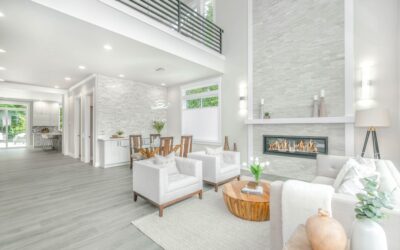
Walk into a house with real plantation window blinds and you feel it before you can name it: the rooms look finished, quiet, and permanent. Unlike fabric shades that yellow and fray, plantation window blinds are architectural. They are wide-louver interior shutters mounted in a frame, and appraisers treat them as a built-in upgrade rather than a soft furnishing, which is why they show up on so many listing sheets as a selling point.
Part of our Windows & Doors guide — explore the full guide →
What Plantation Window Blinds Actually Are
The term is a bit of a misnomer. These are shutters, not blinds in the venetian sense, though the industry uses the names interchangeably. Each panel holds a set of horizontal louvers, typically tilted with a hidden rear tilt rod or a discreet front bar, mounted inside a frame that screws to your window casing. When closed, the louvers overlap to block light and view; when open flat, they let in nearly the full window.
The signature feature is the louver width. Traditional colonial shutters used 1.25-inch slats, while true plantation style runs 2.5, 3.5, or 4.5 inches wide. The wider the louver, the more glass you see through when they are open and the more contemporary the look. On a standard double-hung window, 3.5-inch louvers are the most popular choice because they balance view and light control.
Choosing Your Louver Size and Panel Layout
Louver size is the first decision, and room scale drives it. In a small bathroom with a 24-inch window, 2.5-inch louvers keep the proportions right. In a great room with 8-foot-tall windows, 4.5-inch louvers look intentional rather than busy. Mixing sizes across one facade of the house reads as a mistake, so pick one width and stay with it for a cohesive exterior view.
Panel layout matters just as much. A single wide window may take a two-panel bi-fold or a four-panel configuration so no single panel is too heavy to swing. Ask about a divider rail, a horizontal bar that splits tall panels into upper and lower louver sections you can tilt independently. That lets you close the bottom for privacy while leaving the top open for daylight, which is ideal for street-facing bedrooms.
Material Options and What They Cost
The material determines both price and durability, and choosing wrong for the room causes headaches. Here is the landscape:
- Basswood: The premium real-wood option. Light, strong, and paintable or stainable. Best for living rooms and bedrooms. Expect $30 to $50 per square foot installed.
- Engineered wood / composite: A wood core wrapped in a durable coating. More moisture-tolerant than solid wood and cheaper, at $20 to $35 per square foot.
- Vinyl / PVC and faux wood: Fully waterproof and the value pick for bathrooms, kitchens, and laundry rooms. Runs $18 to $28 per square foot. Very wide vinyl louvers can sag over long spans, so ask about internal aluminum reinforcement.
For a typical 36-by-60-inch window, budget $250 to $600 installed depending on material and features. A whole house of 12 to 15 windows commonly lands between $4,000 and $9,000. Real basswood in a formal room and waterproof faux wood in wet rooms is the combination most pros recommend.
Measuring for an Inside or Outside Mount
An accurate measurement is what separates a custom-fit look from a sloppy one. Decide first between an inside mount, where panels sit within the window recess, and an outside mount, where the frame overlaps the wall around the opening. Inside mounts look cleaner but demand at least 2 to 3 inches of depth in the recess to clear the louvers.
For an inside mount, measure the width at the top, middle, and bottom, then use the smallest number. Do the same for height at left, center, and right. Windows are rarely perfectly square, and ordering to the largest dimension guarantees a panel that will not fit. Measure to the nearest 1/8 inch and note it clearly. If the recess is too shallow, an outside mount solves it and can also make a small window look larger.
Installation: DIY or Hire It Out
A handy homeowner can hang a set of plantation shutters in an afternoon with a drill, a level, shims, and the mounting screws included in the kit. The frame goes in first, leveled and shimmed square, and the panels then hang on their hinges. The tricky part is getting the frame perfectly plumb so the panels close evenly and the tilt rods do not bind.
Where windows are out of square, tall, or numerous, a professional installer is worth the $75 to $150 per opening in labor. Many suppliers include measurement and installation in a package price, and that also puts the fit guarantee on them rather than you. If a panel binds or a louver droops later, a bundled install means a warranty callback rather than a re-order.
Cleaning and Long-Term Care
One of the quiet advantages of plantation shutters is how little upkeep they need. A weekly pass with a microfiber duster or a vacuum brush attachment keeps the louvers clean. For grime in a kitchen, wipe wood louvers with a barely damp cloth and dry them immediately; vinyl and faux wood tolerate a mild soapy wipe without worry.
Check the tension screws on the tilt mechanism once or twice a year. Over time the friction hinge that holds louvers at an angle can loosen, letting them drift closed; a quarter turn on the tension screw restores the hold. Avoid oil-based furniture sprays on painted louvers, since they attract dust and can leave a film. Done right, a good set outlasts several rounds of carpet and paint.
Are Plantation Shutters Worth It?
For a long-term home, the answer is usually yes. They cost more up front than blinds or curtains, but they do not need replacing every few years, they improve insulation at the window by adding an air layer, and they tend to return a solid share of their cost at resale because buyers see them as part of the house. In hot climates, closed louvers cut solar heat gain and ease the load on your air conditioning.
If you plan to move within a year or two, cellular shades or faux-wood blinds make more financial sense. But if this is your home for the foreseeable future, plantation shutters are one of the few window treatments that genuinely age into an asset rather than a wear item. Choose the right material for each room, measure carefully, and they will look as good in fifteen years as the day they went up.
Handling Odd Windows and Special Shapes
Not every window is a tidy rectangle, and plantation shutters actually handle oddball shapes better than most treatments. Arched or half-round windows can take a fixed sunburst or a specialty arched panel built to the curve, something roller shades and blinds simply cannot do cleanly. Angled or raked windows following a vaulted ceiling accept custom-cut frames that fit the slope precisely. Bay and bow windows get individual panels per section, mitered at the corners for a wrapped, upholstered look.
French doors are another common challenge, and shutters shine there too. A door-mounted shutter uses a shallow frame with a cutout for the handle, and because it is fixed to the door it moves with it and does not swing loose or rattle when the door opens. For very wide openings and sliding patio doors, bypass or bi-fold shutter tracks let panels slide or fold aside to clear the doorway, giving you the shutter look on a slider where blinds usually rule. Because these are all custom-built to the opening, expect to pay a premium of 15 to 40 percent over a standard rectangular window and a longer lead time, but the payoff is a clean, tailored fit on windows that otherwise look awkward with off-the-shelf coverings.
One color decision trips up more homeowners than any other: whether to match the shutters to the trim or to the wall. As a rule, painting shutters the same white or off-white as the window casing gives the crispest, most built-in look and suits the vast majority of homes. A stained wood shutter reads warmer and works beautifully in a study or a room with other wood tones, but it demands real basswood, not a painted composite, to look right. Avoid trendy colors on a fixture this permanent, since shutters routinely last fifteen years or more and you do not want to repaint every panel when tastes shift. If you have shutters visible from the street, remember the exterior sees the back of the louvers, so keep the color consistent across one facade for a uniform look from outside. Choose the finish for the long haul and the shutters keep earning their premium price year after year.