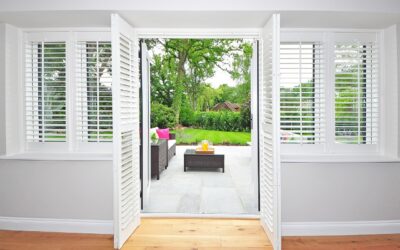
Custom wood plantation shutters can run $300 to $450 per window installed, which is why a lot of homeowners assume the classic louvered look is out of reach. It isn’t. Cheap plantation shutters made from faux wood, PVC, and composite materials deliver nearly the same crisp, built-in appearance for a fraction of the price — sometimes as little as $20 to $30 per square foot — if you know which products hold up and which corners are safe to cut. Here’s how to shop the budget end without ending up with shutters that yellow, sag, or scream “cheap.”
- Why Faux Wood Beats Real Wood on a Budget
- The Material Tiers, From Cheapest Up
- Where to Buy Cheap Plantation Shutters
- Louver Size and How It Changes the Look
- Inside Mount vs. Outside Mount
- What to Avoid at Rock-Bottom Prices
- Getting High-End Results for Less
- Measuring So You Don’t Waste Money
- Installing Budget Shutters Yourself
- Cleaning and Care
- Cleaning and Long-Term Upkeep
Why Faux Wood Beats Real Wood on a Budget
The instinct is to assume real wood is better, but for shutters, that’s often backwards. Basswood shutters look beautiful and are the lightest option for very tall panels, yet they cost the most and can warp in humid bathrooms and kitchens. Faux wood — typically a solid or foamed PVC, or an engineered composite with an MDF core wrapped in vinyl or a poly coating — resists moisture, won’t crack, and costs 30 to 50 percent less.
For most rooms, and especially anywhere near water, faux wood or composite is the smarter buy, not just the cheaper one. The only place real wood clearly wins is on extra-wide panels where its lighter weight prevents sagging, and in high-end formal rooms where the grain matters.
The Material Tiers, From Cheapest Up
Budget shutters aren’t all the same, and the material sets both the price and the durability. Here’s the ladder.
- Hollow vinyl/PVC: the rock-bottom tier, often $20 to $25 per square foot. Lightweight and moisture-proof, but louvers can flex and the finish looks plasticky up close. Fine for a rental or a small window.
- Solid faux wood (poly-coated composite): $25 to $40 per square foot. The value sweet spot — a solid feel, a smooth paintable-looking finish, and good rigidity. This is what most people should buy.
- Composite with aluminum-reinforced rails: a step up for wide windows, keeping cost reasonable while preventing sag.
- Basswood (real wood): $200 to $350-plus per window, the premium tier, worth it only for tall panels or formal spaces.
Where to Buy Cheap Plantation Shutters
Price varies a lot by channel, so shop around. Big-box home centers offer the easiest entry: Home Depot and Lowe’s both sell made-to-measure faux wood shutters through in-store design services, generally $150 to $300 per window depending on size. Online specialists like Blinds.com, SelectBlinds, and Blindster frequently undercut them, running custom composite shutters closer to $100 to $250 per window with regular sales and free samples mailed to your door.
Amazon carries ready-made and semi-custom vinyl shutters at the lowest prices, but sizing is limited to stock dimensions, so measure carefully. For a true DIY route, some retailers sell unassembled vinyl shutter kits you cut and hang yourself for under $20 per square foot — the cheapest path if you’re handy and patient.
Louver Size and How It Changes the Look
Louver width has a bigger visual impact than most first-time buyers expect, and it doesn’t change the price much, so choose deliberately. The three standard sizes are 2.5 inches, 3.5 inches, and 4.5 inches. Narrow 2.5-inch louvers suit small windows and a traditional look but block more view when open. Wide 3.5-inch and 4.5-inch louvers are the modern favorite: they let in more light, offer a cleaner sightline when tilted open, and make a window feel larger. For most rooms, 3.5-inch louvers are the safe, contemporary choice.
Inside Mount vs. Outside Mount
How you mount cheap shutters affects both fit and appearance. An inside mount sits within the window frame for a tailored, built-in look, but it demands enough depth — usually at least 2.5 to 3 inches — and a reasonably square window, since gaps show badly on shutters. An outside mount attaches to the wall or trim around the opening, which forgives shallow frames and out-of-square windows while making the window look bigger. If your windows are shallow, crank-operated, or not quite square, an outside mount saves both money and frustration.
What to Avoid at Rock-Bottom Prices
Some savings cost you later. A few warning signs separate a smart bargain from a regret.
- Thin hollow louvers that flex when you press them — they warp in sunlight and rattle in a breeze.
- Bright-white plastic that yellows. Cheap uncoated PVC discolors in direct sun within a few years; look for UV-stabilized finishes.
- Undersized tilt rods and cheap hinges that loosen and sag. Test the louver action in a sample if you can.
- Off-brand “custom” with no warranty. Reputable faux wood shutters carry a limited lifetime warranty; if there’s none, walk away.
Getting High-End Results for Less
The path to cheap plantation shutters that don’t look cheap is simple: pick solid faux wood or composite in the $25 to $40 per square foot range, choose 3.5-inch louvers, buy from a specialist like Blinds.com or SelectBlinds during a sale, and measure precisely for a clean fit. Skip the hollow bargain vinyl unless it’s for a minor window, and confirm a UV-stable finish and a real warranty. Do that, and you’ll get the timeless, built-in plantation look for roughly half what custom wood costs — and no one but you will know the difference.
Measuring So You Don’t Waste Money
The fastest way to blow a shutter budget is a mismeasure that forces a reorder, custom shutters aren’t returnable. For an inside mount, measure the window opening width at the top, middle, and bottom, then use the smallest number; do the same for height using the left, center, and right. Check the jamb depth too, since inside-mount shutters generally need about 2.5 inches of clear depth to hold the frame and clear the louvers.
For an outside mount, measure the opening and add 1.5 to 2 inches of overlap on each side and the top so the panels block light and look intentional. Write measurements as width by height, always in that order, because reversing them is a classic and costly mistake. When ordering DIY, most sites walk you through this, but measuring twice before you submit is free insurance against a $200 error.
Installing Budget Shutters Yourself
DIY installation is where the biggest savings hide, since labor can equal the cost of the shutters themselves. A basic install runs about 45 minutes to an hour per window with a drill, a level, and the included screws. For an inside mount, you set the frame into the opening, shim it level and square, then screw through the frame into the jamb. For an outside mount, you anchor the frame to the casing or wall, hitting studs or using rated anchors in drywall.
The steps that matter most are leveling and squaring, a frame that’s even slightly out will leave the panels swinging open or binding shut. Take your time with shims, check level in both directions, and test the louver operation before driving the final screws. Done carefully, a homeowner can outfit a whole house of windows over a weekend and keep the cost of cheap plantation shutters closer to the $100 to $200 material range per window rather than the $200-plus installed figure a pro would charge.
Cleaning and Care
One quiet advantage of faux wood and composite shutters is how little maintenance they need, which is part of why they beat curtains and blinds for busy rooms. Dust the louvers weekly with a microfiber cloth or a vacuum brush attachment, tilting them one way then the other to reach both faces. For kitchen and bathroom shutters that pick up grease or hard-water film, wipe them down every month or two with a cloth dampened in mild dish soap and water, then dry them; PVC and poly-coated composite shrug off moisture that would ruin real wood.
Avoid abrasive cleaners and bleach, which can dull or discolor the finish over time. Check the tilt rod and hinges once or twice a year and snug any loose screws so the louvers keep holding their angle. Treated this way, quality cheap shutters stay crisp and white for a decade — delivering the built-in plantation look at a fraction of the cost with almost none of the upkeep.
Cleaning and Long-Term Upkeep
Budget shutters last far longer when you treat them right, and the good news is that faux wood is genuinely low-maintenance. Dust the louvers weekly with a microfiber cloth or a vacuum brush attachment, tilting the slats one way, wiping, then reversing to hit both faces. In a kitchen or bathroom, where grease and hard-water film build up, a damp cloth with a drop of mild dish soap every month or two keeps the finish bright; poly and PVC shutters shrug off moisture that would swell real wood.
Check the tension and hinges once or twice a year. Over time the louver tilt can loosen so slats drift on their own, most shutters have a small tension screw or a friction pivot you can snug up in seconds. Tighten any loose hinge screws on the frame while you’re at it. That five-minute seasonal check is the difference between cheap plantation shutters that still operate crisply after a decade and ones that sag and rattle within a couple of years.