
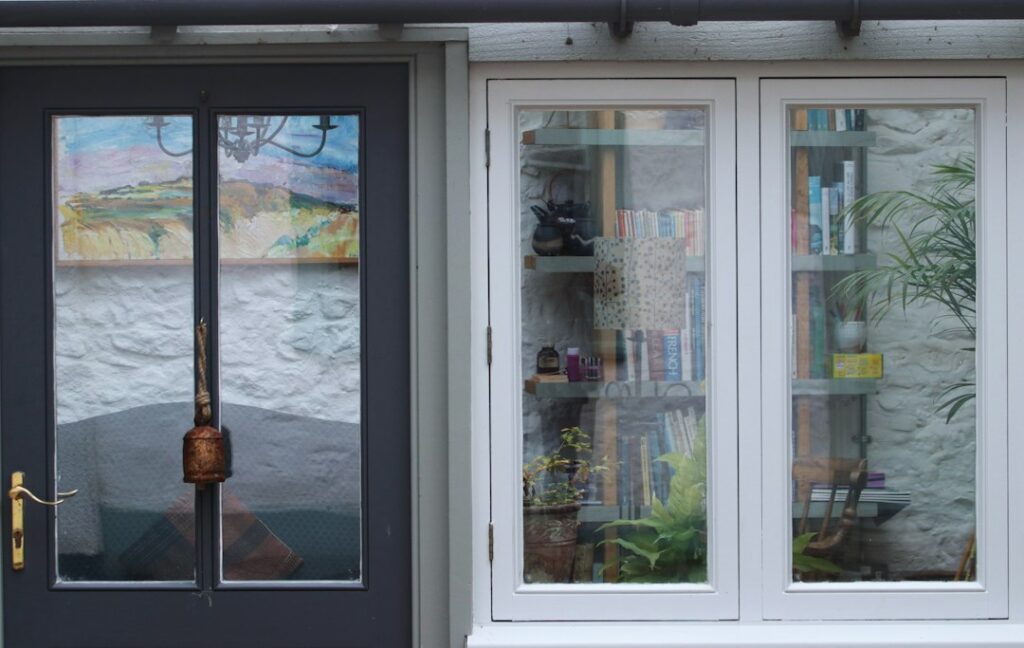
A cracked or dated glass panel does not mean you need a new entry door. On most steel and fiberglass doors, front door glass replacement is a bolt-out, bolt-in job. The glass sits inside a plastic frame kit held together by screws, and the whole unit comes out as one piece. With the right replacement insert and a helper, many homeowners finish in two to three hours.
Part of our Windows & Doors guide — explore the full guide →
The work comes down to three things: removing the old frame kit without damaging the door skin, measuring accurately so the new insert fits the existing cutout, and handling heavy glass safely. Decorative glass costs more than clear, but it is also the fastest way to change how an entry looks from the street. If the door itself is rotted, dented or warped, though, a new insert is money spent on a failing slab.
- How Front Door Glass Replacement Works on Steel and Fiberglass Doors
- Safety First: Handling Door Glass
- Tools and Materials
- Measuring for a Replacement Insert
- Step-by-Step: Removing and Installing the Insert
- Decorative vs Clear Glass
- Troubleshooting After Installation
- General Cost Ranges
- When to Replace the Whole Door Instead
- When to Call a Pro
- Replace Glass in Door Cost by Door Type
- Frequently Asked Questions
How Front Door Glass Replacement Works on Steel and Fiberglass Doors
Steel and fiberglass entry doors are built with a cutout in the door skin. A glass insert, also called a door lite, fills that cutout. The insert has two halves: an interior frame and an exterior frame, with the sealed glass unit sandwiched between them. Screws on the interior side pull the two halves together, clamping them onto the door. Screw caps or plugs often hide the screw heads.
Because the frame kit is a separate component, front door glass replacement usually means swapping the entire insert, frame and all, rather than cutting a new pane into the old frame. That makes the job easier: a new replacement door glass insert arrives as a sealed, pre-assembled unit, so you are not glazing glass by hand.
Wood doors are different. Their glass is often held by wood stops nailed into the door, and older wood doors may have single-pane glass set in glazing putty. Those repairs follow a different process and are not the focus here.
Safety First: Handling Door Glass
Entry door glass is heavy and sharp at the edges. A full-length insert can weigh 50 pounds or more. Before you start:
- Wear cut-resistant gloves and safety glasses for the entire job
- Plan a two-person carry for any insert larger than a small half-moon or oval
- Carry glass vertically, never flat, and never flex it or let an edge strike the floor or frame
- If the old glass is cracked, apply painter’s tape across both faces in a crisscross pattern to hold fragments together
- Replacement door glass must be tempered or otherwise rated safety glazing; do not substitute ordinary annealed glass
- Lay a moving blanket on the floor where the insert will rest
Shattered tempered glass breaks into small cubes. Keep kids and pets away and vacuum thoroughly afterward.
Tools and Materials
- Cordless drill with a Phillips bit, or a manual screwdriver
- Stiff putty knife and a thin plastic pry tool
- Utility knife with fresh blades
- Tape measure
- Painter’s tape and a marker
- Exterior-grade clear silicone sealant or the sealant recommended with the insert
- Mineral spirits or adhesive remover for old sealant
- Replacement insert with a frame kit sized to your cutout
- Cut-resistant gloves, safety glasses and a helper
Measuring for a Replacement Insert
Measurements are the step most people get wrong. You are not measuring the visible glass. You need the size of the rough cutout in the door, which you can only see accurately once the old frame is out. Still, you can take a good starting measurement first.
- Measure the frame outside to outside. Measure the width and height of the full frame on the interior side, from outer edge to outer edge.
- Measure door thickness. Most entry doors are 1-3/4 inches thick. Frame kits are sized for specific thicknesses, so confirm yours.
- Note the shape. Rectangle, half-moon, arch-top, oval or full-lite each call for a specific frame. To replace oval glass in a front door, match the oval dimensions and the frame’s outer profile closely.
- Confirm the cutout after removal. Once the old insert is out, measure the opening in the door skin. Replacement inserts list a required cutout size, usually about 1/2 inch smaller than the frame’s outside dimension.
Many stores carry standard inserts such as 22 by 36, 22 by 48, 22 by 64 and 24 by 38 inches. If your size is close but not exact, do not force it. A mismatched front door glass insert replacement leaves gaps that leak air and water.
Step-by-Step: Removing and Installing the Insert
- Remove the door if helpful. Working flat on sawhorses is easier, but many people do the job with the door on its hinges. If the door stays hung, wedge it open and have your helper support the exterior side.
- Pop the screw plugs. Use a thin pry tool to lift the plastic caps covering the screws on the interior frame.
- Remove the screws. Back out every screw and keep them in a cup. Your helper should hold the exterior frame so it cannot fall.
- Break the sealant bond. Run a utility knife around the exterior frame where it meets the door skin, cutting through old sealant and paint. Slide a putty knife under the edge and work around slowly.
- Remove the insert. Push gently from inside while your helper lifts the exterior frame out. Carry it vertically to your blanket.
- Clean the opening. Scrape and wipe off old sealant with mineral spirits. Inspect the door core around the cutout for foam damage or rust.
- Dry-fit the new insert. Set the new unit in the opening to confirm fit before applying any sealant.
- Apply sealant. Run a continuous bead on the back of the exterior frame flange, following the insert instructions.
- Set and fasten. Press the exterior half into place, then set the interior half and drive the screws in a crisscross pattern. Snug them evenly; overtightening can crack the frame or distort the glass seal.
- Finish. Replace screw plugs, wipe off squeeze-out, and let the sealant cure before painting the frame.
Decorative vs Clear Glass
Choosing glass is where entry door glass replacement becomes a style upgrade. Clear glass maximizes light and view but gives up privacy. Decorative options include:
- Frosted or satin etch: diffused light, strong privacy, low maintenance
- Textured or rain glass: obscures the view while keeping a bright entry
- Beveled and leaded designs: traditional look with zinc, brass or black came lines
- Internal blinds: blinds sealed between panes so you never dust them
- Low-E coated glass: improves energy performance in sunny or cold climates
Match the privacy rating to the room behind the door. A foyer facing a busy street benefits from higher obscurity, while a door into a backyard can stay clear.
Troubleshooting After Installation
- Drafts around the frame: the sealant bead was incomplete or the insert is undersized. Remove and reseal, or confirm the cutout matches the insert spec.
- Fog between the panes: the sealed unit has failed. This is a defect in the insert, not the install, and usually requires replacement under warranty.
- Rattle when the door closes: screws are loose or uneven. Tighten in a crisscross pattern.
- Water on the interior sill after rain: check the top of the exterior frame for a gap in sealant.
- Cracked frame corner: usually from overtightening. Small cracks can be sealed, but a split frame should be replaced.
General Cost Ranges
Front door glass replacement costs vary with size, design and who does the work:
- Small clear or frosted inserts: roughly $100 to $300
- Half-lite and three-quarter decorative inserts: roughly $250 to $700
- Full-lite decorative inserts with beveled or leaded glass: roughly $500 to $1,500 or more
- Professional installation: often $150 to $400 in labor on top of the insert
- Custom sizes or shapes: expect longer lead times and higher prices
For comparison, a new prehung steel or fiberglass entry door with glass often runs $600 to $2,500 before installation.
When to Replace the Whole Door Instead
An entry door glass insert replacement makes sense only when the door slab is sound. Consider a full door replacement if:
- The steel skin is rusted through or deeply dented
- A fiberglass skin is cracked or delaminating
- The door is warped and no longer seals against the weatherstripping
- The frame, sill or jamb is rotted
- You want a larger glass area than the current cutout allows
Enlarging a cutout in a steel or fiberglass door is not a DIY project; it can compromise the door’s structure and void its warranty.
When to Call a Pro
Hire a glazier or door installer for full-lite inserts that exceed what two people can safely handle, for custom shapes, for wood doors with putty-set glass, or when the door frame shows rot. A pro is also worth it when you are unsure about measurements, since a mis-ordered custom insert is usually nonreturnable.
Replace Glass in Door Cost by Door Type
The cost to replace glass in a door depends mostly on the door type: a steel or fiberglass entry door insert, a wood door pane, a sidelite, a storm door panel, or a sliding patio door panel. Small panes in wood or storm doors are often the cheapest repairs, while full-lite decorative inserts and sliding door panels sit at the top. Door glass must be tempered or other rated safety glazing, which costs more than ordinary window glass.
Typical Cost Ranges
| Door glass job | Typical cost range | What drives the price |
|---|---|---|
| Small clear or frosted entry door insert | Roughly $100 to $300 plus labor | Size, frame kit, privacy glass |
| Full-lite decorative entry door insert | Roughly $500 to $1,500 or more plus labor | Beveled or leaded glass, size |
| Single pane in a wood door | Low to mid hundreds installed | Tempered glass cut to size, glazing labor |
| Storm door glass panel | Under $100 to a few hundred | Whether a stock replacement panel fits |
| Sidelite glass or insert | A few hundred to over $1,000 | Decorative match to the main door |
| Sliding patio door glass panel | Several hundred to over $1,000 | Insulated unit size, Low-E coating |
Professional labor for an entry door insert often runs $150 to $400. Glass shops may add a trip charge for a single pane, so bundling several repairs into one visit lowers the cost per piece.
Glass Only vs the Whole Insert
On steel and fiberglass doors, the sealed glass unit and frame are usually replaced together. Some glass shops can reglaze just the sealed unit inside an existing frame when the frame is in good shape, which can cost less for a custom shape. For fogged double-pane glass, replacing only the insulated glass unit is often cheaper than a new frame kit, provided the shop can match the thickness.
Ways to Keep the Cost Down
- Measure carefully and match a stock insert size instead of ordering custom.
- Check the door and insert warranty; failed seals are often covered.
- Choose clear or simple frosted glass over beveled or leaded designs.
- For a storm door, check whether the maker sells a replacement panel before calling a glazier.
If the door slab is rusted, delaminating or warped, put the money toward a new prehung door rather than new glass.
Frequently Asked Questions
Can you replace just the glass in a front door?
Yes. On most steel and fiberglass doors, the glass sits in a removable frame kit that you unscrew and replace as a complete insert without replacing the door.
How much does front door glass replacement cost?
Inserts range from about $100 for small clear units to $1,500 or more for full-lite decorative glass, plus roughly $150 to $400 for professional installation.
How do I measure for a replacement door glass insert?
Measure the frame outside to outside, confirm door thickness and shape, then verify the rough cutout once the old insert is removed. Match the cutout size listed for the new insert.
Can I replace oval glass in a front door myself?
Often, if a matching oval insert is available for your cutout size. Oval inserts must match closely, so confirm dimensions before ordering.
Is door glass tempered?
Glass in entry doors should be tempered or other rated safety glazing. Always buy a replacement insert rated for door use.
How long does it take to replace a front door glass insert?
Most DIY swaps take two to three hours with a helper, plus sealant cure time before painting.


