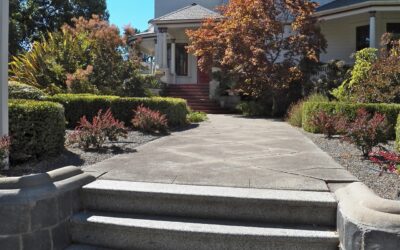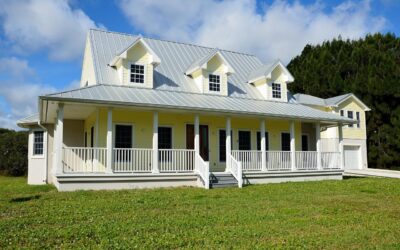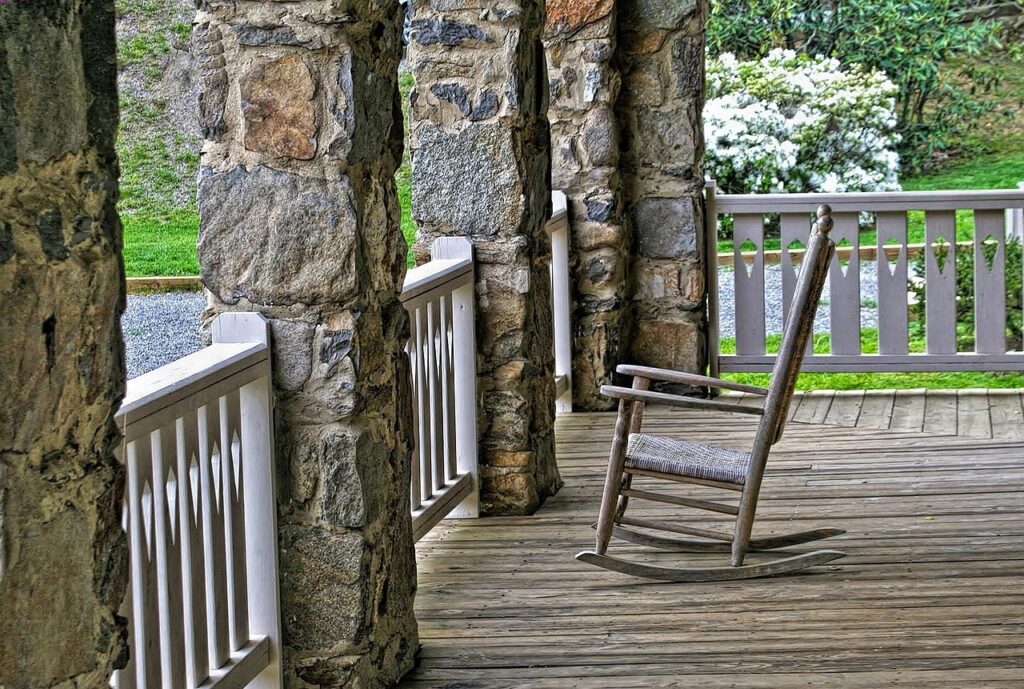
The walkway from the driveway to the front porch is the single most-photographed surface on most homes. A cracked concrete strip from 1972 makes even a beautifully landscaped property look tired, while a curving flagstone path with proper edging turns a basic colonial into a showcase. The best front porch walkway ideas match the architecture of the house, the surrounding landscape style, and the budget you have available, with the right material choice often making more visual difference than expensive plantings or new siding.
Classic Brick Walkway
Clay brick laid in a herringbone or running bond pattern is the timeless walkway choice and works on traditional, colonial, and craftsman homes. Pricing for installed clay paver brick runs $14 to $22 per square foot in 2025, depending on whether the brick is laid on a sand base (mid-range) or mortared to a concrete slab (premium). A 50-foot walkway 4 feet wide costs $2,800 to $4,400.
For longevity, choose paver-grade clay brick rather than building brick. Pine Hall Brick, Acme Brick, and Boral all make pavers rated for ground contact and freeze-thaw cycles. Building brick will spall and crumble after 5 winters in northern climates. The premium for paver-grade is about $1.50 per brick, which pays back many times over in years of use.
Natural Flagstone Path
Irregularly shaped flagstone in muted tans, grays, or warm browns gives a casual, organic look that suits ranch, modern farmhouse, and craftsman homes. Pennsylvania bluestone, Tennessee sandstone, and Arizona flagstone are the most common types in the US market. Installed pricing runs $20 to $35 per square foot for stones set on a sand base with polymeric joint sand.
Flagstone works best in curving paths that follow natural land contours rather than rigid straight lines. The irregular edges of the stones feel forced when squeezed into a strict rectangle. A 4-foot-wide curving path of 200 square feet runs $4,000 to $7,000 — pricey but visually distinctive enough that the investment shows.
Concrete Pavers
Concrete pavers from Belgard, Techo-Bloc, and Unilock have come a long way from the basic gray rectangles of 20 years ago. Modern options include tumbled finishes that mimic aged brick, oversized 24×24 inch slabs for modern designs, and bullnose pieces for stair treads. Installed pricing runs $12 to $20 per square foot.
The advantage of concrete pavers is the design flexibility — you can specify exact dimensions, colors, and patterns to match the house. The Belgard Mega-Lafitt pattern at $14 per square foot installed gives a flagstone look at brick pricing, and the Techo-Bloc Blu 60 at $18 per square foot suits modern architecture well.
Stamped and Stained Concrete
For walkways longer than 30 feet or for matching an existing concrete driveway, stamped concrete is the most cost-effective premium option. A poured concrete walkway with a stamp pattern (slate, ashlar, or brick) and color hardener costs $10 to $15 per square foot installed. The same walkway with no stamp is $7 to $9 per square foot.
Stamped concrete needs a sealer every 2 to 3 years to keep colors looking fresh. Plan on $0.40 per square foot in materials and a half day of labor every other spring. Done properly, stamped concrete lasts 25 to 40 years with minor crack repair as needed.
Gravel and Crushed Stone Path
For cottage-style homes and informal landscapes, a crushed gravel or decomposed granite walkway looks intentional and casual. Pricing is the lowest of any walkway type at $4 to $7 per square foot installed, including edging and base prep. A 200-square-foot walkway runs $800 to $1,400.
Edging is essential to keep gravel paths from spreading into adjacent beds. Use steel landscape edging at $5 per foot or a concrete curb at $12 per foot. Without edging, gravel migrates into lawns and beds within one growing season. Decomposed granite stabilizes better than pure crushed stone but still benefits from edging.
Pattern and Layout Considerations
Width matters more than most homeowners realize. A walkway under 3 feet wide forces visitors to walk single file, which is uncomfortable for couples and guests. The ideal width for a primary front walk is 4 to 5 feet, allowing two people to walk side by side comfortably. Save the narrower 30-inch paths for side yards and garden routes.
For straight walkways from sidewalk to porch, a slight bend or jog adds visual interest without making the path feel forced. Curved walkways work best when they curve around an existing tree, planting bed, or land feature rather than curving for the sake of curving. A pointless curve in a flat front yard looks awkward.
Lighting and Edge Details
Path lighting at intervals of 8 to 12 feet transforms a daytime walkway into an evening experience. Low-voltage LED bollards like the Volt Top Dog at $89 each give a clean modern look, while solar-powered fixtures from $25 each provide an easier installation with no wiring. For a 50-foot walkway, plan on 5 to 7 fixtures.
Edge details separate professional walkways from DIY work. Steel edging buried 1 inch below the surface keeps a flagstone or paver walkway crisp for decades. Soldier-course brick borders frame brick or concrete walkways with a contrasting band. Granite cobblestone borders at $9 per linear foot add premium feel to almost any walkway material.
Cost Summary Per Walkway Type
- Gravel or decomposed granite: $4 to $7 per square foot — cottage, informal
- Stamped concrete: $10 to $15 per square foot — versatile, durable
- Concrete pavers: $12 to $20 per square foot — design flexibility
- Clay brick: $14 to $22 per square foot — traditional, classic
- Natural flagstone: $20 to $35 per square foot — organic, premium
Avoiding Common Walkway Mistakes
The biggest walkway mistake is poor base prep. A 4-inch compacted gravel base under any paver or stone material is non-negotiable in northern climates. Skip this step and you get frost heave within 2 winters that pushes individual stones up 1 to 2 inches, ruining the walkway. The base prep is invisible work that determines whether the walkway lasts 5 years or 30.
The second common mistake is wrong proportions. A grand 6-foot walkway on a small ranch house looks bloated. A skinny 2-foot path leading to a wide Victorian porch looks like an afterthought. Match the walkway scale to the house size: 3-4 feet for cottages, 4-5 feet for typical homes, 5-6 feet for larger formal homes.
The third mistake is fighting the natural grade. If the front yard slopes, a walkway with steps that follow the slope looks better and lasts longer than a tilted ramp. Steps every 6 to 12 feet of horizontal travel, with 6-inch risers and 12-inch treads, handle most residential slopes elegantly.