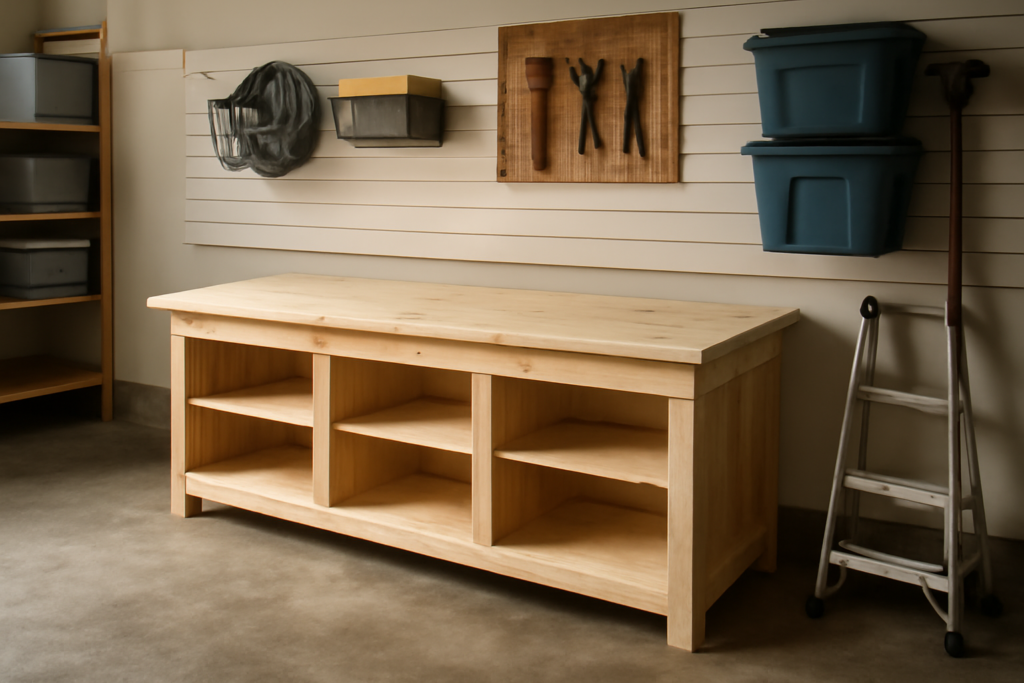
The zone just inside the garage door, where you kick off muddy boots and dump sports gear, is the hardest-working and most cluttered spot in most homes. A garage storage bench tames that chaos by combining a sturdy seat with hidden storage underneath, giving you a place to sit while lacing up boots and a home for everything that used to pile on the floor. Unlike flimsy indoor benches, a good garage bench stands up to heavy tools, road salt, and the weight of an adult sitting down hard. This guide covers the types available, what to look for when buying, and how to build your own for a fraction of the retail price.
- Why a Storage Bench Belongs in Your Garage
- Types of Garage Storage Benches
- Storage Configurations to Consider
- Key Features to Look For
- Building Your Own Garage Storage Bench
- Organizing the Interior
- Placement Tips for Maximum Use
- Weatherproofing for Garage Conditions
- Combining a Bench With a Full Storage Wall
- Budgeting for Your Bench
- The Bottom Line
Why a Storage Bench Belongs in Your Garage
The value of a storage bench comes from doing two jobs at once. It creates a practical drop zone for the daily in-and-out routine, boots, backpacks, dog leashes, and car-care supplies, while also serving as seating for changing shoes or taking a break during projects. That dual function makes it one of the highest-impact organizing purchases per square foot.
A bench also lifts clutter off the floor and into a defined container, which instantly makes a garage look tidier and keeps items off the concrete where they’d collect dust and moisture. For families, it’s the difference between a mudroom-style landing pad and a permanent pile by the door.
Types of Garage Storage Benches
Benches range from grab-and-go plastic units to custom cabinetry, and the right pick depends on your budget and how much abuse it’ll take.
Molded Resin and Plastic Benches
Weatherproof resin deck boxes and storage benches are inexpensive, often $60 to $150, and immune to rust and moisture. They’re perfect for storing outdoor cushions, sports balls, and gardening gear, though they flex more and hold less weight than metal or wood.
Steel and Metal Benches
Powder-coated steel benches, sometimes part of a modular garage cabinet system, offer the highest durability and weight capacity. They resist dents and shrug off oil and chemicals, making them the pro-grade choice for a serious workshop, typically $150 to $400.
Wood Benches
A wood bench, whether store-bought or DIY, brings warmth and heavy-duty strength. Solid construction from 2x4s and plywood can hold hundreds of pounds and be customized exactly to your space, which is why it’s the favorite of DIYers.
Storage Configurations to Consider
How the storage is arranged matters as much as the bench itself. Lift-top benches use the entire seat as a lid, opening to a deep cavity that swallows bulky items but requires clearing the seat to access. Cubby-style benches feature open front compartments, often sized for baskets or bins, giving quick grab-and-go access without lifting anything.
Drawer and door configurations, common on cabinet-based benches, keep contents dust-free and let you organize by category. Many homeowners choose a hybrid: open cubbies for frequently used gear and a closed compartment for seasonal or messy items.
Key Features to Look For
When shopping, a few specs separate a bench that lasts from one that wobbles within a year:
- Weight capacity: look for at least 300 to 500 pounds of seat rating so it holds an adult plus stored contents.
- Material and finish: powder-coated steel or sealed wood resists garage moisture and chemicals far better than raw MDF.
- Lid support: soft-close or gas-strut hinges on lift-tops prevent slammed fingers.
- Footprint: measure your landing zone so the bench doesn’t block the car door or walkway.
- Ventilation: some airflow helps prevent musty odors if you store damp gear.
Also check whether the bench needs assembly and how positive the reviews are on hardware quality, since cheap cam-lock fasteners are a common weak point.
Building Your Own Garage Storage Bench
A DIY bench is one of the most beginner-friendly weekend builds, and it lets you size the piece perfectly to your wall. The basic design is a plywood box on a 2×4 frame with a hinged or removable lid.
Start by cutting a base frame from 2x4s sized to your space, then sheath it in 3/4-inch plywood for the sides, bottom, and back. Add a face frame or trim for a finished look, and build a lid slightly larger than the opening. Attach the lid with a piano hinge for strength, and install a lid support so it stays open safely. Expect to spend $50 to $90 in materials for a bench that would cost two to three times as much retail.
Comfort and Finish Touches
For a mudroom feel, add a cushion on top and hooks on the wall above for coats and bags. Seal or paint the wood to resist moisture and make spills easy to wipe. A coat of durable enamel in a color that matches your garage cabinets pulls the whole space together.
Organizing the Interior
A bench is only as useful as the system inside it. Use labeled bins or baskets to divide the cavity into zones, one for shoes, one for pet supplies, one for car-wash gear, so items don’t become an undifferentiated heap. Stackable bins double your usable depth in a deep lift-top design.
For families, assign each person a cubby or bin so everyone has a clear spot for their gear. This single habit is what keeps a storage bench organized long after the initial cleanup, preventing the slow slide back into clutter.
Placement Tips for Maximum Use
Position the bench along the wall nearest the door you use most, since a drop zone only works if it’s on the natural path in and out. Leave enough clearance to open the bench and to sit down comfortably without banging into the car or a shelf.
If floor space is tight, a narrow bench with vertical storage above, hooks and a shelf, gives you the same function in a slimmer footprint. Keep at least three feet of walking clearance so the garage stays navigable when the car is parked.
Weatherproofing for Garage Conditions
A garage is a harsher environment than most people realize, with temperature swings, humidity, road salt in winter, and the occasional oil or chemical spill. A bench that would last a decade in a mudroom can deteriorate fast in the garage if it’s not built or finished for the conditions. That’s why material choice and finish matter so much here.
If you go with wood, seal every surface, including the underside and interior, with a durable exterior-grade polyurethane or enamel that resists moisture and wipes clean. Raw MDF and particleboard swell and crumble when they absorb humidity, so avoid them for anything that touches the concrete. Metal benches should be powder-coated to resist rust, and even then it’s wise to add rubber or plastic feet that lift the base off the damp floor. Storing a moisture absorber or a few silica packs inside a closed bench helps prevent that musty smell that develops when damp gear sits in a sealed compartment.
Combining a Bench With a Full Storage Wall
A storage bench works even harder when it anchors a larger organization system rather than standing alone. Pairing the bench with wall hooks, a slatwall panel, or overhead shelving above it turns a single drop zone into a complete command center for the garage entry. Coats and bags hang on hooks at eye level, helmets and sports gear sit on a shelf, and the bench below handles shoes and bulky items.
For a cohesive look, match the bench to a modular garage cabinet line so the finishes and colors align, creating a built-in appearance without custom cabinetry costs. Even a simple DIY setup benefits from vertical thinking: the wall above a bench is prime real estate that’s usually wasted. By stacking storage upward from the bench, you multiply capacity without giving up any additional floor space, which is exactly what a cramped garage needs most.
Budgeting for Your Bench
Price ranges widely depending on the route you take, so set expectations before you shop. A basic resin storage bench or deck box lands around $60 to $150 and requires no assembly beyond snapping parts together. Mid-range wood or metal benches run $150 to $300, while heavy-duty steel units that tie into a cabinet system can reach $400 or more.
Building your own remains the value champion, delivering a custom-sized, heavy-duty bench for roughly $50 to $90 in lumber and hardware, plus a weekend of labor. Whichever path fits your budget, prioritize weight capacity and a moisture-resistant finish over cosmetic extras, since those two factors determine whether the bench still serves you well after years of daily garage use.
The Bottom Line
A garage storage bench solves the two biggest problems of the garage entryway at once: nowhere to sit and nowhere to stash the daily gear. Whether you buy a rugged steel unit, a weatherproof resin box, or build a custom wood bench over a weekend, the payoff is a cleaner, more functional space and a genuine landing pad for your household. Match the material and weight rating to how hard you’ll use it, organize the interior with bins, and place it on your natural path, and this simple piece of furniture will keep your garage in order for years.