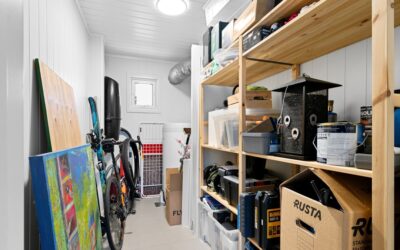
The average two-car garage swallows thousands of dollars in tools, yet most of them end up buried in a pile on the workbench or scattered across the floor. Smart garage tool storage isn’t about buying more bins, it’s about getting every tool off the floor, visible, and within arm’s reach of where you actually use it. Done right, a well-organized garage reclaims a full parking bay, protects your investment from rust and damage, and turns a frustrating hunt for the right wrench into a five-second reach.
- Start by Reading Your Space Vertically
- Pegboard: The Classic Starter System
- Slatwall and Track Systems for Heavy Duty
- Cabinets and Workbenches
- Overhead and Ceiling Storage
- Small-Parts and Fastener Organization
- Protecting Tools From Rust and Damage
- Organizing Power Tools and Their Accessories
- Creating Zones by Task
- Lighting and Workflow
- Building Your System in Stages
Start by Reading Your Space Vertically
The single biggest mistake homeowners make is storing everything at floor level. A garage has three storage zones, and the walls and ceiling are almost always underused. Before buying anything, look up.
The lower wall zone, from waist to shoulder height, is prime real estate for tools you grab daily. The upper walls and overhead space handle seasonal and bulky items. The floor should hold only rolling cabinets and large equipment. Planning storage by zone, rather than by whatever container is on sale, is what makes a system actually work long term.
Pegboard: The Classic Starter System
Pegboard remains the most affordable and flexible way to get hand tools organized and visible. A 4-foot by 8-foot sheet of tempered hardboard pegboard costs around $20 to $30, and a kit of hooks adds $15 to $25.
- Mount it on 1/2-inch furring strips so hooks have clearance to seat properly
- Trace each tool’s outline with a marker so everything returns to its home
- Use locking hooks for heavier tools that tend to lift off when you pull a neighbor
- Group by task: fasteners near the drill, cutting tools together, measuring tools in one zone
Pegboard’s weakness is weight capacity, so keep it to hand tools and reserve heavier gear for sturdier systems.
Slatwall and Track Systems for Heavy Duty
When you outgrow pegboard, slatwall and rail-based track systems handle far more weight and adjust without tools. These systems mount horizontal panels or rails to the studs, then accept hooks, baskets, shelves, and specialty holders that slide anywhere along the track.
Brands like Gladiator, Rubbermaid FastTrack, and Proslat run $3 to $8 per square foot for panels plus accessories. The payoff is capacity and flexibility: a single rail can hold a string trimmer, a coiled hose, and a shelf of paint cans, and you can rearrange the whole wall in minutes as your needs change. For most homeowners, a track system on one primary wall is the best value upgrade available.
Cabinets and Workbenches
Closed storage keeps dust, moisture, and prying hands away from valuable power tools. Steel cabinets resist impacts and rolling models let you bring tools to the project.
A quality rolling tool chest runs $200 to $800 and organizes hand tools by drawer, while tall wall cabinets store power tools and supplies out of sight. Pair cabinets with a solid workbench, ideally with a hardwood or laminated top that can take abuse. A bench with a built-in power strip and a pegboard back panel becomes the command center of the garage, keeping your most-used tools staged and ready.
Overhead and Ceiling Storage
The space above the garage door and across the ceiling is perfect for items you touch a few times a year. Overhead racks bolt into the ceiling joists and hold 400 to 600 pounds, ideal for storing seldom-used equipment and bins clear of the work area.
Keep a critical safety rule in mind: mount overhead racks only into solid framing, never drywall anchors, and stay clear of the garage door’s travel path and springs. Leave adequate headroom so nothing hangs into the zone where you walk or park. Overhead storage is best for the light-but-bulky, not for heavy tools you’ll want frequent access to.
Small-Parts and Fastener Organization
Nothing eats time like digging for the right screw. Dedicated small-parts storage pays for itself the first time you need a specific bolt in a hurry.
- Clear-front bin systems let you see contents at a glance and mount to the wall
- Stackable divided cases keep drill bits, sockets, and fasteners sorted by size
- Magnetic strips hold bits, blades, and small metal tools right at the bench
- Label everything, because a system only stays organized if returning items is effortless
Grouping fasteners by type and size, then labeling clearly, is the difference between a system that lasts and one that dissolves back into chaos within a month.
Protecting Tools From Rust and Damage
Garages swing through humidity and temperature extremes that punish metal tools. A few habits keep your investment in shape. Store hand tools off concrete floors, which wick moisture, and consider a small dehumidifier in damp climates.
Toss silica gel packs or rust-inhibiting VCI capsules into closed drawers and cases. Wipe down blades and metal surfaces with a light oil before long storage, and keep power tools in cases or cabinets to shield them from dust that clogs vents and switches. These small steps extend tool life by years.
Organizing Power Tools and Their Accessories
Power tools deserve special handling because they’re expensive, heavy, and come with a swarm of loose accessories. The best approach keeps each tool with its dedicated charger, batteries, and bits in one spot so you’re never hunting mid-project.
Mount a charging station on the wall near an outlet, with a shelf or dedicated slots for each battery and charger, so your cordless lineup is always topped up and ready. Store drills, impact drivers, and saws on sturdy shelves or in their original cases, and keep frequently paired accessories, drill and driver bits, saw blades, sanding pads, in labeled bins right beside the matching tool. Heavier tools like table saws and miter saws work best on rolling stands or a dedicated bench so you can reposition them without straining your back.
Creating Zones by Task
The most efficient garages are organized around how you actually work, grouping everything a given job needs into one area. Rather than sorting purely by tool type, think in terms of activities and set up dedicated zones.
- Woodworking zone — saws, clamps, chisels, and measuring tools near the bench
- Automotive zone — sockets, wrenches, jacks, and fluids near the garage door
- Yard and garden zone — long-handled tools, hoses, and the trimmer on a wall rack
- Fasteners and supplies zone — a wall of labeled bins central to everything
Grouping by task means fewer trips across the garage mid-project and a natural, intuitive place to return each tool, which is what keeps any system from collapsing back into disorder.
Lighting and Workflow
Good storage is wasted if you can’t see what you’re doing, and most garages are badly underlit. Adding bright LED shop lights or ceiling fixtures in the 4000K to 5000K range floods the space with clean, shadow-free light that makes finding tools and doing precise work far easier.
Position task lighting directly over the workbench, where detailed work happens, and consider a plug-in or clamp light you can aim into a project. Pair the lighting with a few well-placed outlets or a power strip at bench height so you’re not stringing extension cords across the floor. A well-lit, powered work zone transforms the garage from a place you dread into one where projects actually get finished, and it makes your organized storage genuinely usable.
Building Your System in Stages
You don’t need to buy everything at once. Start by clearing the floor and installing one solid wall system, then add a cabinet and a bench, and finish with overhead storage for the overflow. Prioritize the tools you use weekly, giving them the most accessible spots.
The best garage tool storage setup is one you’ll actually maintain, so match the system to your habits, not to a magazine photo. Get everything visible, labeled, and off the floor, and you’ll spend less time searching, protect your tools from damage, and finally park a car where a car belongs.