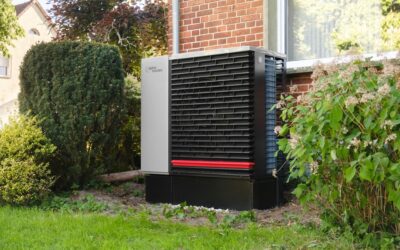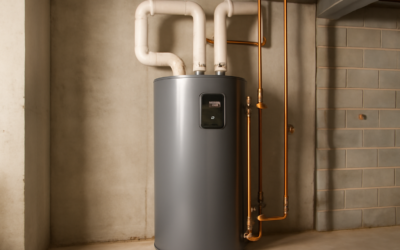
Every time a ground source heat pump runs in summer, it pulls heat out of your house and dumps it into the earth. A geothermal water heater setup intercepts some of that heat on the way out and sends it into your domestic hot water instead. The device that makes this happen is called a desuperheater, and in a typical home it can supply a large share of hot water during the cooling season for almost no extra operating cost.
The short answer: if you already have a geothermal heat pump, adding a desuperheater and a preheat buffer tank is one of the cheapest efficiency upgrades available, often cutting water heating costs by roughly 25 to 50 percent over a full year. If you want the heat pump to make all your hot water on demand, you need a full-demand (dedicated water-to-water) system, which costs more but works year round.
- How a Geothermal Water Heater Harvests Heat
- Savings by Season
- Buffer Tank Setup: The Two-Tank Method
- Scald Safety and Water Temperature
- Retrofit Feasibility: Can You Add One Later?
- General Cost Ranges
- Troubleshooting a Desuperheater That Underperforms
- When to Call a Licensed Professional
- Frequently Asked Questions
Savings swing with the seasons, the size of your loop, how much hot water your household uses and how the tanks are plumbed. Getting the plumbing right matters more than most homeowners expect, so it pays to understand how the pieces fit before you call an installer.
How a Geothermal Water Heater Harvests Heat
A geothermal heat pump compresses refrigerant, which raises its temperature well above what the house needs. The hottest refrigerant, right after the compressor, is called superheated gas. It can reach 160F to 200F or more. A desuperheater is a small double-walled heat exchanger placed on that hot gas line. A tiny circulator pump moves water from the bottom of a storage tank through the exchanger and back, soaking up heat that would otherwise go to the ground loop in summer or be used for space heating in winter.
Because the exchanger only captures the superheat portion of the refrigerant cycle, it grabs roughly 10 to 20 percent of the unit’s total heat output. That sounds small, but hot water loads in most homes are modest, so a few thousand BTUs per hour running for many hours adds up quickly.
Desuperheater vs full-demand systems
- Desuperheater (partial): Only makes hot water when the heat pump is already running for heating or cooling. Low cost add-on, usually built into or bolted onto the unit.
- Full-demand or dedicated water-to-water: The heat pump switches into a water heating mode whenever the tank calls for heat, independent of space conditioning. Much higher output, higher equipment cost.
- Combination units: Some heat pumps offer both a desuperheater and a hot water priority mode, giving you the best of each at a mid-range price.
Heat exchange water heaters of this type share one idea: move heat rather than make it. A resistance element turns one unit of electricity into one unit of heat. A heat pump moves three to five units of heat for each unit of electricity, and a desuperheater rides along on energy you are already paying for.
Savings by Season
The summer is where desuperheaters shine. Your heat pump runs long cycles to cool the house, and the heat it removes is literally free. In a busy cooling month, many households see the desuperheater cover most or even all of their hot water, with the backup tank element barely turning on.
Winter is different. The desuperheater is now borrowing heat that would have warmed your rooms, so the hot water is not free, but it is still produced at heat pump efficiency, far better than a resistance element. Expect solid savings, just smaller than in summer.
Spring and fall are the weak months. When the weather is mild the heat pump barely runs, so the desuperheater has little to offer, and your conventional tank does most of the work. That seasonal pattern is exactly why the tank setup matters so much.
| Season | Heat pump runtime | Typical hot water share |
|---|---|---|
| Summer | Long cooling cycles | High, often most of demand |
| Winter | Long heating cycles | Moderate to high |
| Spring and fall | Short or no cycles | Low |
Buffer Tank Setup: The Two-Tank Method
The most common mistake is plumbing a desuperheater into a single electric water heater. The element keeps the tank near its setpoint, so the desuperheater has almost no cold water to heat and ends up doing very little. The fix is a two-tank arrangement.
- Preheat (buffer) tank: An unpowered or element-disconnected storage tank, often 50 to 80 gallons, receives cold water from the main. The desuperheater circulates water from the bottom of this tank and returns it hot to the top.
- Finishing tank: Your regular water heater draws preheated water from the buffer tank. If the buffer is already at 120F or above, the finishing tank’s burner or element stays off. If it is lukewarm, the finishing tank only tops it up.
- Circulator and check valve: The small pump runs only when the compressor runs. A check valve prevents thermosiphoning backward when the system is idle.
- High-limit control: Most desuperheaters include a temperature limit that stops circulation when water gets too hot, which protects the exchanger and reduces scald risk.
Keep the pipe run between the heat pump and buffer tank short and insulated. Long, cold runs bleed away the modest heat the desuperheater collects. Pipe insulation is inexpensive and worth adding on every hot line in the loop.
Scald Safety and Water Temperature
Desuperheaters can push buffer tank water well above normal household temperatures on hot summer days. That makes anti-scald protection essential. Install a thermostatic mixing valve on the hot outlet of the finishing tank, set to deliver around 120F at the fixtures. This is especially important in homes with young children or older adults.
Set the finishing water heater near 120F as well, and never disable its temperature and pressure relief valve. If you ever need to service a tank, shut off the power or fuel supply, close the cold inlet, open a hot faucet to relieve pressure and let the water cool for several hours before draining. Water above 140F causes serious burns in seconds.
Retrofit Feasibility: Can You Add One Later?
Adding a desuperheater to an existing geothermal system is usually possible, but not always simple. Start by checking these points:
- Factory port or kit: Many heat pumps come with desuperheater connections already on the cabinet, often capped off. If yours has them, the retrofit is mostly plumbing and wiring a circulator.
- Aftermarket exchangers: Units without ports can sometimes accept an external exchanger brazed into the hot gas line. This requires refrigerant recovery and recharge by a licensed HVAC technician.
- Space for a second tank: You need floor space near the water heater for a buffer tank, plus a floor drain or pan.
- Water quality: Hard water scales the small exchanger passages. In hard water areas, a softener or periodic descaling keeps output from dropping.
- Heat pump age: On an older unit near the end of its life, it may make more sense to wait and choose a replacement with built-in hot water capability.
If you are planning a new geothermal installation, add the desuperheater from day one. The incremental cost is small at that stage, and the installer can place the buffer tank and piping in the ideal spots.
General Cost Ranges
Prices vary by region and equipment, so treat these as rough planning figures rather than quotes:
- Desuperheater on a new install: often a few hundred to around a thousand dollars in added cost.
- Retrofit with factory ports: commonly $800 to $2,000 including buffer tank, circulator and plumbing.
- Retrofit requiring refrigerant work: can climb to $1,500 to $3,000 or more.
- Full-demand water-to-water system: typically several thousand dollars on top of the base heat pump.
Payback for a desuperheater is frequently just a few years in homes with high hot water use and long cooling seasons. Households of one or two people in mild climates see slower returns. Federal and utility incentives for geothermal systems sometimes cover the desuperheater as part of the package, so ask about them before you sign.
Troubleshooting a Desuperheater That Underperforms
If your bills did not drop, work through these common causes:
- Single-tank plumbing: The element or burner is doing all the work. Convert to a two-tank setup.
- Circulator not running: Listen for the pump when the compressor is on. A failed pump or a tripped switch on the unit is common.
- Air in the loop: Trapped air stops circulation. Purging the lines usually fixes it.
- Scaled exchanger: Output drops gradually in hard water areas. Descaling restores it.
- Pump switched off in winter: Some owners disable the desuperheater in winter to prioritize space heating. Check the switch position and decide which you prefer.
- Buffer tank element still wired: If the preheat tank’s element is active, it competes with the desuperheater. Disconnect it (power off first) or leave it off at the breaker.
When to Call a Licensed Professional
Anything touching the refrigerant circuit requires an EPA-certified, licensed HVAC technician. Brazing an exchanger into the hot gas line, recovering refrigerant and recharging the system are not DIY tasks. Water heater replacements and new tank connections should follow local plumbing code, and many jurisdictions require a permit. A licensed plumber can handle the buffer tank, mixing valve, relief valve discharge and drain pan. If your finishing tank is gas fired, any gas connection work belongs to a licensed pro, and if you ever smell gas, leave the house and call the utility. New circuits for circulators or tank elements should be run by a licensed electrician.
For homeowners with a working geothermal system and a clear path to a second tank, a desuperheater is one of the most practical ways to squeeze more value out of equipment you already own. For new builds, a full-demand geothermal water heater can make the ground loop your main hot water source all year.
Frequently Asked Questions
Does a desuperheater make hot water in winter?
Yes, as long as the heat pump is running for space heating. The hot water is not free in winter because the heat is borrowed from home heating, but it is produced at heat pump efficiency, which is far cheaper than a resistance element.
How much can a geothermal water heater save?
Many households cut water heating costs by roughly a quarter to a half over a year with a desuperheater and buffer tank. Full-demand systems can save more because they make hot water year round, not just when the heat pump runs.
Do I need two water heaters for a desuperheater?
You need two tanks for the best results: an unpowered preheat tank fed by the desuperheater and a regular finishing tank. A single-tank setup works poorly because the element keeps the water warm before the desuperheater can contribute.
Can I add a desuperheater to my existing geothermal unit?
Often yes. Units with factory desuperheater ports are straightforward retrofits. Units without ports may need an external exchanger installed by a licensed HVAC technician, which involves refrigerant work and costs more.
Is desuperheater water safe to use?
Yes. Desuperheaters use double-walled exchangers to separate refrigerant from potable water. Because summer temperatures can run high, install a thermostatic mixing valve so fixtures receive water around 120F.