A few feet below your yard, the ground stays a steady 50 to 60°F year-round, and that stability is the secret behind the most efficient heating and cooling system you can install. A ground source heat pump, often called geothermal, moves heat between your home and the earth instead of burning fuel. The upfront cost is high, but a ground source heat pump can slash energy bills for decades. This guide explains how it works, what it costs, and whether it makes sense for you.
- How a Ground Source Heat Pump Works
- Efficiency That Beats Everything Else
- Types of Ground Loops
- What It Costs
- Tax Credits and Incentives
- The Payback Math
- Pros and Cons
- Why Professional Installation Is Non-Negotiable
- Is Geothermal Right for You?
- Ground Source vs. Air Source Heat Pumps
- What the Installation Process Looks Like
- Maintenance and Longevity
- The Bottom Line
How a Ground Source Heat Pump Works
Rather than creating heat, a geothermal system moves it. In winter, fluid circulating through buried pipes (the ground loop) absorbs warmth from the earth and the heat pump concentrates it to warm your home. In summer, the process reverses: the system pulls heat out of your house and dumps it into the cooler ground. Because the earth’s temperature barely changes seasonally, the system always works against a mild source, which is why it is so efficient. It can also make free or cheap hot water as a byproduct.
Efficiency That Beats Everything Else
Geothermal is the efficiency champion of home HVAC. Its performance is measured in COP (coefficient of performance) for heating and EER for cooling. A good ground source heat pump delivers a COP of 3.5 to 5, meaning it produces 3.5 to 5 units of heat for every unit of electricity it uses. Air-source heat pumps and furnaces cannot match that, especially in cold weather, because the ground source never fights extreme outdoor air temperatures. Real-world savings on heating and cooling bills often run 30-60% compared with conventional systems.
Types of Ground Loops
The buried loop is the heart of the system, and the design depends on your land, soil, and budget:
- Horizontal closed loop: pipes buried in trenches 4-6 feet deep across a wide area. The cheapest option, but it needs significant yard space.
- Vertical closed loop: pipes dropped into boreholes drilled 150-400 feet deep. Ideal for small lots since it needs little surface area, but drilling raises the cost.
- Pond/lake closed loop: coils submerged in a suitable body of water on your property. The least expensive if you have a large enough pond.
- Open loop: uses well water pumped through the heat pump and returned. Efficient where abundant clean groundwater exists, but subject to local rules and water quality.
What It Costs
There is no way around the high entry price. A complete residential geothermal installation typically runs $15,000 to $40,000, with vertical loops and larger homes at the top of the range. The loop field and drilling or trenching are the biggest cost drivers. That is far more than a conventional furnace and AC, which is the main barrier for most homeowners.
Tax Credits and Incentives
Incentives take a big bite out of that cost. The federal residential clean energy tax credit has covered a substantial percentage of geothermal installation costs, and many states, utilities, and local programs add rebates on top. These incentives can reduce the net cost dramatically, so check the current federal credit and your local utility programs before ruling geothermal out on price. Because tax law and program funding change, confirm the exact current credit percentage and eligibility with a tax professional or the program itself.
The Payback Math
Geothermal is a long-game investment. After incentives, the premium over a conventional system often pays back through energy savings in roughly 5 to 12 years, depending on your climate, energy prices, and how much you heat and cool. After that, you enjoy decades of very low operating costs. The equipment helps here too: the indoor heat pump commonly lasts 20-25 years, and the ground loop itself is often rated for 50+ years, far longer than a furnace or air conditioner.
Pros and Cons
Advantages:
- The lowest operating costs of any HVAC system
- Heats and cools with one system, plus can provide hot water
- Very long equipment life and a loop field that lasts generations
- No outdoor condenser noise and no combustion or carbon monoxide risk
- Consistent comfort even in extreme cold, unlike air-source heat pumps
Considerations:
- High upfront cost and significant installation disruption
- Requires suitable land for trenching or space for drilling
- Payback takes years, so it suits long-term homeowners
- Fewer qualified installers in some regions
Why Professional Installation Is Non-Negotiable
This is not a DIY project. The ground loop must be sized and installed by specialists, requiring excavation or deep drilling, precise loop sizing for your heating and cooling load, and correct fluid charging. The heat pump connects to your ductwork or hydronic system, and refrigerant work requires an EPA-certified technician. An undersized or poorly installed loop cripples performance permanently, so use an experienced, certified geothermal contractor and get a proper load calculation and site assessment first.
Is Geothermal Right for You?
A ground source heat pump makes the most sense if you plan to stay in your home long-term, have suitable land or lot conditions, live in a climate with real heating and cooling needs, and can handle the upfront cost or finance it against the incentives and savings. For a new build or a major renovation, it is easier and cheaper to include from the start.
Ground Source vs. Air Source Heat Pumps
The most common comparison is with an ordinary air-source heat pump, which is far cheaper to install. The key differences:
- Efficiency: ground source is significantly more efficient, especially in cold weather, because it draws from stable 50-60°F earth rather than frigid outdoor air.
- Cold-weather output: an air-source unit loses capacity as temperatures drop; a ground-source system holds steady all winter.
- Upfront cost: air source wins dramatically, often a fraction of geothermal’s installed price.
- Lifespan: geothermal’s indoor equipment and especially its ground loop far outlast an air-source condenser.
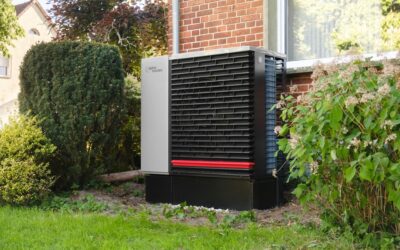
- Noise and aesthetics: geothermal has no outdoor condenser humming in the yard.
Air-source heat pumps have improved enough that they are the practical pick for many homes, but for lowest lifetime operating cost and best cold-climate performance, ground source remains the leader.
What the Installation Process Looks Like
A geothermal install is a bigger project than most HVAC work, and knowing the steps sets expectations. First a contractor performs a load calculation and site assessment to size the system and choose a loop type based on your soil, lot size, and water resources. Then comes the loop installation: excavation and trenching for a horizontal loop, or drilling boreholes for a vertical loop, which is the most disruptive and equipment-intensive phase. The loop is connected to the indoor heat pump, which ties into your ductwork or a hydronic distribution system. Finally the loop is filled and pressure-tested, the refrigerant circuit is charged by a certified technician, and the system is commissioned. Expect the yard work to take several days and to disturb landscaping that will need to recover.
Maintenance and Longevity
One underrated advantage of geothermal is how little it demands once installed. There is no outdoor condenser exposed to weather, so nothing corrodes in the elements. The indoor heat pump needs routine care similar to any HVAC system: change or clean the air filter regularly, keep the equipment clean, and have a professional check the system and loop fluid periodically. The buried loop itself is essentially maintenance-free and commonly rated to last 50 years or more, often outliving the house’s other systems entirely. This low upkeep, combined with rock-bottom operating costs, is a big part of geothermal’s long-term value story.
The Bottom Line
A ground source heat pump is the most efficient, longest-lasting way to heat and cool a home, tapping the stable temperature of the earth to cut energy bills by a third or more. The catch is the $15,000-$40,000 upfront cost, softened significantly by federal and local incentives. For long-term homeowners with the right property, it is a premium system that pays back over years and then keeps saving for decades, but only when installed by a qualified geothermal professional.