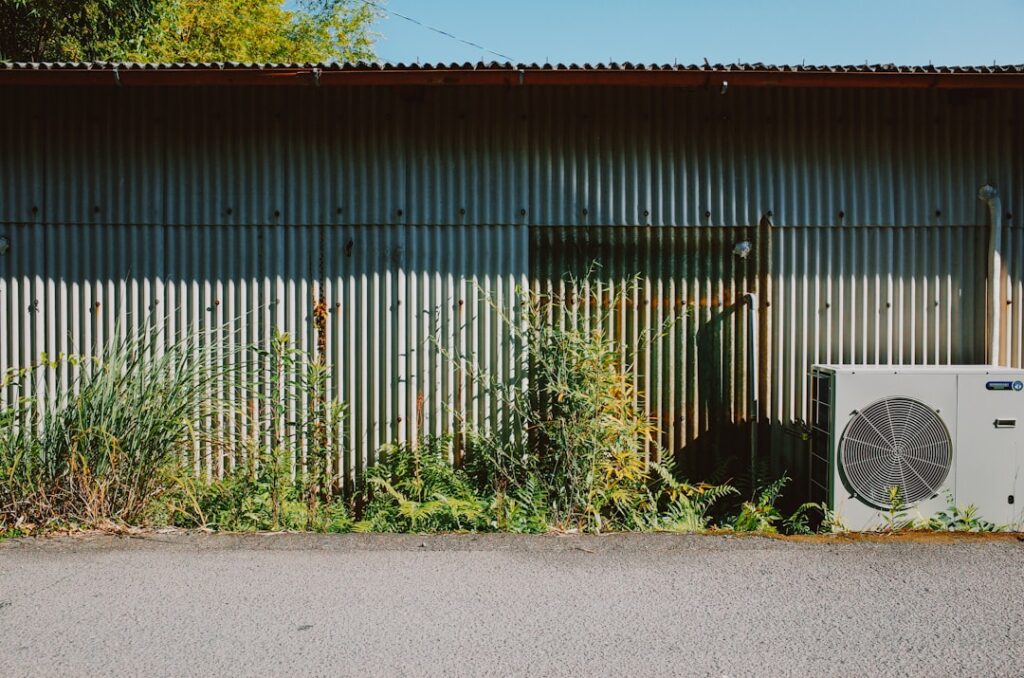
If you have ever glanced at the metal box beside a house and wondered whether it was air conditioning or something more, you are not alone. Homeowners often ask what does a heat pump look like, because from the outside it closely resembles a central air conditioner. This guide describes the outdoor and indoor components, how to tell a heat pump from an AC, and the visual clues that give it away.
- The Outdoor Unit
- Heat Pump vs Air Conditioner Appearance
- The Indoor Component
- Ducted Heat Pump Appearance
- Ductless Mini Split Appearance
- Common Sizes
- Visual Signs You Have a Heat Pump
- Where Heat Pumps Are Installed
- Package Units vs Split Systems
- Mini Split vs Central Appearance
- Why It Matters to Know
- Reading the Nameplate
- Ground-Source Heat Pumps Look Different
- Telling It Apart From a Furnace
- Common Points of Confusion
- Final Takeaway
The Outdoor Unit
The most recognizable part is the outdoor unit, usually installed on a concrete pad or bracket beside or behind the home. It is a rectangular or square metal cabinet, typically 2 to 4 feet wide and tall, with:
- A large fan visible through a grille on the top or front
- Thin metal fins (the coil) wrapping around the sides
- Two insulated copper refrigerant lines running into the house
- An electrical disconnect box mounted on the wall nearby
At a glance, this looks almost identical to a central air conditioner condenser, which is why the two are so easily confused.
Heat Pump vs Air Conditioner Appearance
Because both use the same basic outdoor cabinet, telling them apart takes a closer look. The key differences include:
- The reversing valve: A heat pump has an extra brass component and lines inside that let it run in both directions; you may see more copper tubing.
- The data label: The nameplate on the unit lists model information; heat pumps show heating specifications (HSPF) and often the word “heat pump.”
- Operation in winter: A heat pump runs and blows steam or shows a defrost cycle in cold weather; an AC sits idle in winter.
The Indoor Component
What the indoor part looks like depends on the system type.
- Ducted (central) heat pump: Connects to an indoor air handler or furnace, a large cabinet usually in a basement, closet, or attic, that distributes air through ducts and vents.
- Ductless mini split: Uses a sleek, wall-mounted indoor head, a long white plastic unit near the ceiling, or a floor-mounted or ceiling-cassette unit.
With a ductless system, the indoor unit is clearly visible on the wall; with a ducted system, the heat pump moves air through the same registers as a furnace.
Ducted Heat Pump Appearance
A ducted heat pump looks like a central AC outside paired with an air handler inside. The air handler is a tall metal cabinet, often resembling a furnace, connected to ductwork. From the living space, you only see supply and return vents; there is no visible clue in the rooms themselves that it is a heat pump rather than a furnace and AC.
Ductless Mini Split Appearance
Ductless heat pumps are the most visually distinctive. The indoor head is a smooth, rounded white rectangle about 30 to 40 inches wide, mounted high on a wall. Air blows from a louvered vent at the bottom. The outdoor unit is smaller than a central condenser. A small line-set cover, a white plastic channel, runs down the exterior wall hiding the refrigerant lines.
Common Sizes
Outdoor heat pump units vary with capacity. A small single-zone ductless outdoor unit might be just 2 feet wide and a foot deep, while a whole-home ducted heat pump condenser is comparable to a central AC at roughly 3 feet square. Larger homes need bigger units or multiple units. The physical size roughly correlates with the heating and cooling capacity in tons.
Visual Signs You Have a Heat Pump
If you are trying to identify an existing system, look for these clues:
- The outdoor unit runs in winter to provide heat, not just in summer
- You see the outdoor unit steaming or dripping during cold-weather defrost cycles
- The thermostat has an “emergency heat” or “auxiliary heat” setting, a telltale heat pump feature
- The nameplate lists HSPF ratings and heating performance
- There is no gas line or flue for combustion heating
Where Heat Pumps Are Installed
Outdoor units sit on a pad at ground level, on a wall bracket, or on a rooftop for some buildings. In snowy climates they are often raised on a stand a foot or more off the ground so snow does not block airflow. Indoor air handlers live in basements, utility closets, garages, or attics, while ductless heads are placed high on interior walls in the rooms they serve.
Package Units vs Split Systems
Heat pumps come in two physical layouts that look quite different. A split system, the most common, separates the outdoor condenser from an indoor air handler, connected by refrigerant lines. A packaged heat pump combines all components in a single large cabinet, usually mounted on the roof of a commercial building or on a slab beside a home, with ductwork running directly into the structure. Packaged units are bulkier boxes with no separate indoor component visible. If you see one big metal cabinet doing all the work with ducts entering the building, it is likely a packaged system.
Mini Split vs Central Appearance
The two residential heat pump styles are easy to tell apart once you know the cues. A central (ducted) heat pump uses a large outdoor condenser matched to an indoor air handler, and inside the home you only see vents. A ductless mini split uses a smaller outdoor unit and one or more visible indoor heads mounted on walls, with slim line-set covers running down the exterior. If a home has sleek white units mounted high on interior walls and no ductwork, it is a ductless mini split heat pump rather than a central system.
Why It Matters to Know
Identifying your system helps with maintenance, thermostat settings, and repairs. Knowing you have a heat pump explains why the outdoor unit runs in winter and why the thermostat behaves differently from a furnace. It also matters when buying a home, since a heat pump provides both heating and cooling in one system, which affects energy costs and maintenance planning.
Reading the Nameplate
The metal data label on the outdoor unit is the surest way to confirm what you have. Look for the model number and specifications; a heat pump lists heating performance ratings such as HSPF or HSPF2 and shows heating capacity in BTU, while a plain air conditioner lists only cooling data. The model number itself often contains a clue, with letters indicating a heat pump versus a straight cooling condenser. If the label is faded, photograph the model number and look it up online to identify the equipment type.
Ground-Source Heat Pumps Look Different
Not all heat pumps have an outdoor fan unit. Air-source heat pumps, the common type, use the fan-equipped cabinet outside. Ground-source (geothermal) heat pumps, by contrast, have no outdoor condenser at all; instead, they circulate fluid through buried loops in the yard and house all their equipment indoors in a unit resembling a large furnace or water heater. So if a home is heated and cooled by a heat pump but you see no outdoor unit, it may be geothermal, with the loops hidden underground.
Telling It Apart From a Furnace
Inside the home, distinguishing a heat pump air handler from a gas furnace is useful. A gas furnace has a flue or vent pipe carrying combustion gases outside and a gas line feeding it, and it produces heat by burning fuel. A heat pump air handler has no flue, no gas line, and no burner; it simply moves air over a coil fed by refrigerant from the outdoor unit. The presence of an outdoor unit that runs in winter, combined with the absence of a combustion vent, confirms a heat pump.
Common Points of Confusion
People often mistake a heat pump for other equipment. It is not an air conditioner, though it looks identical outside, because it also heats. It is not a furnace, because it does not burn fuel. It is not a boiler, which heats water for radiators. A dual-fuel or hybrid system pairs a heat pump outdoor unit with a gas furnace indoors, switching between them, which can make identification tricky. When in doubt, watch whether the outdoor unit runs on a cold day and check the thermostat for an emergency-heat setting.
Final Takeaway
So what does a heat pump look like? Outside, it is a metal cabinet with a fan and coil fins that closely resembles a central air conditioner; the giveaways are winter operation, defrost steam, extra refrigerant tubing, and an emergency-heat thermostat setting. Inside, it is either a furnace-like air handler or a sleek wall-mounted ductless head. Once you know the visual cues, a heat pump is easy to recognize and understand.