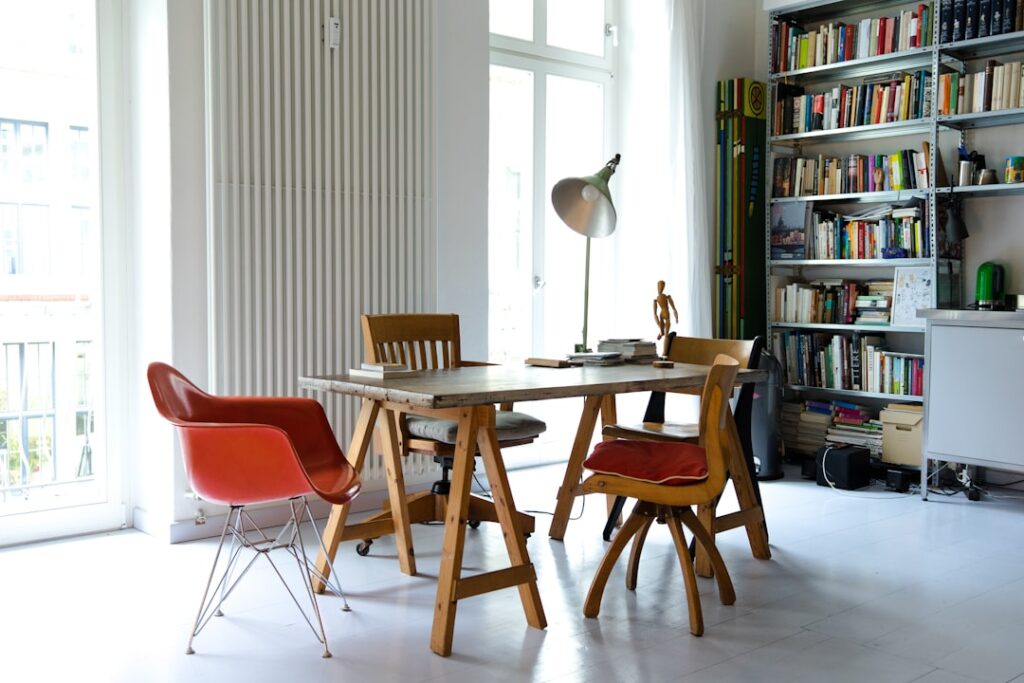
Few finishes divide flooring opinion as sharply as a high-shine surface. Glossy flooring bounces daylight, expands the visual size of a room, and reads luxurious in marble, polished concrete, and high-end laminate — but every scratch and footprint shows up like a fingerprint on a black phone. The question isn’t whether gloss is beautiful, it’s whether it suits your traffic, your light, and your tolerance for daily upkeep. This guide covers the gloss-level science, the products that handle wear, and the install rules that protect a mirror-finish floor.
What “Glossy” Actually Means in Flooring
Gloss is measured in gloss units (GU) on a 60-degree gloss meter. Matte sits at 0 to 10 GU, satin at 10 to 35, semi-gloss at 35 to 70, and high-gloss at 70 to 100. True mirror finishes — the kind you see on polished marble or piano-finish hardwood — read 90 GU and above. Anything sold as “ultra gloss” or “super gloss” laminate measures around 80 to 95 GU. By comparison a typical satin polyurethane on hardwood measures 25 to 35 GU.
Three categories deliver legitimate high-gloss floors: polished natural stone (marble, granite, terrazzo), porcelain tile with polished surface, and ultra-gloss laminate or LVP with thicker UV-cured topcoats. Each category behaves differently under traffic.
Pros of Glossy Flooring
Light reflectivity is the headline benefit. A glossy floor bounces ambient and direct light around a room, increasing perceived brightness by 20 to 40 percent versus matte alternatives. North-facing rooms with limited daylight benefit dramatically. Glossy surfaces also clean smoother — dust, hair, and crumbs sweep up easily because there is no surface texture to grab debris.
- Visual brightness — bounces light, expands perceived room size
- Easy debris removal — smooth surface releases dirt without grabbing
- Luxurious appearance — reads premium in marble, granite, ultra-gloss laminate
- Stain resistance — sealed gloss surfaces reject most spills if cleaned promptly
- Color depth — high gloss intensifies dark wood tones and stone veins
Cons and Hard Realities
Scratch visibility is the headline complaint. Light scratches on glossy laminate or vinyl read as bright streaks against the reflective surface. The same scratch on a matte floor would be invisible at three feet. Heavy-traffic rooms typically dull the finish within 18 to 36 months, leaving uneven patches where shine has worn off in walking lanes while edges retain their original gloss.
Slip resistance drops sharply when glossy floors are wet. Polished marble and high-gloss porcelain measure 0.3 to 0.4 wet COF — well below the 0.6 ANSI A137.1 minimum for safe walking surfaces. For bathrooms, kitchens, and entryways, choose textured or honed finishes instead, or specify a slip-treatment additive in the topcoat.
Material Categories
Five product types compete in the glossy category. Each suits different applications and budgets.
- Polished marble and granite — natural stone, $14 to $30 per sq ft material, $25 to $50 installed. Refinishable indefinitely
- Polished porcelain tile — manufactured, $4 to $14 per sq ft material. Not refinishable but extremely hard
- Ultra-gloss laminate — Pergo Brilliance, Quick-Step Largo High Gloss, Krono Original Glamour. $3 to $7 per sq ft
- High-gloss LVP and SPC — Karndean Designflooring, Mannington Adura. $4.50 to $8 per sq ft
- Polished concrete — site-finished, $5 to $12 per sq ft total. Refinishable
Real Installed Costs in 2026
Numbers below cover a 600 sq ft kitchen and dining install.
- Polished marble (Carrara) installed: $18,000 to $30,000
- Polished porcelain tile installed: $6,000 to $13,500
- Ultra-gloss laminate installed: $3,300 to $7,500
- High-gloss SPC installed: $4,500 to $9,000
- Polished concrete (existing slab): $3,000 to $7,200
Where Each Material Wins
Polished marble belongs in formal entries, hotel-style master bathrooms, and feature spaces where the patina of natural stone justifies the price. Polished porcelain wins in modern kitchens and open-plan living because it delivers marble looks at a quarter of the cost. Ultra-gloss laminate fits bedrooms, hallways, and mid-budget remodels. Glossy LVP and SPC suit basements and rentals. Polished concrete owns commercial showrooms, modern lofts, and any space where a sealed industrial look matches the design.
Subfloor Prep and Install Rules
Subfloor flatness matters more on glossy flooring than on matte because reflective surfaces telegraph every imperfection. Tolerance should be 1/8 inch over 10 ft for glue-down or click-lock products, 1/16 inch over 10 ft for thin polished tile. Use Mapei Planiprep SC, Ardex K15, or USG Levelrock SLU 425 to level the substrate.
For polished porcelain on slab, use Mapei Ultraflex 2 or Laticrete 254 Platinum thinset with a 1/4 by 1/2 inch notched trowel. Beat tiles down with a tile-leveling system to avoid lippage — even 1/16 inch lippage reads as a glaring shadow line on a polished surface. For high-gloss laminate and LVP, leave a 5/16 inch expansion gap and stagger end joints by at least 8 inches.
Care and Maintenance That Preserves the Shine
Three habits keep glossy flooring looking new. First, daily dust removal with a soft microfiber mop — never abrasive brooms or beater-bar vacuums. Second, weekly damp-mop with a stone-safe (for marble) or laminate-safe cleaner. Bona Stone, Tile and Laminate is the gold standard. Third, immediate spill cleanup. Acidic spills (wine, citrus, vinegar) etch polished marble within minutes — wipe and rinse fast.
For polished marble, plan to rehone the surface every 7 to 12 years. Marble polishing services run $2 to $5 per sq ft and restore the original gloss. For porcelain and laminate, the gloss cannot be restored once it dulls — replacement is the only fix, which is why traffic-pattern wear matters so much in product selection.
Slip and Safety Considerations
Three precautions reduce slip risk on glossy floors. Place wool or rubber-backed rugs at every entry, in front of sinks, and at the base of stairs. Use a slip-resistant additive (TileLab SureGrip, Stone Care SlipGrip) on polished marble and porcelain in wet zones — these are clear penetrating treatments that improve wet COF without changing appearance. Reapply annually.
Avoid silicone or wax-based polishes that promise extra shine. They build up over time, dull the original finish, and turn slippery floors deadly when wet. Most flooring manufacturers void warranties if these products are used.
When to Skip Gloss Entirely
Glossy flooring is the wrong call in three scenarios. Households with three or more dogs that scratch the surface daily. Mudrooms and entries from snowy or rainy climates where wet floors create slip hazards. And busy commercial spaces over 1,000 sq ft where traffic patterns will dull walking lanes within months. For those rooms a matte or satin finish gives 80 percent of the look without the maintenance burden. The right finish always matches the actual lifestyle, not the catalog photo.
Prefer to explore on your own?
See how new flooring looks in your actual room in seconds — free, no signup.
Try the free Floor Studio →