
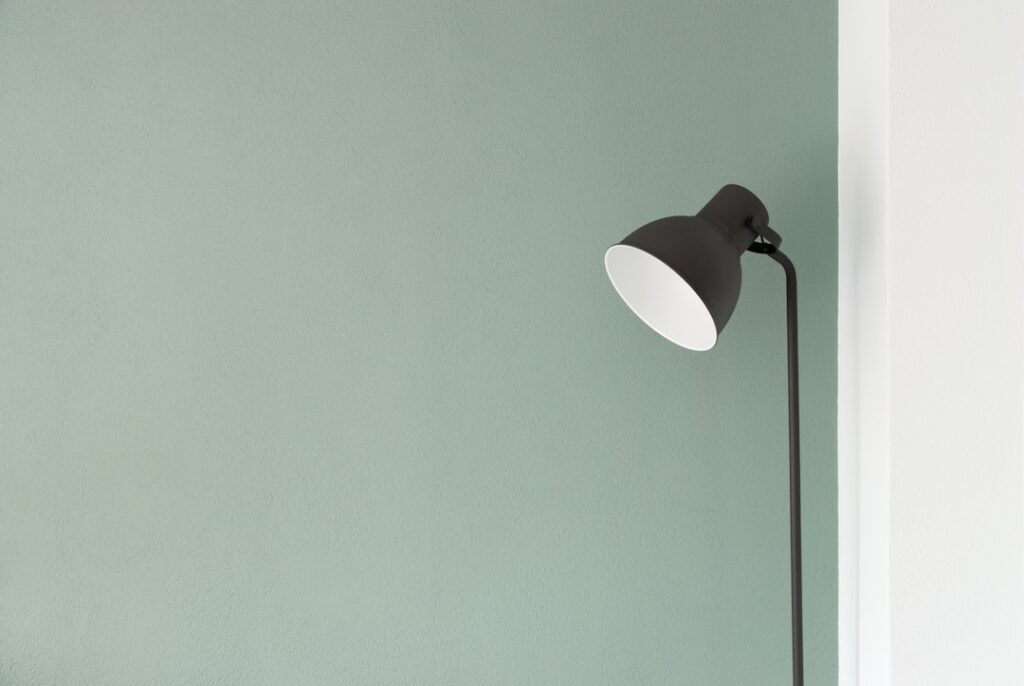
A gooseneck floor lamp is one of the most practical lighting tools you can add to a room. Its defining feature is the flexible, bendable neck that lets you aim light exactly where you need it, whether that is over a book, across a desk, or onto a cozy reading chair. That adjustability makes it far more versatile than a fixed-arm lamp.
This guide explains how gooseneck lamps work, the styles available, how to choose the right bulb and brightness, where to place them, and what to look for when buying. By the end, you will know how to pick a lamp that delivers the right light for your space.
What Is a Gooseneck Floor Lamp
The name comes from the long, segmented metal neck that bends and holds its position much like a goose’s neck. Unlike rigid lamps, the gooseneck stays wherever you point it, so you can fine-tune the angle and distance of the light throughout the day. Most stand 50 to 65 inches tall, putting the head at a comfortable height for seated tasks.
The design pairs a weighted base for stability, a slim vertical pole, and the flexible neck topped by a shade or head that directs the beam. This focused, directional quality is what sets it apart from ambient lamps that scatter light broadly.
Common Styles and Finishes
Gooseneck lamps span a wide range of looks, so you can match almost any decor. The construction is similar across styles; the differences are mostly in the head shape and finish.
- Industrial: Exposed metal, matte black or aged brass, often with a dome or barn-style shade. Suits lofts and modern farmhouse rooms.
- Mid-century modern: Slim profiles, walnut accents, and brushed brass or chrome.
- Minimalist: Clean lines, single finish, and a small directional head, ideal for contemporary spaces.
- Multi-head (tree) lamps: Several goosenecks on one pole, each independently adjustable for reading nooks or shared seating.
Popular finishes include matte black, brushed nickel, brass, and bronze. Match the lamp to other metal accents in the room, such as drawer pulls or picture frames, for a coordinated look.
Choosing the Right Bulb and Brightness
Because a gooseneck lamp is usually a task light, brightness and color temperature matter more than with decorative fixtures. For reading, aim for roughly 450 to 800 lumens at the head. LED bulbs are the clear choice today, running cool, lasting up to 25,000 hours, and using a fraction of the energy of incandescents.
Color temperature shapes the mood. A warm 2700K to 3000K bulb feels cozy and is great for living rooms and bedrooms, while a cooler 3500K to 4000K bulb improves focus for desk work and detailed hobbies. Choose a lamp with a dimmer or buy dimmable bulbs and a compatible switch to get flexibility across tasks.
Where to Place a Gooseneck Floor Lamp
Placement is where the gooseneck truly shines. Position it just behind and to the side of a reading chair so the head reaches over your shoulder and lights the page without glare. Beside a sofa, angle it to illuminate a specific seat rather than the whole room.
At a desk or craft table, set the lamp so the light falls from the side opposite your writing hand, which reduces shadows. In a bedroom, a gooseneck beside the headboard offers focused reading light without disturbing a partner. Keep the base out of walkways to avoid tripping over the cord.
Features Worth Looking For
A few practical features separate a lamp you will love from one that frustrates you. Prioritize these when comparing models.
- Weighted, wide base: Prevents tipping, especially important when the neck is extended at an angle.
- Smooth, firm neck: It should bend easily but hold its position without drooping over time.
- Built-in dimmer or USB port: Adds convenience for charging devices and adjusting light levels.
- Quality switch placement: A foot switch or accessible inline switch beats reaching up to the head every time.
Gooseneck vs. Other Floor Lamps
It helps to understand where a gooseneck lamp fits among other options. A torchiere lamp throws light upward to bounce off the ceiling, producing soft ambient light but no focused task lighting. An arc lamp reaches its head out over a seating area, useful when you cannot place a lamp directly beside a chair, but its position is fixed once set.
A gooseneck splits the difference with unmatched precision. You can point it straight down for reading, angle it toward a wall for indirect glow, or aim it at a workspace, all from the same fixture. If your priority is general room lighting, a torchiere or a shaded floor lamp is better; if you want light you can aim exactly, the gooseneck wins. Many rooms benefit from pairing the two, using ambient light plus a gooseneck for tasks.
Energy Efficiency and Smart Options
Modern gooseneck lamps pair well with energy-saving and smart features. An LED bulb in the 8- to 12-watt range produces the same light as a 60-watt incandescent while running cool to the touch, which matters since the head often sits close to your hands or a book. Look for bulbs labeled with both lumens and color temperature so you know exactly what you are getting.
Smart bulbs add another layer of convenience. A Wi-Fi or Bluetooth bulb lets you dim the lamp, change color temperature from warm to cool, and set schedules from your phone or a voice assistant. For a reading lamp, the ability to warm the light in the evening and brighten it for detailed work makes a single fixture far more versatile.
Care and Maintenance
Gooseneck lamps need little upkeep, but a few habits keep them working well. Dust the shade and neck regularly with a dry microfiber cloth, since buildup dulls metal finishes. Avoid forcing the neck past its natural range, which can fatigue the internal segments and cause sagging.
If a bulb flickers, check that it is seated properly and rated as dimmable if you use a dimmer. For metal finishes, skip abrasive cleaners; a slightly damp cloth followed by a dry buff is all that polished or brushed surfaces need.
Final Thoughts
A well-chosen gooseneck floor lamp brings adjustable, focused light to any corner that needs it, from a reading chair to a home office. Match the style to your decor, pick an LED bulb with the right brightness and color temperature, and place it where the flexible neck can do its job. The payoff is comfortable, glare-free light exactly where you want it.
Prefer to explore on your own?
See how new flooring looks in your actual room in seconds — free, no signup.
Try the free Floor Studio →

