Most people pick a gray because it feels safe, then discover that the shape and the grout matter far more than the shade. Gray mosaic tile can look crisp and modern on a shower floor or soft and vintage on a powder room wall, and the difference usually comes down to the pattern you choose and the joint color around it. Small tiles also bring practical benefits: hundreds of grout lines add grip underfoot, and the tiny pieces bend to the slope of a shower pan in a way large-format tile never can. If you want a short answer, choose a matte or textured porcelain mosaic for floors, a glossy ceramic or glass mosaic for walls and backsplashes, and pair it with a grout one or two shades lighter or darker than the tile.
Part of our Tile & Grout guide — explore the full guide →
Gray sits in the middle of the value scale, so it plays well with white fixtures, warm wood vanities, brass or black hardware, and both cool and warm wall paint. That flexibility is why it has outlasted several design trends. Each common shape is covered here, along with the finishes that hold up in wet areas, grout pairing, installation steps and what you can expect to spend.
Choosing Gray Mosaic Tile by Shape
Mosaics are sold on mesh-backed sheets, typically about 12 by 12 inches, so the shape determines both the look and how easily the sheet hides seams. Here are the shapes you will see most often in gray.
Hexagon
Hex tiles come in sizes from about 1 inch up to 3 inches across. The smaller sizes read as classic and old-house appropriate, especially in a pale dove gray with white grout. Larger hexes in charcoal or a concrete-look gray feel more contemporary. Because the edges interlock, sheet seams disappear well, which makes hex one of the more forgiving shapes for a first-time tiler.
Penny Round
Penny rounds are small circles, roughly 3/4 inch, set in a tight grid. They create more grout area than any other shape, which gives excellent slip resistance on a shower floor. The tradeoff is more grout to clean and seal. A mid-gray penny with a matching gray grout gives a calm, textured field; a light gray penny with charcoal grout looks busier and more graphic.
Herringbone
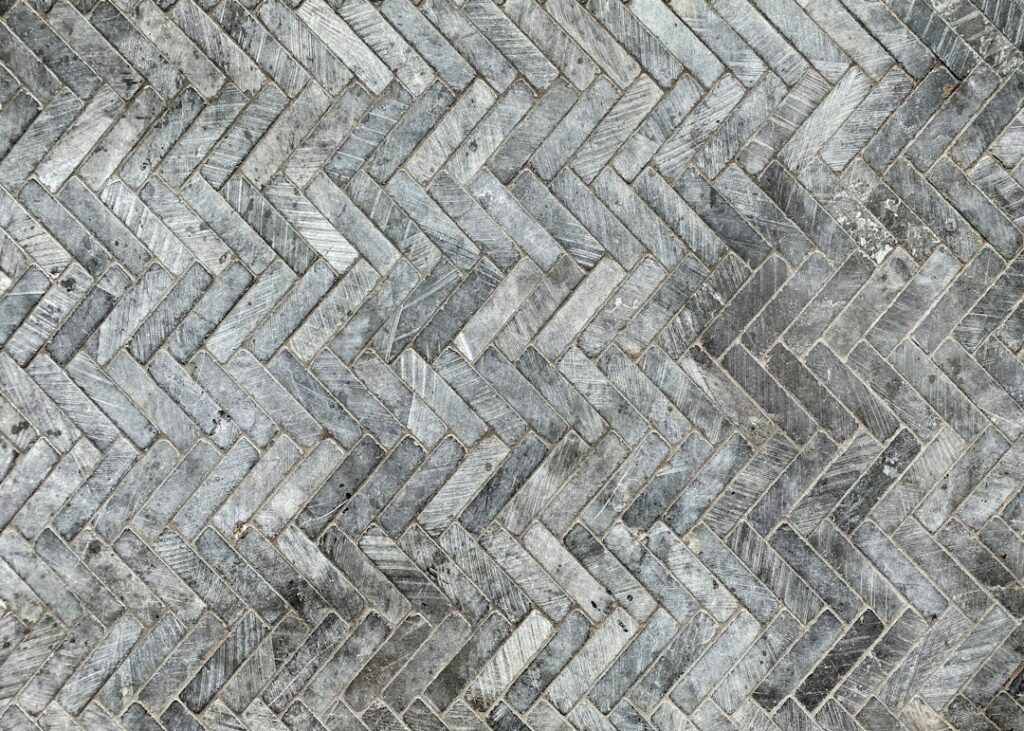
Herringbone mosaics use small rectangles, often 1 by 2 or 1 by 3 inches, set at angles in a zigzag. In gray marble or stone-look porcelain, herringbone adds movement to a backsplash without introducing another color. It also works as an accent stripe or niche lining in a shower.
Basketweave
Basketweave sheets combine pairs of rectangles with a small square dot at each intersection. The traditional version uses white rectangles with gray or black dots, but all-gray basketweave in two tones, such as light gray bars with dark gray dots, gives the same vintage texture with a softer contrast. It suits bathroom floors in older homes and laundry rooms.
Square, Linear and Picket
Simple 1 or 2 inch squares are the most budget-friendly and the easiest to cut. Thin linear sticks and picket shapes (elongated points) are mostly wall tiles and give a gray backsplash a more designed, stacked look.
Finishes and Materials That Hold Up
The material behind the color determines where a mosaic can safely go. Match the tile to the job rather than to the photo.
- Porcelain: dense, water resistant and the best all-round choice for shower floors. Look for a matte, honed or lightly textured surface.
- Glazed ceramic: softer and less expensive. Fine for walls, backsplashes and low-traffic floors, but less suited to heavy wear.
- Natural stone: gray marble, slate and limestone mosaics have beautiful variation but need sealing and gentle cleaners. Marble etches with acidic products.
- Glass: reflective and luminous on walls and backsplashes. Most glass mosaics are too slippery for floors unless specifically rated for them.
- Recycled or mixed media: blends of glass, stone and metal-look pieces for accent bands only.
For floors, check the slip resistance rating on the product data sheet. A wet dynamic coefficient of friction of 0.42 or higher is the common benchmark for level interior floors that get wet. Polished finishes look great on a wall and can be dangerous on a wet floor.
Where Gray Mosaics Work Best
Shower floors are the most natural home for a gray mosaic. The small tiles follow the slope toward the drain, the grout lines add traction, and a medium gray hides soap film and hard water spots better than white. A 2 inch hex or penny round in matte porcelain is a reliable pick.
Kitchen backsplashes are the second big use. A gray herringbone or linear mosaic behind a range gives texture without fighting a busy granite or quartz pattern. Choose a glazed or glass surface that wipes clean easily, and plan for a slightly darker grout so cooking splatter does not show.
Other good spots include shower niches, bathroom floors in small rooms, accent bands on a tub surround, fireplace surrounds (non-combustible tile only, following the manufacturer’s clearance guidance) and laundry or mudroom floors where grip matters. The site’s color-specific guides to blue, green and black mosaics cover bolder looks; gray is the option to reach for when you want texture without committing to a strong color.
Grout Pairing for Gray Mosaics
Grout makes up a large share of the visible surface on a mosaic, sometimes a quarter or more on penny rounds. That makes the grout decision as important as the tile decision.
- Matching gray grout: the field reads as one color and the shape becomes subtle texture. Best for small rooms and minimalist designs.
- White or off-white grout: outlines each piece and gives a classic, crisp look. Shows dirt faster on floors.
- Charcoal or black grout: dramatic and graphic, and very forgiving of stains on floors.
- Warm gray or greige grout: softens a cool gray tile so it sits better next to wood or brass.
Use unsanded grout for joints 1/8 inch and narrower on glass or polished stone to avoid scratching, and sanded or high-performance grout for wider joints on floors. Epoxy and single-component urethane grouts resist stains and do not need sealing, which pays off on a shower floor with hundreds of joints. Always grout a sample board first, because grout often dries a shade lighter than the wet color on the bag.
Tools and Materials
- Mesh-backed mosaic sheets plus 10 to 15 percent extra for cuts and breakage
- Polymer-modified thinset suited to the tile material (white thinset for glass and light stone)
- Small notched trowel, usually 3/16 inch V-notch or 1/4 by 3/16 inch for mosaics
- Tile nippers, a wet saw or a manual cutter for cleaner straight cuts
- Flat beating block and rubber mallet
- Grout float, sponges, buckets and a microfiber cloth
- Waterproofing membrane for showers and wet walls
- Safety glasses, gloves and a dust mask for mixing powders
How to Install Mosaic Sheets
- Prepare the substrate. Floors need to be flat and stiff; walls need cement board or a foam board, not drywall, in wet areas. Waterproof showers fully, including the pan, before any tile goes down.
- Dry lay and plan the layout. Lay a few sheets out to see how they fit. Start from the center of the most visible area and push cuts to corners or under trim.
- Spread thinset in small sections. Work about 3 square feet at a time so the mortar does not skin over. Comb in straight lines.
- Set and beat in the sheets. Press each sheet in place, then tap it flat with the beating block. Match the gaps between sheets to the joints within a sheet so seams vanish.
- Check coverage. Pull a sheet now and then to confirm full contact. Glass mosaics show trowel lines through the tile, so flatten the ridges on the back side if needed.
- Clean the joints. Scrape out any thinset that squeezed up before it hardens; it will show through grout.
- Grout after curing. Wait the cure time on the thinset bag, usually 24 hours. Grout diagonally, remove excess, and sponge lightly with a well-wrung sponge.
- Seal if required. Seal cement grout and natural stone after the grout cures, following the product label.
Troubleshooting Common Problems
Visible sheet lines: this is the most common complaint with any mosaic. Space sheets carefully and step back every few rows to look from a standing height. Slide sheets while the thinset is still wet to fix spacing.
Haze after grouting: cement grout often leaves a film. Buff with a dry microfiber cloth after the first sponge pass. For stubborn haze, use a haze remover safe for your tile type; acid-based removers will damage marble.
Uneven gray shading: stone and some porcelain mosaics vary from box to box. Blend tiles from several boxes as you go.
Lippage on penny rounds: small tiles can sit at different heights if the trowel ridges are not collapsed. A beating block fixes most of it while the mortar is fresh.
Grout darkening in the shower: usually trapped moisture or soap residue. Improve ventilation, squeegee after use, and consider epoxy grout when you regrout.
Cost Ranges
Material prices vary widely by material. As a general guide, basic ceramic and porcelain gray mosaics run about $8 to $20 per square foot, while marble, glass and specialty shapes often land between $20 and $45 or more. Professional installation for mosaics is higher than for large tile because of the detail work, typically $15 to $35 per square foot for labor, more for complex patterns, niches and shower pans. A small shower floor of 9 to 12 square feet might total a few hundred to a little over a thousand dollars installed, depending on waterproofing and prep. Prices change by region, so get at least two written quotes.
When to Hire a Pro
Backsplashes and small powder room floors are reasonable weekend projects for a careful DIYer. Bring in a professional tile setter for shower floors and pans, any job that needs a new mortar bed or waterproofing system, glass mosaics (which show every mistake), large natural stone areas, and any floor where the subfloor feels bouncy. Water damage from a failed shower pan costs far more than the labor you might save.
Gray mosaic tile is one of the most adaptable finishes you can choose. Pick the shape for the style, the material for the location, and the grout for how much contrast you want, and the result will look good for decades.
Frequently Asked Questions
Is gray mosaic tile good for a shower floor?
Yes. Small matte porcelain tiles follow the slope to the drain, and the many grout joints add traction. Medium gray also hides water spots and soap film better than white.
What grout color goes with gray mosaic tile?
Matching gray grout gives a calm, unified look; white outlines each piece for a classic style; charcoal adds contrast and hides stains on floors. Test on a sample board before committing.
Are glass mosaics safe on floors?
Most glass mosaics are wall tiles only and become slippery when wet. Use glass on backsplashes and shower walls unless the product is specifically rated for floor use.
Do I need to seal a gray mosaic?
Porcelain and glazed ceramic do not need sealing, but cement grout and natural stone do. Epoxy and urethane grouts do not require a sealer.
How do I hide the seams between mosaic sheets?
Keep the gap between sheets equal to the joints within each sheet, check from standing height every few rows, and adjust while the thinset is still wet.
Prefer to explore on your own?
See how new flooring looks in your actual room in seconds — free, no signup.
Try the free Floor Studio →