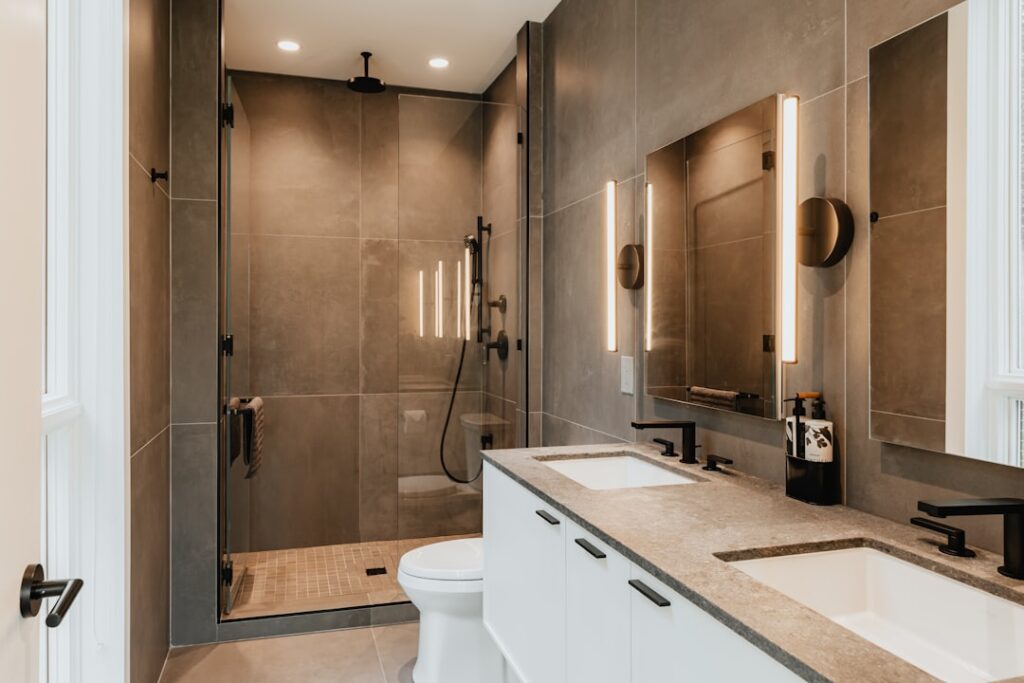
Gray has quietly become the default neutral for bathrooms, but the wrong shade can leave a space feeling like a parking garage instead of a spa. A well-executed gray shower reads calm, modern, and expensive; a poorly chosen one reads flat and cold. The difference almost never comes down to the gray itself. It comes down to undertone, finish, grout color, and how the light hits the surface every morning.
- Warm Gray vs. Cool Gray: The Decision That Matters Most
- Choosing Tile for a Gray Shower
- Grout Color Can Make or Break It
- Balancing the Cold Factor
- Lighting Your Gray Shower
- Popular Gray Shower Color Pairings
- Gray Shower Styles by Room
- Mixing Gray With Tile Shapes and Layouts
- Maintenance Realities
- Final Design Advice
After years of watching homeowners fall in love with a sample tile only to regret it once it covered three walls, I can tell you the planning matters more than the price tag. Here’s how to design a gray shower that still looks intentional a decade from now.
Warm Gray vs. Cool Gray: The Decision That Matters Most
Every gray leans somewhere. Cool grays carry blue or green undertones and pair naturally with chrome, white marble looks, and bright LED lighting. Warm grays, sometimes called “greige,” carry beige or taupe undertones and play well with brushed brass, wood vanities, and warmer bulbs.
The classic mistake is mixing the two. A cool blue-gray tile under a warm 2700K bulb looks muddy and slightly purple. Decide on warm or cool early, then carry that temperature through your tile, grout, fixtures, and bulb color.
Choosing Tile for a Gray Shower
Tile drives the entire look, and you have more options than ever in the gray family.
- Large-format porcelain (12×24 or larger): Fewer grout lines, a seamless modern look, and easier cleaning. Ideal for contemporary spaces.
- Marble-look porcelain: Soft gray veining over a white or pale base. Delivers a luxury feel without natural stone’s sealing and staining headaches.
- Subway tile in gray: Timeless, budget-friendly, and easy to source. A classic 3×6 in matte gray suits both modern and traditional baths.
- Gray penny or hex mosaic: Excellent for shower floors because the dense grout pattern adds slip resistance.
Expect porcelain tile to run roughly $3 to $12 per square foot for the material, with marble-look and large-format options at the higher end.
Grout Color Can Make or Break It
Grout is the detail homeowners overlook and contractors obsess over. With gray tile you have three strategies. Matching grout creates a seamless, monolithic wall that feels expansive. Slightly darker grout defines each tile and adds subtle structure. Contrasting grout, like white grout on dark gray tile, creates a graphic, high-energy pattern that can date quickly.
For shower floors, always go a shade or two darker than you think. Light grout on a shower pan shows soap scum and discoloration fast. A medium-to-dark gray grout hides the inevitable.
Balancing the Cold Factor
The single biggest complaint about gray showers is that they feel cold. The fix is contrast and texture, not abandoning gray. Bring in warmth with a teak shower bench, a brushed brass or matte black fixture set, or a band of natural stone niche tile. Even a single wood-look porcelain accent wall transforms the temperature of the room.
Plants, woven baskets, and warm-toned towels do more than you’d expect. A gray shower surrounded by warm accessories feels like a boutique hotel; the same shower with stark white everything feels clinical.
Lighting Your Gray Shower
Lighting is where good gray showers go to die. Gray is highly reflective of color temperature, so a cheap cool-white bulb can turn a beautiful greige into hospital blue. For warm grays, choose 2700K to 3000K bulbs. For cool grays in a modern bath, 3500K reads crisp without going harsh.
Install a damp-rated recessed light directly over the shower so the tile isn’t lit only from across the room. Even, layered lighting keeps the gray looking rich rather than gloomy in the corners.
Popular Gray Shower Color Pairings
Gray is endlessly flexible, which is both its strength and its trap. These pairings consistently look pulled-together:
- Gray and white: The crisp, timeless classic. Use white for the field and gray as an accent, or reverse it for drama.
- Gray and black: Matte black fixtures and a charcoal niche bring modern edge.
- Gray and wood: Wood-look floors or a vanity warm the whole room and soften the gray.
- Gray and brass: Brushed brass hardware adds glamour and breaks up the neutral palette.
Gray Shower Styles by Room
The right gray shower changes with the bathroom it lives in. In a small powder bath or a tight three-quarter bath, large-format light gray porcelain with matching grout keeps the space feeling open and uninterrupted. The fewer visual breaks, the bigger the room reads. Save the dark charcoals and high-contrast patterns for larger bathrooms that can absorb the drama.
In a primary suite, you have room to layer. A gray marble-look feature wall behind the shower, a wood-look vanity, and brushed brass fixtures create a spa-like retreat. For a guest bath that needs to please everyone, a timeless gray-and-white subway scheme is the safe, broadly appealing choice that won’t feel dated when it’s time to sell.
Mixing Gray With Tile Shapes and Layouts
Shape and layout matter as much as color. The same gray reads completely differently as a glossy 3×6 subway, a matte large-format slab, or a hand-cut zellige. A vertical-stack subway layout feels modern, a classic offset brick pattern feels traditional, and a herringbone accent strip adds movement without introducing a new color.
If you want interest without busyness, keep one gray tone and vary the tile format instead. A large-format gray on the main walls with a gray penny-round on the floor gives you texture and slip resistance while the consistent color keeps the look calm and cohesive.
Maintenance Realities
Mid-tone grays are forgiving on the walls, hiding water spots better than glossy white. Glossy gray finishes show more streaking than matte ones, so if low maintenance is your priority, lean matte for the walls and a textured mosaic for the floor.
Seal cement grout annually and squeegee glass doors after each use to keep mineral buildup from dulling the surface. With minimal upkeep, a gray shower holds its showroom look for years.
Final Design Advice
The best gray shower is one where the gray supports the room rather than dominating it. Pick your undertone first, choose grout that flatters the tile, warm the space with metal and wood accents, and light it correctly. Do those four things and your gray shower will feel timeless instead of trendy. Order full-size sample boards and tape them to the wall for a few days before committing. Gray changes character hour by hour as the daylight shifts, and the only way to trust a shade is to watch it live in your actual bathroom.