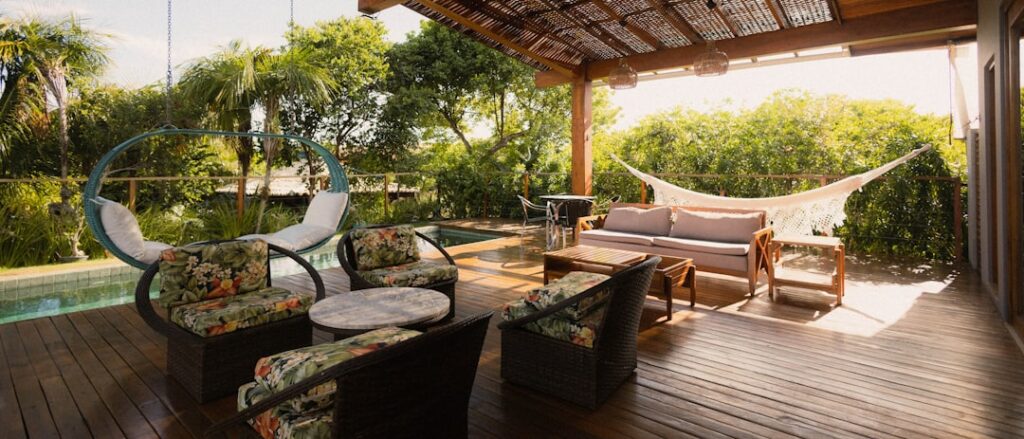
A pergola over pool areas is one of the most requested upgrades I see, and for good reason: it turns a bright, exposed slab into a resort-style lounge you can actually sit in at noon. But a pergola near water is not the same project as one over a dry patio. Chlorine, splash, humidity, wind load, and electrical code all change the math. Done right, it delivers 40 to 60 percent shade over the deck and lasts 20 years. Done wrong, the posts corrode, the footings heave, and you fight algae on every slat. Here is how to think it through before you build.
Over the Water or Over the Deck?
The first decision is whether the pergola spans the pool itself or shades the surrounding deck. Spanning the water looks dramatic but complicates everything. You cannot set posts in the pool, so the structure must clear-span, sometimes 16 to 20 feet, which means beefier beams such as double 2-by-12s or steel, plus posts landing on the deck edge. Anything hanging over the water, including hardware and fasteners, must be corrosion-rated, and dropped tools during a build become a real hazard to the liner and the crew.
The far more common and practical approach is a pergola over the deck along one side, typically the lounge or dining zone. You shade the seating without shading the swimming water, which most people actually want warm and sunny. A 12-by-16-foot pergola along the sunny edge of the deck covers a table and chairs and still leaves the pool open to the sky.
Size It for Coverage and Clearance
Pergola sizing over a pool follows the same rules as any patio structure, with two extra clearances. Keep the underside of the beams at least 8 feet above the deck so tall swimmers and pool nets clear it, and hold any post at least 4 feet back from the water’s edge so it does not become a trip hazard on a wet deck.
- Lounge zone: 12 by 14 feet minimum for two chaises and a side table.
- Dining zone: 12 by 12 feet for a six-seat table with chair pull-out room.
- Rafter spacing: 12 to 16 inches on center for roughly 50 percent shade; add spaced 1-by-2 top slats or a shade cloth for more.
- Post setback: 4 feet from the coping, more if a diving board or slide swings nearby.
Choose Materials That Shrug Off Chlorine
Material choice is where pool pergolas live or die. Splash-out water carries chlorine or salt, and both are hard on ordinary hardware and untreated wood. Standard galvanized fasteners will rust-streak within a single season near a saltwater system, staining the deck below.
Wood
Western red cedar and pressure-treated southern yellow pine both work if you seal them. Cedar resists rot naturally and stays cooler underfoot around the base, but budget for re-sealing every 2 to 3 years. Expect $30 to $60 per square foot installed for a quality wood pergola, more if you upgrade to clear, knot-free stock.
Aluminum and Vinyl
Powder-coated aluminum is my top pick over water. It never rots, shrugs off chlorine, and a louvered aluminum roof lets you close the slats before a storm or open them for full sun. Aluminum pergolas run $50 to $100 per square foot but essentially eliminate maintenance. Vinyl-clad structures sit in the middle and never need paint, though they can look plasticky up close and can chalk over years of UV.
Whatever the frame, specify stainless steel hardware, grade 304 near chlorine and grade 316 near salt, or hot-dip galvanized structural connectors. On a saltwater pool, stainless is not optional; anything less becomes a rust stain in a year or two.
Footings, Setbacks, and Wind
Footings around a pool need extra care because the deck is often a floating slab poured over disturbed backfill. Do not just anchor posts to the existing deck surface and hope. Core through it and pour dedicated footings that reach below the frost line, 12 inches in the South up to 48 inches in the North, on undisturbed soil or engineered fill.
Wind uplift is the quiet killer. A pergola is a sail, and a poolside location is usually open and exposed with nothing to break the gusts. In hurricane and high-wind regions, use through-bolted post bases rated for uplift and check whether your county requires an engineered design for open structures over a certain size. A louvered roof that opens to let wind pass reduces uplift dramatically and can be the difference between a repair bill and a total loss after a storm.
Electrical and Code Around Water
This is the part homeowners underestimate. The National Electrical Code treats anything near a pool as a special zone with strict rules. Any lighting, fan, or outlet mounted on the pergola must be GFCI protected, and there are firm clearances for overhead wiring above the water. Do not run a standard extension of your patio circuit out to a poolside pergola without a licensed electrician confirming the setback and bonding requirements first.
Metal pergolas near a pool typically must be bonded into the pool’s equipotential bonding grid to prevent shock hazards. That means a listed bonding lug and a number 8 solid copper conductor tying the frame to the grid. It is a small line item during construction and a genuine nightmare to retrofit once the deck is finished, so plan for it up front and get it inspected.
Shade, Vines, and Add-Ons
An open pergola alone only knocks down direct sun by about half, so most pool owners add a shade layer. A retractable canopy on a track gives you sun or shade on demand and comes off before winter. A tensioned shade sail rated for UV cuts 90-plus percent of rays and dries fast after a splash. Outdoor-rated shade cloth zip-tied to the rafters is the cheapest fix at a few dollars per square foot and buys real relief.
Vines look beautiful but think twice over a pool. Flowering climbers drop petals, attract bees, and add leaf litter that clogs the skimmer basket daily. If you want greenery, keep it on the far side of the structure away from the water, or choose a tidy evergreen like star jasmine that drops less debris and smells good on a warm evening.
Keep It Low-Maintenance
Humidity plus shade plus splash is a recipe for algae and mildew on any surface. Hose the pergola down when you clean the deck, and treat wood with a mildewcide-containing sealer so the black spots never take hold. Aluminum needs nothing more than an occasional rinse. Position the structure so morning sun hits the shaded slats and dries them out, which slows biological growth more than any coating you can brush on.
Skimmer load is the other maintenance angle. Every square foot of overhead structure eventually sheds dust and, in wooded lots, pollen and leaves into the water. Angle rafters so debris blows off the deck side rather than the pool side, and keep tall messy trees out of the shade equation entirely.
Design Ideas That Elevate the Space
Once the structure and safety are handled, the details are what turn a plain pergola into a poolside room. Outdoor curtains on a wire or rod between posts give you privacy, wind protection, and a resort feel, and they pull back out of the way when you want the open view. A run of dimmable string lights or low-voltage post lights makes the space usable after dark, when a lit pergola reflecting off the water is genuinely striking.
Think about what lives under it, too. A pair of chaise lounges, an outdoor sofa on a quick-dry cushion, or a dining set for wet swimsuits all work if you choose fabrics rated for sun and moisture. A ceiling fan on a rated damp box knocks the edge off still, humid afternoons. Consider integrating a small outdoor shower or a towel bar on a post so dripping swimmers are not tracking through the house.
Planting Around It
Container plantings soften the frame without dropping debris into the pool if you keep them off the water side. Tropical looks come easy with potted palms, bird of paradise, or ornamental grasses in warm zones; in cooler climates, hardy potted boxwood or dwarf conifers give year-round structure. Choose low-litter species and set the pots where runoff drains to the deck, not the pool, so you are not fighting the skimmer over every fallen leaf.
Budget and Payoff
A poolside pergola is a mid-range project with real returns. A modest 12-by-12-foot wood structure runs $4,000 to $8,000 installed; a premium 14-by-16-foot louvered aluminum system with lighting can hit $18,000 to $25,000. Compared with a full pool remodel, it is a cost-effective way to make the space usable through the hottest hours and adds genuine resale appeal. Spend the money where it counts, on corrosion-proof hardware, proper footings, and code-compliant electrical, and a pergola over your pool will still look sharp long after the liner needs replacing.