Drive any beach road in Florida or the Outer Banks and look up: the metal roofs that still look sharp after 20 years of salt spray are overwhelmingly aluminum. An aluminum roof is the corrosion specialist of the metal roofing family — it cannot rust, because there’s no iron in it, and the oxide film it forms on contact with air is self-healing armor rather than decay. That single property makes aluminum the default specification within a mile or two of saltwater, and a legitimate contender well inland. Here’s what aluminum does better than other metals, what it costs, and where its softness and price argue for something else.
Part of our Roofing guide — explore the full guide →
Why Salt Air Doesn’t Touch It
Steel roofing survives weather only through its coatings — galvanized zinc or Galvalume’s zinc-aluminum alloy sacrificing themselves to protect the iron beneath. Salt accelerates that sacrifice dramatically; cut panel edges and scratches become rust initiation points, and most steel roofing warranties explicitly exclude installations within 1,500 feet or so of saltwater. Aluminum plays a different game entirely. Exposed to oxygen, it instantly forms a microscopically thin aluminum-oxide layer that’s chemically inert; scratch it, and the layer re-forms in seconds. Salt spray, humid marine air, and acid rain that would perforate unprotected steel in a few years leave aluminum essentially untouched for decades. That’s why coastal building codes and most manufacturers’ marine-environment warranties funnel buyers to aluminum — it’s frequently the only metal roof warrantied on oceanfront homes.
Aluminum vs. Steel: The Honest Comparison
Steel remains the majority of residential metal roofing for good reasons — this comparison is about picking lanes, not declaring a winner. (Our metal roofing guide covers the full field, and the steel roofing guide makes steel’s case in depth.)
- Corrosion: aluminum, decisively — the entire reason it exists as a roofing product.
- Cost: steel, by 20 to 40 percent for comparable profiles.
- Dent resistance: steel. Aluminum is softer; hail, dropped branches, and careless foot traffic mark it more easily. Textured and stamped-shake aluminum profiles hide dings far better than smooth panels.
- Weight: aluminum, at roughly one-third steel’s density — about 0.5 pounds per sq ft versus 1.5. Meaningful for re-roofing older structures and roof-overs.
- Thermal movement: steel. Aluminum expands nearly twice as much per degree, demanding clip systems and installer competence on long panel runs to prevent oil-canning and fastener wear.
- Strength per gauge: steel, which is why aluminum panels run thicker (0.032 – 0.040 inch) to match the rigidity of thinner steel.
The practical rule most contractors use: within 2 miles of saltwater, aluminum, no debate. Hail country (Texas, the Plains, Colorado), steel. Everywhere else, price and profile availability usually decide.
What an Aluminum Roof Costs
Installed 2026 pricing for residential aluminum:
- Exposed-fastener corrugated/rib panels: $7 – $11 per sq ft installed
- Standing seam (concealed fastener): $11 – $17 per sq ft
- Stamped aluminum shingles/shakes (Interlock, Classic Metal Roofing): $12 – $18 per sq ft
A 2,000 sq ft roof lands roughly $22,000 to $34,000 for standing seam — typically $2,000 to $6,000 above equivalent steel and two to three times asphalt. The payback logic is lifespan and avoided replacements: 50 years is a conservative expectation, warranties commonly run 40 years to lifetime on the PVDF (Kynar 500) paint systems, and coastal insurers in hurricane states often discount premiums for Class 4 impact-rated and 140+ mph wind-rated aluminum systems. Aluminum also carries high recycled content — most residential product is 90 %+ recycled — and full end-of-life scrap value.
Panel Styles and the Look Question
Availability is the quiet limitation: not every metal-roofing contractor stocks or roll-forms aluminum, and rural markets may quote only steel by default. If aluminum is the right spec for your exposure, be prepared to call regional specialty suppliers or coastal-market installers rather than accepting the first “we only do steel” answer.
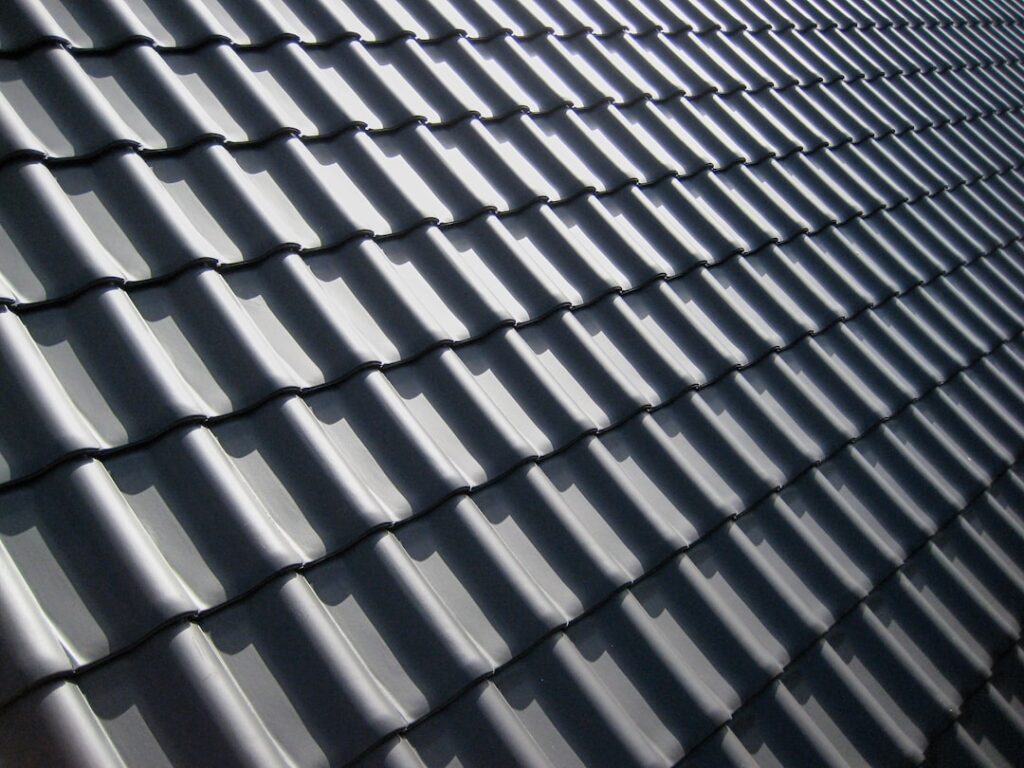
Aluminum comes in every metal-roof idiom: traditional 5V-crimp (the classic Florida beach-house look), mechanical-lock standing seam for modern architecture, and stamped profiles that convincingly imitate cedar shakes, slate, and tile at a third of tile’s weight. Color range is wide because nearly all residential aluminum ships with factory PVDF finishes, which hold color and gloss against UV better than the polyester paints common on budget steel. One aesthetic caution: broad, flat aluminum pans show oil-canning (visible waviness) more readily than steel; striated or ribbed pan profiles and 0.040 gauge all but eliminate it and are worth specifying on prominent rooflines.
Installation Details That Matter More With Aluminum
Two aluminum-specific requirements separate good installs from callbacks. First, thermal movement: a 40-foot aluminum panel moves close to half an inch across a 100°F temperature swing, so standing-seam systems must use floating clips, slotted fastening, or short panel runs — face-screwing long panels tight is a guaranteed fastener-leak factory. Second, galvanic isolation: aluminum in direct contact with copper, or washed by runoff from copper pipes and flashings, corrodes sacrificially. Keep copper, and to a lesser degree bare steel, out of contact and out of the drainage path; use stainless or coated fasteners rated for aluminum. Beyond those, practice mirrors any quality metal roof — solid deck or purlins per the profile, underlayment rated for high temp, and walking-pad care during install, since aluminum records boot damage steel would shrug off.
Energy Performance and Climate Fit
Aluminum’s efficiency story goes beyond the reflective paint every metal roof advertises. The metal itself has low thermal mass — it sheds absorbed heat almost immediately when the sun drops, where tile and asphalt radiate stored heat into the attic all evening. Paired with above-sheathing ventilation (the air gap under stamped-shingle profiles and batten-mounted systems), field studies have measured summer cooling-load reductions of 20 percent or more versus dark asphalt. Cool-roof-rated PVDF colors qualify for utility rebates in parts of the Sun Belt, and hurricane-zone insurers discount for the wind ratings mentioned earlier — worth a call to your agent before you pick a system, since the discount sometimes steers the profile choice.
Climate fit runs wider than the coast. Aluminum performs well in snow country (smooth panels shed load, and the metal ignores freeze-thaw entirely), in humid Gulf climates where steel edge-rust starts early, and over lake-effect regions with constant moisture. Its one genuine climate weakness is severe hail territory, where softness turns a cosmetic risk into a near-certainty over a roof’s life.
Maintenance and Longevity
Noise and lightning — the two questions every metal-roof buyer asks — have the same answers for aluminum as for steel. Over a solid deck with underlayment and attic insulation, rain on aluminum measures within a few decibels of asphalt; the barn-roof drumming people remember comes from panels over open purlins. And metal roofs do not attract lightning; if anything, a grounded metal roof disperses a strike more safely than combustible materials.
Aluminum’s upkeep list is short: rinse salt accumulation off low-slope sections yearly in oceanfront settings (some coastal warranties require it), keep gutters clear, replace neoprene washers on any exposed-fastener sections around year 15 to 20, and repaint or clear-coat if the finish chalks — decades out with PVDF. There is no rust inspection because there is no rust. Realistic service life runs 50+ years, with the paint finish, not the metal, defining the aesthetic lifespan.
The Verdict
An aluminum roof is the right answer to a specific question: what metal survives where the air itself is corrosive? On the coast, it’s not a premium option — it’s the baseline competent spec, and steel is the false economy. Inland, aluminum still earns its premium for buyers prioritizing lifetime corrosion immunity and light weight, while steel takes the hail belt and the budget-driven job. Before signing, confirm three line items in the proposal: alloy and gauge (0.032 minimum for panels, 0.040 for premium standing seam), a PVDF finish by name, and fastener/flashing metals compatible with aluminum. Match the metal to the exposure, hold the installer to those specs, and either aluminum or steel will outlive every asphalt roof on the street.