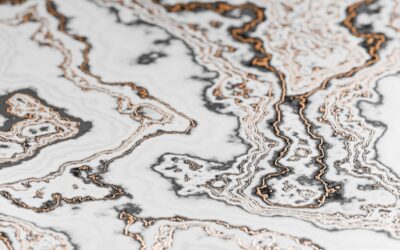
A green granite countertop brings a color to the kitchen that few other natural stones can match. After two decades installing stone in kitchens and baths, I can tell you green granite still turns heads when a homeowner walks into a showroom expecting nothing but beige and gray. It reads as bold in a white kitchen and warm alongside natural wood cabinets, and because it is genuine igneous rock, it wears like iron. This guide walks through the popular varieties, what you should actually pay, and how to keep a green slab looking good for 30 years.
Part of our Countertops guide — explore the full guide →
What Makes Green Granite Green
The color comes from the minerals that crystallized when the magma cooled underground. Amphibole, serpentine, chlorite, and certain feldspars all push the tone toward green. Because those minerals sit in a random matrix with quartz and mica, no two slabs are identical. Some greens run nearly emerald with black speckling; others fade toward gray-green or olive with copper flecks.
One thing to understand up front: a handful of stones sold as “green granite” are technically not granite at all. Verde stones from India and Brazil are often gabbro or a serpentine-heavy rock. That distinction matters less for looks and more for maintenance, which I cover below. Ask the fabricator what the slab actually is before you sign.
Popular Green Granite Varieties
- Ubatuba – A dark green-black from Brazil with gold and green flecks. Extremely common, very forgiving, and one of the cheaper greens.
- Verde Butterfly – Deep forest green with dramatic silver and black crystals that catch light.
- Costa Esmeralda – A softer sage-green with cream veining, popular in coastal and traditional kitchens.
- Verde Peacock – Rich blue-green tones that shift depending on how the slab is lit.
- Green Galaxy / Emerald Pearl – Dark backgrounds with reflective blue-green pearl crystals; technically a larvikite but sold in the green family.
If you want the green to be the star of the room, go with a lighter, busier stone like Costa Esmeralda. If you want green as a supporting accent, a dark Ubatuba reads almost black from across the room and only shows its green up close.
Green Granite Countertop Cost
Expect to pay between $40 and $100 per square foot installed for a green granite countertop, with most homeowners landing around $55 to $70. Pricing breaks down by tier:
- Tier 1 (entry): $40-$55/sq ft – Ubatuba and common Verde stones.
- Tier 2 (mid): $55-$75/sq ft – Verde Butterfly, Costa Esmeralda.
- Tier 3 (premium): $75-$100+/sq ft – Rare Verde Peacock and exotic imports.
For a typical 40-square-foot kitchen (about 30 linear feet of counter), a mid-grade green granite job runs roughly $2,200 to $3,000 installed. That figure includes the slab, fabrication, edge profile, cutouts for the sink and cooktop, and setting. Add $150 to $400 for an undermount sink cutout and polishing, and budget another $10 to $20 per square foot if you upgrade to a mitered or ogee edge.
Durability and Everyday Performance
Granite sits at 6 to 7 on the Mohs hardness scale, harder than a steel knife blade. You can set a hot pan straight from a 400-degree oven on it without scorching, and it shrugs off the kind of knife contact that would gouge a laminate or butcher-block top. In practical terms, a green granite counter outlasts most of the appliances around it.
The one weakness is porosity. Untreated granite can absorb oil, wine, and citrus if a spill sits for hours. Darker greens like Ubatuba are quite dense and rarely stain, but lighter serpentine-based greens are thirstier and need attention. That is why sealing matters.
Sealing and Maintenance
Seal a new green granite countertop at installation and re-test it once a year. The test is simple: drip a tablespoon of water on the surface and wait 15 minutes. If the stone darkens where the water sat, it needs resealing. If the water beads, you are fine.
- Clean the surface with a stone-safe cleaner and let it dry fully for 24 hours.
- Apply an impregnating sealer with a clean cloth, working in sections.
- Let it soak 10 to 15 minutes, then wipe off all residue before it hazes.
- Allow 24 to 48 hours of cure time before heavy use.
For daily cleaning, use warm water and a few drops of dish soap or a pH-neutral stone cleaner. Skip vinegar, bleach, ammonia, and generic all-purpose sprays; acids etch and harsh chemicals strip the sealer. A quality sealer costs $15 to $30 and one bottle handles a full kitchen.
Design Pairings That Work
Green granite is versatile, but a few combinations consistently look sharp:
- White or cream cabinets – Lets a dark green pop and keeps the room from feeling heavy.
- Natural oak or cherry – Green and wood tones are a classic, earthy match.
- Warm brass or bronze hardware – Picks up the gold flecks common in Ubatuba and Verde Butterfly.
- Cream or travertine backsplash – Softens a busy slab so it does not fight the wall.
Avoid pairing a busy green with an equally busy backsplash. Let one surface do the talking. A simple subway tile or a solid quartz backsplash keeps the eye calm.
Pros and Cons at a Glance
Pros
- Heat, scratch, and chip resistant natural stone
- Distinctive color unavailable in most engineered surfaces
- Every slab is one of a kind
- Adds resale appeal in the right kitchen
Cons
- Requires periodic sealing
- Lighter greens can stain if neglected
- Color trends shift, so a bold green is a longer-term commitment
- Seams show on large runs, especially on busy patterns
Frequently Asked Questions
Is green granite outdated?
Not at all, though it moved out of the mainstream when gray tones took over in the 2010s. Deep, subtle greens like Ubatuba have stayed steadily popular because they read almost neutral. A vivid emerald is more of a statement choice, so pick it because you love it, not because it is trending.
Does green granite stain easily?
Dark, dense greens rarely stain once sealed. Lighter serpentine-based greens are more porous and need more diligent sealing. In both cases, wiping spills within a few minutes prevents nearly all staining.
How long does a green granite countertop last?
With basic care, 30 to 50 years is realistic. The stone itself effectively never wears out; the only thing you maintain is the sealer, which is a once-a-year, ten-minute job.
Is green quartz a good alternative to a green granite countertop?
Yes, if low maintenance matters more than natural variation. Green quartz is engineered, non-porous, and never needs sealing, and its color is consistent from slab to slab. The trade-offs are less heat tolerance, since the resin binder can scorch under a hot pan, and less of the crystal depth and movement that make green granite slabs one of a kind.
What is the difference between green granite and green quartzite?
Granite is an igneous rock of mixed minerals, while quartzite is a metamorphic rock made mostly of quartz. Green quartzites tend to show softer, flowing veins, while green granites lean toward speckles and crystals. Quartzite is usually harder and often costs more, and both need sealing. Some stones sold as quartzite are softer and can etch, so test a sample before buying.
Can you use green granite for bathroom countertops?
Yes, green granite works well on bathroom vanities and handles water, heat from styling tools, and daily cleaning. Bathrooms see less heavy use than kitchens, so a small vanity top is also a good way to use a remnant piece. Seal it like a kitchen top, since lotions, oils, and hair products can darken lighter green stones if they sit.
Fabrication and Installation Tips
How the slab is cut and set matters as much as the stone you pick. A few things to know before install day: always hand-select your exact slab at the yard rather than approving a sample chip, because green granite varies wildly from slab to slab and a sample never shows the movement across a full 9-by-5-foot piece. Bookmatched seams, where two adjoining pieces mirror each other, hide a seam far better on a busy green than a random butt joint. And confirm the fabricator uses a color-matched epoxy at the seam so it disappears rather than reading as a dark line.
Support is the other thing people overlook. A 3 cm green granite slab weighs roughly 18 to 19 pounds per square foot, so a full kitchen top can top 700 pounds. Any overhang beyond 10 inches, common on a breakfast bar, needs steel brackets or corbels underneath. Skipping that support is the number one cause of a cracked stone counter down the road.
The Bottom Line
A green granite countertop delivers color, character, and genuine durability at a price that competes with quartz and even undercuts the premium engineered lines. Budget $55 to $70 per square foot installed for a mid-grade slab, seal it once a year, and it will outlast every renovation trend that comes after it. Visit a stone yard in person and put your hands on the actual slab before you buy, because photos never capture how green stone shifts under real kitchen light.