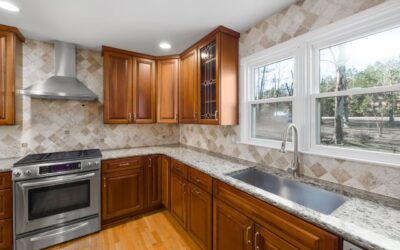
Warm, soft, and endlessly versatile, cream granite countertops bring a light, inviting feeling to a kitchen without the stark coolness of pure white. These natural stone surfaces blend creamy backgrounds with flecks and veins of beige, brown, gold, and gray, creating depth that pairs beautifully with everything from traditional cherry cabinets to crisp modern white. If you want the durability and uniqueness of natural granite in a hue that flatters almost any palette, cream is a perennial favorite.
Part of our Countertops guide — explore the full guide →
This guide covers the popular cream granite varieties, how to pair them in your kitchen, what they cost, the sealing and care they require, and how to choose the right slab. With a little knowledge, you can pick a surface that looks timeless and performs for decades.
What Makes Cream Granite Special
Granite is a natural igneous stone quarried in large slabs, and no two pieces are identical. Cream varieties feature light, warm base tones speckled or veined with minerals that add movement and character. That natural variation is part of the appeal, because your countertop becomes genuinely one of a kind, unlike manufactured surfaces that repeat the same pattern.
The warmth of cream granite is its biggest design advantage. Where bright white surfaces can feel clinical, creamy tones add a cozy, welcoming quality while still keeping a kitchen light and open. They hide crumbs and water spots better than dark stone and reflect a soft glow under kitchen lighting, which is why they have remained popular across changing design trends.
Popular Cream Granite Varieties
Several well-known granite types fall into the cream family, each with its own personality. When shopping, you may encounter names like these:
- Colonial Cream — a soft cream-to-beige stone with subtle gray and burgundy flecks, very versatile.
- New Venetian Gold — creamy background with gold, beige, and burgundy speckles and gentle movement.
- Crema Bordeaux — warmer cream with rosy and burgundy tones for a richer look.
- Ivory or Cream Pearl — lighter, more uniform creams with delicate veining.
- Madura Gold — golden-cream tones with darker flecks that read warm and earthy.
Names can vary by supplier and region, and the same stone may be sold under different labels, so focus on the actual slab in front of you rather than the name alone. Because granite varies so much, always view full slabs before purchasing to confirm the color and pattern match your vision.
Design Pairings That Work
The neutral warmth of cream granite makes it remarkably easy to coordinate. It bridges traditional and modern styles and pairs well with many cabinet colors:
- White cabinets — creates a soft, layered, light kitchen with subtle warmth instead of high contrast.
- Wood cabinets — cherry, oak, and maple feel rich and harmonious against creamy stone.
- Cream or beige cabinets — a serene, tonal look that feels calm and cohesive.
- Gray or navy cabinets — the warm stone softens cooler cabinet colors for balance.
For backsplashes, cream granite pairs well with travertine, beige subway tile, or a soft mosaic that picks up the stone’s flecks. Pull one of the accent colors from the granite, such as gold or burgundy, into your hardware or decor to tie the room together. Because the stone already has movement, a simple backsplash often looks best.
Pros and Cons
Granite offers genuine advantages along with a few considerations. On the plus side, it is extremely hard and heat-resistant, each slab is unique, it adds lasting value and a premium look, and cream tones hide everyday smudges better than dark stone. With proper sealing, it resists stains well and can last the life of your kitchen.
On the other hand, granite is porous and needs periodic sealing to prevent stains, unlike non-porous engineered quartz. It can chip at edges under a hard impact, and acidic spills like lemon juice or wine should be wiped up promptly. Granite is also heavy and requires professional installation. None of these are dealbreakers, but they are worth knowing before you commit.
What Cream Granite Countertops Cost
Granite is priced per square foot installed, and the figure depends on the rarity of the stone, the slab thickness, edge profile, and your local labor rates. As general estimates, cream granite often runs in the range of about $40 to $100 per square foot installed, with more common varieties at the lower end and exotic or highly figured stones costing more. Complex layouts, premium edges, and multiple cutouts add to the total.
For an accurate price, take your measurements to two or three local fabricators and request quotes on the specific stone you want. Confirm what each quote includes, such as templating, fabrication, edge work, sink cutouts, sealing, and removal of any old countertop, so you can compare offers on equal footing.
Sealing and Care
Because granite is porous, sealing is the key maintenance task. Many cream granites benefit from sealing at installation and periodic resealing afterward. A simple way to check is the water test: drip a little water on the surface and watch. If it beads up, the seal is intact; if it soaks in and darkens within a few minutes, it is time to reseal. Depending on the stone and sealer, this may be needed once a year or less often.
For daily cleaning, use warm water with a little mild dish soap or a cleaner labeled safe for natural stone, and dry with a soft cloth. Avoid acidic cleaners like vinegar and lemon, as well as abrasive powders, which can dull the surface or weaken the sealer. Use cutting boards and trivets to protect the finish, and wipe up spills promptly, especially anything acidic.
Choosing the Right Slab
Since granite is natural, the most important step is selecting your actual slab in person. Visit the stone yard, view full slabs under good light, and remember that small samples cannot show the full range of color and movement. Mark the section you love so the fabricator uses it, and ask to see how seams will be placed in your layout.
With the right slab and proper care, cream granite countertops deliver warmth, durability, and timeless appeal that works across nearly any kitchen style. Take your time choosing the stone, keep it sealed and gently cleaned, and you will enjoy a surface that stays beautiful and functional for many years.
Frequently Asked Questions
Is cream granite or cream quartz better for a kitchen?
Cream granite suits buyers who want natural variation and better heat tolerance, while cream quartz suits those who want zero sealing and a consistent pattern. Quartz is engineered and non-porous, so it never needs sealing, but its resin binder can scorch under a hot pan. Granite needs periodic sealing yet handles heat better and gives every kitchen a one-of-a-kind slab.
What is the difference between cream granite and cream quartzite?
Both are natural stone, but quartzite is a metamorphic rock made mostly of quartz, while granite is an igneous rock of mixed minerals. Quartzite is usually harder and often costs more, and cream quartzites tend to show softer, marble-like veining. Both need sealing. Some stones sold as quartzite are actually softer and can etch, so test a sample with lemon juice before buying.
How thick are cream granite countertops?
Granite countertops come in two standard thicknesses: 2 cm (about 3/4 inch) and 3 cm (about 1 1/4 inch). The 3 cm slab is the common choice for kitchens because it spans cabinets without a plywood subtop and resists cracking at sink cutouts. 2 cm slabs cost less but usually need a support layer and a laminated edge to look thicker.
How do you remove an oil stain from cream granite?
Use a poultice: mix baking soda with a little water into a paste, spread it over the stain about 1/4 inch thick, cover with plastic wrap, and let it sit 24 to 48 hours to draw the oil out. Scrape it off, rinse, and repeat if needed. Light cream stones show oil darkening more than dark granite, so reseal once the stain is gone.