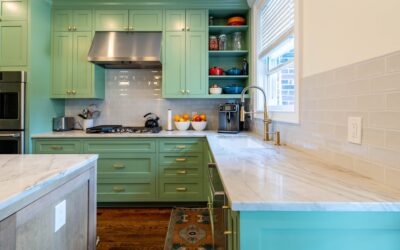
Green has quietly become one of the most requested colors in kitchen design, and for good reason. A green kitchen backsplash brings nature indoors, pairs with almost any cabinet color, and ranges from soft and soothing to bold and dramatic depending on the shade you choose. It is the rare color that feels both classic and current.
Part of our Kitchen Remodeling guide — explore the full guide →
From sage to emerald to deep forest, green works because it reads as a neutral in many kitchens. It complements wood tones, plays beautifully against white and cream, and grounds a space without the starkness of black or the predictability of gray.
Why Green Works So Well
Color psychology aside, green simply behaves well in a kitchen. It sits between warm and cool on the spectrum, so it bridges warm wood floors and cool stone counters with ease. It also hides minor splatter better than pure white, a practical bonus behind a busy range.
Because green spans such a wide range of tones, you can dial the mood up or down. A muted sage feels calm and timeless. A glossy emerald feels luxe and energetic. The same color family fits a farmhouse, a mid-century kitchen, or a sleek modern space.
Choosing the Right Shade of Green
The shade you pick sets the entire tone of the room, so consider your light and your cabinets before committing.
- Sage and soft green: Muted, calming, and easy to live with. Pairs with white, cream, and natural wood.
- Olive and moss: Warm, earthy greens that suit organic, nature-inspired kitchens.
- Emerald and jewel green: Rich and dramatic, especially in a glossy glaze with brass accents.
- Forest and hunter green: Deep and moody, striking against white counters and dark hardware.
- Mint and seafoam: Light and retro, perfect for a playful or vintage-inspired kitchen.
Always test samples on the wall and view them at different times of day. North-facing kitchens cool a color down, while warm afternoon light can push a green toward yellow.
Tile Materials That Suit Green
Green comes in nearly every tile material, and the material shapes the feel as much as the color.
- Glossy ceramic and porcelain: The most common and budget-friendly, with reflective depth that makes green glow.
- Zellige and handmade tile: Uneven, light-catching surfaces that give emerald and sage real movement.
- Glass tile: Vibrant and easy to clean, ideal for saturated greens.
- Subway tile: A classic shape in a fresh color, endlessly versatile.
- Green marble and stone-look tile: Veined options like a green marble bring pattern and luxury.
For a high-impact look on a budget, glossy green subway tile in a classic running bond is hard to beat.
Pairing Green With Cabinets and Counters
The magic of green is how flexibly it pairs. Use these combinations as starting points and adjust to your taste.
- White cabinets: Almost any green pops cleanly against white, from sage to emerald.
- Wood cabinets: Olive and moss greens echo natural tones for a warm, organic kitchen.
- Navy or black cabinets: Deep forest green creates a moody, sophisticated palette.
- Cream and off-white counters: Soften a bold green and keep the room from feeling heavy.
- Brass and gold hardware: A timeless partner that makes green look intentional and rich.
If your cabinets are already a strong color, keep the green more muted so the room does not compete with itself.
What It Costs
Cost depends almost entirely on the tile material rather than the color. These are planning estimates.
- Ceramic and porcelain subway tile: roughly $3 to $10 per square foot.
- Glass tile: about $7 to $20 per square foot.
- Zellige and handmade tile: $15 to $40 per square foot.
- Green marble or natural stone: $15 to $50 per square foot.
- Professional installation: generally $10 to $20 per square foot in labor.
A backsplash covers relatively little area, so splurging on a beautiful tile here delivers maximum impact for a manageable total.
Design and Layout Ideas
Pattern adds personality even within a single color. Try a vertical stack for a modern look, a herringbone for movement, or a classic horizontal offset for something familiar and clean. Running tile all the way to the ceiling behind a range or open shelving makes a dramatic feature wall.
Grout choice matters too. A matching green or tonal grout keeps the look seamless and lets the color dominate. A contrasting grout, such as soft gray, highlights the tile shape and pattern. For high-gloss emerald or zellige, a tonal grout usually looks most refined.
Maintenance and Practical Considerations
Beyond looks, think about how the backsplash will hold up behind a working stove and sink. Glossy ceramic, porcelain, and glass wipe clean of grease and splatter with a soft cloth and a pH-neutral cleaner, which makes them the most practical choices for a busy kitchen. Whatever tile you pick, the grout still needs attention.
Seal cement-based grout after it cures and reapply periodically so it resists staining, especially behind the cooktop where grease accumulates. Handmade and zellige tiles add stunning texture but have more surface variation and grout to clean, so factor that in if low maintenance is a priority. Natural green stone like marble needs sealing and gentle, non-acidic cleaners to avoid etching. Matching the material to how hard your kitchen works ensures the backsplash still looks great years down the line.
Is a Green Backsplash Right for You?
If you want color that feels fresh without being trendy, green is one of the safest bold choices you can make. It flatters wood, white, navy, and black alike, and the range of available shades means there is a green for every style from rustic to ultra-modern.
Start with a shade that suits your light, choose a material that fits your budget and maintenance tolerance, and test samples before you buy. Order a few sample tiles and tape them to the wall, then look at them in morning and evening light, since green shifts more than most colors as the light changes. Decide too whether you want the green to be the room’s quiet backdrop or its bold focal point, because that single choice guides everything from the shade to the finish. Done thoughtfully, a green kitchen backsplash brings a warm, grounded energy that keeps looking good long after whiter, plainer choices start to feel flat.