An empty patio or deck always feels unfinished, no matter how nice the furniture is. A green outdoor rug instantly grounds the space, adds color that echoes the surrounding landscape, and makes hard surfaces feel like a true outdoor room. Green is one of the smartest choices outside because it blends naturally with grass, foliage, and garden tones rather than fighting them. After outfitting countless decks, porches, and poolside areas, I’ll walk you through the materials, shades, and care that keep an outdoor rug looking great season after season.
Part of our Windows & Doors guide — explore the full guide →
Why Green Works Outdoors
Color theory is on your side. Green sits beside nature’s own palette, so it harmonizes with lawns, hedges, and potted plants instead of clashing. It reads as calming and fresh, which is exactly the mood most people want on a patio. A green rug can pull together mismatched furniture and tie the hard-surface seating area into the surrounding yard.
Practically, mid and darker greens also hide dirt, pollen, and grass clippings better than light neutrals, which is a real advantage in a space that takes a beating from the elements and muddy shoes.
Best Materials for Outdoor Use
The fiber is what determines whether your rug survives the seasons. Outdoor rugs need to shrug off sun, rain, and mildew. The top performers:
- Polypropylene (olefin): the most popular outdoor fiber, fade-resistant, quick-drying, and affordable
- Polyester (PET): soft underfoot, often made from recycled bottles, holds color well
- Recycled plastic (straw-style): reversible flatweaves that hose clean easily, great for high-traffic areas
- Natural fibers like jute or sisal: avoid these outdoors unless on a fully covered porch, since they hold moisture and rot
For an exposed deck or patio, polypropylene is the workhorse choice. Look specifically for a label that says UV-stabilized or fade-resistant, since untreated synthetics still bleach in strong sun.
Choosing the Right Shade of Green
Green spans a wide range, and the shade sets the entire vibe of your space:
- Sage and soft green: calm, modern, pairs with neutral furniture
- Emerald and forest green: rich and dramatic, anchors bold designs
- Olive and moss: earthy and natural, hides dirt well
- Lime and bright green: energetic and fun, great for poolside spaces
Consider your surroundings. A sage rug looks elegant against gray composite decking, while a deep emerald pops on a natural wood deck. If your yard is full of greenery already, a patterned green-and-white rug can add contrast without competing.
Sizing and Placement
Size the rug to your seating arrangement, not the whole patio. For a conversation set, the rug should be large enough that at least the front legs of all furniture rest on it, which visually unifies the group. For a dining set, extend the rug far enough that chairs stay on it when pulled out.
Common outdoor sizes include 5 by 8, 8 by 10, and 9 by 12 feet. A small bistro setup works with a 5 by 8, while a full patio sectional usually needs a 9 by 12 or larger. Leave some hard surface visible around the edges so the rug frames the space rather than wallpapering it.
Cost Expectations
Outdoor rugs are refreshingly affordable since most are machine-made synthetics:
- Small (5 by 8): $40 to $120
- Medium (8 by 10): $80 to $200
- Large (9 by 12): $120 to $350
- Premium designer or hand-woven recycled: $300 to $700
Because outdoor rugs take real weather abuse, many homeowners treat them as a multi-year rather than lifetime purchase. Buying mid-range and replacing every three to five seasons is a perfectly reasonable strategy.
Care and Maintenance
The beauty of synthetic outdoor rugs is how easy they are to clean. For routine care, shake or sweep off debris and hose the rug down when it gets dirty. For deeper cleaning, scrub with a soft brush, mild dish soap, and water, then rinse thoroughly and hang or prop it to dry completely before laying it back down.
Two habits extend the life dramatically. First, lift the rug and let the surface beneath dry after heavy rain, since trapped moisture breeds mildew and stains decking. Second, store the rug rolled up in a dry place over winter in cold climates, since freeze-thaw cycles and snow accelerate wear. A quality outdoor mat pad underneath also prevents slipping on smooth concrete.
Patterns That Work Outdoors
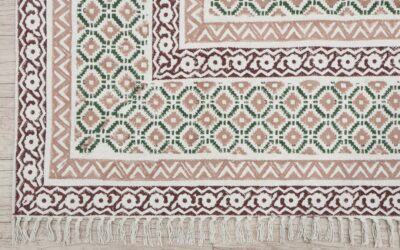
Solid green is timeless, but pattern adds personality and hides dirt even better. A few directions to consider: a green-and-white stripe reads crisp and coastal, a green trellis or lattice pattern feels classic and tailored, and a botanical or palm-leaf print leans tropical and lush. For a bohemian patio, a green Moroccan or medallion pattern brings texture and warmth.
Match the busyness of the pattern to your furniture. If your cushions and pillows are already bold, a subtler green rug keeps the space from feeling chaotic. If your furniture is plain, a patterned rug becomes the design anchor that ties everything together. Either way, a pattern with some variation tends to disguise the inevitable leaves and footprints better than a flat solid.
One thing people overlook outdoors is wind. A lightweight rug on an exposed deck can flip up or blow away in a gust. To keep it in place, use an outdoor-rated rug pad with a grippy bottom, weigh down the corners with heavy planters or furniture legs, and choose a flatweave rather than a thick pile in very windy spots. On a covered porch this matters less, but on an open rooftop or breezy patio it’s worth planning for. Some homeowners also use double-sided outdoor rug tape on smooth surfaces, which holds the rug down without damaging composite or wood decking.
Is a Green Outdoor Rug Right for You?
If you want to make a patio or deck feel like a finished outdoor living room, a green outdoor rug is one of the easiest and most affordable upgrades available. It blends naturally with the landscape, hides everyday dirt, and stands up to sun and rain when you pick the right synthetic fiber. Choose a shade that complements your decking, size it to your furniture, and give it a quick rinse now and then. The result is a welcoming space you’ll actually want to spend time in.