Sustainability claims in the flooring industry are often three parts marketing and one part verifiable fact. Homeowners hear “eco-friendly” or “green” on a product label and assume it means low-VOC adhesives, certified forestry, and a healthier indoor environment, but the truth varies wildly by brand. Green wood flooring is a specific category that combines responsibly sourced raw materials, low or zero off-gassing finishes, and supply chains documented through FSC, FloorScore, or Cradle to Cradle certifications. Pricing runs $3 per square foot for bamboo and cork up to $12 per square foot for premium FSC-certified North American hardwood.
The Certifications That Actually Matter
Five certification programs carry weight in this category. FSC (Forest Stewardship Council) verifies the wood was harvested from responsibly managed forests. FloorScore certifies indoor air emissions are below California Section 01350 thresholds. GreenGuard Gold limits VOCs to even stricter levels suitable for schools and healthcare. Cradle to Cradle measures full lifecycle including material reuse, water, energy, and social fairness. SCS Indoor Advantage Gold mirrors FloorScore at a slightly stricter level.
A product that carries FSC plus FloorScore Gold plus a low-VOC finish (under 50 g/L) is genuinely green. A product that carries one logo and a vague “natural” claim usually is not. Check the manufacturer’s environmental product declaration (EPD) for the actual numbers before you trust the marketing.
Bamboo: The Renewable Heavyweight
Bamboo grows to harvest maturity in 5 to 7 years, compared to 60 to 80 years for white oak or maple. That makes it the fastest-renewing flooring material on the market. Strand-woven bamboo from brands like Cali Bamboo, Teragren, and EcoTimber hits Janka hardness ratings of 3,000 to 5,000, which is harder than Brazilian cherry. Pricing sits between $3 and $6 per square foot for the material.
The catch is the adhesive. Cheap bamboo glues together strands with urea-formaldehyde resins that off-gas for months. Pay the extra dollar per square foot for products that use phenol-formaldehyde (E0 or E1 rated) or zero-formaldehyde resins like Cali Bamboo Greenest. The visible difference is small. The indoor air quality difference is enormous.
Cork: The Forgotten Green Option
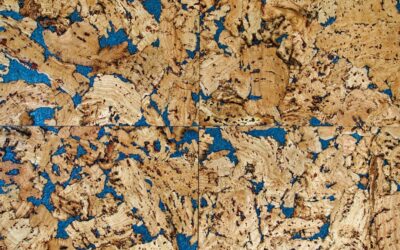
Cork flooring is harvested by stripping bark from cork oak trees in Portugal and Spain, a process that does not kill the tree and repeats on a 9-year cycle for 200 years. That makes cork one of the most genuinely renewable surfaces available. Pricing for click-lock cork planks runs $3 to $7 per square foot, with brands like APC Cork, WE Cork, and Globus Cork dominating the market.
The surface offers natural antimicrobial properties from suberin in the cork cells, R-1.1 thermal resistance per inch (the highest of any flooring), and 18 to 25 decibel sound dampening. The trade-offs are softness (visible dents from furniture legs) and UV fade, which is why dark colors and rubber furniture pads matter on cork installs.
Reclaimed Hardwood: Highest Embodied Value
The greenest flooring is the wood that was already cut decades or centuries ago. Reclaimed barn wood, factory beams, snow fence, and river-recovered logs all enter the supply chain at companies like Pioneer Millworks, Carlisle Wide Plank, and TerraMai. Pricing climbs to $9 to $20 per square foot, but the embodied carbon footprint is dramatically lower than even the most responsibly forested new wood.
The aesthetic story matters too. Reclaimed oak with original saw marks, nail holes, and 1880s patina carries a visual depth that distressed new wood cannot replicate. For LEED-certified projects and certified Living Building Challenge homes, reclaimed is often the only material that scores full points.
Brand Spotlight: Cali Bamboo Fossilized
Cali Bamboo out of San Diego, California is the most accessible green flooring brand in big-box distribution, with product available at Lowe’s and Home Depot. Their Fossilized strand-woven line uses a patented compression process that produces Janka hardness ratings up to 5,500 (compared to white oak at 1,360 and red oak at 1,290). The boards measure 5.375 inches wide by 72 inches long with a 9.2mm thickness, including a 1.2mm wear layer that can be refinished twice. The line carries FSC certification, FloorScore IAQ certification, and uses E0-rated adhesives with under 0.07mg of formaldehyde per liter of off-gas. Pricing through retail channels sits between $3.99 and $5.99 per square foot, with click-lock locking systems that float over standard subfloors.
The Real Pros
Beyond the environmental story, green flooring offers practical wins. Indoor air quality improves measurably: TVOC levels in homes with FloorScore-certified materials average 30% to 50% lower than homes with standard flooring within the first 12 months post-install. That difference matters for children, elderly residents, and anyone with asthma or chemical sensitivity. The premium for genuinely green products typically adds $1 to $3 per square foot over conventional alternatives.
- Lower off-gassing of formaldehyde, VOCs, and isocyanates
- Documented supply chain back to the forest of origin
- Higher resale value on certified-green homes (LEED, Energy Star)
- Renewable raw materials (bamboo, cork) on much shorter cycles than hardwood
- Reclaimed options carry zero new logging impact
The Honest Drawbacks
Cost is the obvious one. A 1,500-square-foot install upgraded from standard to genuinely certified materials typically adds $1,500 to $4,500 to the project. Availability is the other limit. Many small retailers do not stock FSC-certified inventory and rely on special-order shipments with 4 to 8-week lead times. Plan around it or use a contract distributor that specializes in green materials.
What to Ask Before You Buy
Five questions separate real green flooring from greenwashed marketing. First, what certifications does the specific SKU carry (not the brand in general)? Second, what is the formaldehyde emission rating in mg/L? Third, where is the wood sourced from and is the chain-of-custody documented? Fourth, what is the finish chemistry (water-based polyurethane and hardwax oils are cleaner than solvent-based finishes)? Fifth, can you provide an EPD or HPD for the product? If the salesperson cannot answer these questions, the product is probably not as green as the label suggests.
Prefer to explore on your own?
See how new flooring looks in your actual room in seconds — free, no signup.
Try the free Floor Studio →