Pick the wrong undertone and a “gray” floor can turn icy blue or muddy brown once your lighting hits it. That’s exactly the problem greige oak laminate flooring solves. Greige — the blend of gray and beige that designers have leaned on for a decade — sits in the neutral sweet spot, warm enough to feel inviting and cool enough to read modern. On an oak grain, it becomes one of the most flexible floors you can buy, pairing with nearly any wall color, cabinet, and furniture style. Here’s how to choose the right shade and product.
- What “Greige” Means on an Oak Floor
- Why Greige Oak Is So Popular
- Shade Variations to Know
- What Greige Oak Laminate Costs
- Specs Worth Checking
- Design Pairings That Work
- Greige Oak vs. Gray and Natural Oak
- Rooms Where Greige Oak Excels
- Installation and Care Basics
- Avoiding a Greige Mismatch
- The Bottom Line
What “Greige” Means on an Oak Floor
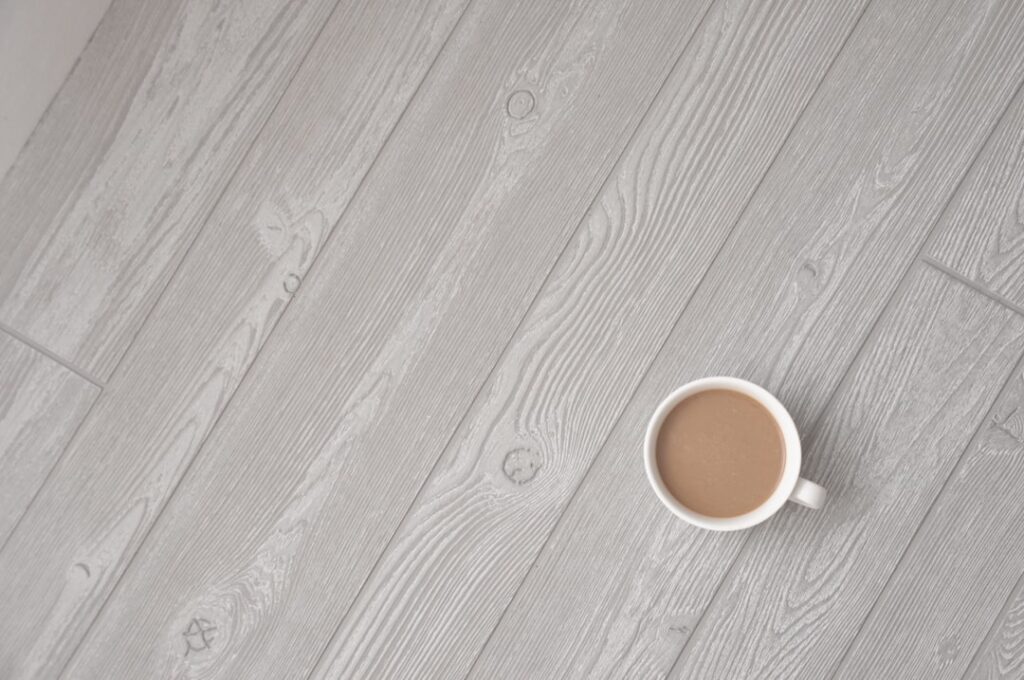
Greige is not a single color; it’s a family. On laminate, manufacturers print greige across oak grain to soften the tone and add depth. The trick is the undertone balance. Lean too gray and the floor feels cold and dated. Lean too beige and you lose the modern edge that made greige popular in the first place. The best products hold a near-even split, with just enough warmth to keep a room from feeling clinical.
Because oak has open, pronounced grain, greige reads as textured rather than flat. You’ll see the beige base tone in the grain valleys and cooler gray washes across the plank face. In north-facing rooms with cool natural light, choose a greige that runs slightly warmer to compensate. In sun-drenched south-facing rooms, a cooler greige stays balanced.
Why Greige Oak Is So Popular
Versatility is the headline. A greige floor works as a neutral backdrop that lets you change your décor without redoing the floor.
- Pairs with warm and cool palettes — white, navy, sage, terracotta, and charcoal all sit well on it
- Hides dirt and pet hair — the mid-tone and grain camouflage daily debris better than dark or pale floors
- Photographs well — a big reason it dominates real estate listings and staged homes
- Feels current without being trendy — greige has staying power that pure gray floors have lost
For anyone planning to sell within a few years, greige is a safe, broadly appealing choice that rarely turns off buyers.
Shade Variations to Know
Not all greige oak is the same. When you’re comparing samples, sort them into these general lanes:
- Light greige: Pale, airy, close to a whitewashed oak with a gray cast. Opens up small rooms and suits Scandinavian and coastal looks.
- Mid greige: The most versatile balance of gray and beige. The default choice for whole-home installs.
- Warm greige: Beige-forward with a hint of taupe. Reads cozier and works in transitional and farmhouse spaces.
- Cool greige: Gray-forward with a subtle beige floor. Best for modern and contemporary rooms with lots of light.
Always test samples in your actual room, at different times of day. Tape a few boards to the floor and live with them for 48 hours before committing. Lighting changes greige more than almost any other color.
What Greige Oak Laminate Costs
Color doesn’t drive price; durability and construction do. Typical material costs:
- Entry-level (AC3, 7mm–8mm): $1.19 to $1.89 per sq ft
- Mid-grade (AC4, 8mm–10mm): $2.09 to $3.39 per sq ft
- Premium (AC5, 12mm, water-resistant core, attached pad): $3.59 to $5.75 per sq ft
A 400 sq ft open-plan area in a solid AC4 greige oak runs roughly $840 to $1,360 for materials. Add $2 to $5 per sq ft for professional installation. Order about 10 percent extra for waste and future repairs, since matching a discontinued greige batch later is difficult.
Specs Worth Checking
Beauty fades fast if the floor can’t take traffic. Prioritize these:
- AC4 or higher for main living areas, hallways, and kitchens
- Water-resistant or SPC core if you’re installing in a kitchen, bath, or basement
- Registered embossing so the texture aligns with the printed grain for a realistic feel
- Matte or low-gloss finish — greige looks most natural at a low sheen and hides scuffs
- Micro-beveled edges to define each plank and add dimension
A wider plank, around 7 to 8 inches, shows off the greige grain and reads more upscale than narrow strips.
Design Pairings That Work
Because greige is a chameleon, the hard part is narrowing your options rather than finding a match. A few reliable combinations:
With crisp white or off-white walls, greige oak feels clean and gallery-like — a favorite for modern farmhouse and coastal interiors. Against deep navy or forest-green cabinetry, the floor grounds the space and keeps it from going too dark. For a warm, layered look, pair warm greige with cream, camel, and rattan textures. If you want contemporary contrast, set cool greige against charcoal furniture and black metal fixtures.
White and light-gray baseboards both work; the beige undertone keeps white trim from looking stark, while gray trim reinforces a cooler scheme.
Greige Oak vs. Gray and Natural Oak
Homeowners usually land on greige after trying and rejecting the extremes. Pure gray oak, which peaked a few years back, now reads as dated in many markets and can feel cold and flat, especially in rooms with limited natural light. Greige keeps the modern restraint of gray but adds the beige warmth that gray lacks, which is why designers migrated to it. On the other side, natural or honey oak is warmer still but commits you to a traditional, golden palette that fights cool décor.
Greige splits the difference. It gives you the flexibility to decorate warm or cool over the life of the floor without the floor itself locking you in. If you’re torn between a trendy gray and a safe natural oak, greige is usually the answer that ages best and appeals to the widest range of future buyers.
Rooms Where Greige Oak Excels
- Open-concept living areas — the neutral tone unifies kitchen, dining, and living zones
- Bedrooms — calm, restful, and easy to style with any bedding
- Home offices — professional and clean on video calls
- Basements — pair with a waterproof SPC core; the cool undertone suits below-grade light
- Rental units — broad appeal and forgiving of wear between tenants
Installation and Care Basics
Greige oak laminate is a floating, click-lock floor that most confident DIYers can install in a weekend. Acclimate the boxes flat in the room for 48 hours, leave a 1/4-inch expansion gap around the perimeter, and stagger end joints at least 8 inches. Mix planks from several boxes so the tone stays even and no repeating pattern jumps out.
Maintenance is light. Dust-mop or vacuum weekly, and clean with a barely damp mop and a laminate-safe cleaner. Because greige is a mid-tone, it forgives dust between cleanings better than dark floors. Skip vinegar, wax, and steam mops, all of which harm the wear layer. Add felt pads under furniture and walk-off mats at doorways to keep grit off the surface.
Avoiding a Greige Mismatch
The most common regret with greige oak is buying off a website swatch. Monitors distort color badly, and a plank that looks perfectly balanced online can turn purple-gray or yellow-beige in your home. Always order at least three physical samples across the greige range — one warm, one mid, one cool — and view them next to your walls, cabinets, and largest furniture pieces. Check them under your evening artificial lighting too, since warm LED bulbs push greige toward beige and cool bulbs push it toward gray. Spending a week and $15 on samples prevents a costly full-room mistake.
The Bottom Line
Greige oak laminate earns its popularity honestly: it’s a warm-cool neutral that flatters almost any room, hides everyday mess, and holds resale appeal. Spend your budget on an AC4-or-better rating and a water-resistant core, then choose your exact greige shade by testing samples in your own light. Get the undertone right and you’ll have a floor that looks intentional and current for years, no matter how your décor evolves around it.
Prefer to explore on your own?
See how new flooring looks in your actual room in seconds — free, no signup.
Try the free Floor Studio →