Most homeowners assume you need reclaimed barn wood to get that warm, time-worn floor look. You don’t. Antique oak laminate flooring reproduces the faded grain, subtle cracks, and mellow amber tones of century-old oak using a high-resolution photographic layer over a dense fiberboard core. The result reads as genuinely aged from three feet away, costs a fraction of real reclaimed hardwood, and shrugs off the scratches and spills that would wreck true antique planks. If you want character without the maintenance headaches, this is one of the smartest floors on the market.
- What Antique Oak Laminate Actually Looks Like
- Where This Floor Works Best
- What Antique Oak Laminate Costs
- Key Specs to Check Before You Buy
- Installation Tips for the Aged Look
- Care and Maintenance
- Antique Oak Laminate vs. the Alternatives
- Common Mistakes to Avoid
- Is Antique Oak Laminate Right for You?
What Antique Oak Laminate Actually Looks Like
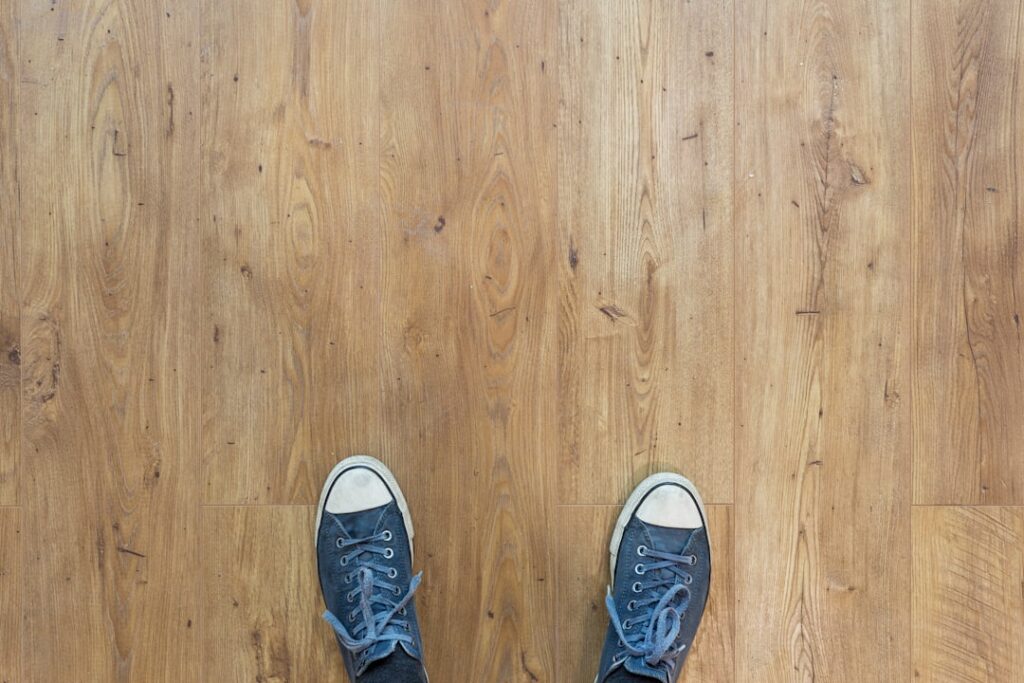
The defining feature is color depth. Where a builder-grade oak laminate uses one or two flat tones, antique oak layers golden honey, soft gray, and faded brown across a single plank. Manufacturers scan real salvaged boards, so you get knots, mineral streaks, saw marks, and the occasional nail hole printed into the design. Better products use registered embossing, where the surface texture lines up exactly with the printed grain, so your fingers feel the same ridges your eyes see.
Plank size matters for the aged look. Antique oak reads best in wider boards, typically 7 to 9 inches, and longer lengths of 48 to 54 inches. Narrow strips look modern and undercut the reclaimed vibe. Finish sheen should stay low. Look for a matte or “natural” surface rated around 5 to 10 on the gloss scale; anything shinier fights the weathered story you’re trying to tell.
Where This Floor Works Best
Antique oak flatters warm, layered interiors. It anchors farmhouse kitchens, transitional living rooms, and rustic-industrial lofts without demanding you commit to a full theme. Because the color palette is busy, it hides dust, pet hair, and minor scuffs far better than a clean single-tone floor.
- Open-concept main floors — the varied tones tie a kitchen, dining, and living zone together
- Rentals and flip properties — high visual value for low material cost
- Homes with pets and kids — the busy grain camouflages daily wear
- Basements — pair antique oak with an SPC or waterproof core rated for below-grade use
The one place to think twice is a bright, minimalist modern space. In a stark white room with sharp lines, the rustic grain can feel out of place. If that’s your style, a greige or blond laminate suits better.
What Antique Oak Laminate Costs
Pricing tracks the abrasion class (AC rating) and core quality more than the color itself. Expect these ranges for the material alone:
- Budget (AC3, 7mm–8mm): $1.09 to $1.79 per sq ft — fine for bedrooms and low-traffic rooms
- Mid-grade (AC4, 8mm–10mm): $1.99 to $3.29 per sq ft — the sweet spot for whole-home use
- Premium (AC5, 10mm–12mm with attached pad): $3.49 to $5.50 per sq ft — deep embossing, realistic bevels, best warranties
For a 300 sq ft living room, plan on roughly $600 to $1,000 in flooring for a quality AC4 product. Professional installation runs another $2 to $5 per sq ft. Compare that to genuine reclaimed antique oak, which can hit $12 to $25 per sq ft installed, and the value case is obvious. Budget an extra 8 to 10 percent for cutting waste, and more if you’re running a diagonal or long-hallway layout.
Key Specs to Check Before You Buy
Color is what draws you in, but these numbers decide whether the floor lasts.
- AC rating: AC4 minimum for kitchens and hallways; AC3 is acceptable only in bedrooms.
- Core type: Standard HDF is fine for dry rooms. For kitchens, baths, or basements, choose a water-resistant HDF or SPC core rated for 24 to 72 hours of spill protection.
- Plank thickness: 10mm or 12mm feels solid and quiet underfoot; 7mm can sound hollow without a good pad.
- Locking system: Angle-tap or drop-lock systems from Unilin or Välinge install fast and hold tight.
- Attached underlayment: A pre-attached IXPE or cork pad saves a step and cuts noise.
Always order one extra box beyond your calculated need. Antique oak runs are dye-lot sensitive, and matching a discontinued batch two years later for a repair is nearly impossible.
Installation Tips for the Aged Look
Laminate is a floating floor, so it clicks together and rests on top of the subfloor without glue or nails. That makes antique oak a realistic weekend DIY project for an average room. A few pointers keep it looking custom rather than builder-basic:
Let the boxes acclimate flat in the room for 48 hours before you start. Mix planks from three or four open boxes as you lay them, so no two repeating grain patterns end up side by side. This staggered approach is what sells the reclaimed illusion. Keep end joints at least 8 to 12 inches apart from row to row, and leave a 1/4-inch to 3/8-inch expansion gap around every wall, pipe, and cabinet toe-kick.
Run the planks parallel to the longest wall or toward the main light source to make the room feel larger and to let the grain read cleanly. A quality foam or cork underlayment with a moisture barrier is non-negotiable over concrete. For the final polish, install matching quarter-round or baseboard to cover the expansion gap.
Care and Maintenance
One reason antique oak laminate beats real aged wood is upkeep. There’s no refinishing, no oiling, no waxing. Weekly care is a dry microfiber dust mop or a vacuum on the hard-floor setting. For deeper cleaning, use a barely damp mop with a laminate-safe cleaner such as Bona or Black Diamond. Never wet-mop with standing water, and never use vinegar or steam mops, which degrade the wear layer and swell the core over time.
- Wipe spills within a few minutes, especially near seams
- Add felt pads under furniture legs to prevent gouges
- Place walk-off mats at exterior doors to trap grit
- Trim pet nails to reduce surface scratching
Antique Oak Laminate vs. the Alternatives
It helps to see where antique oak laminate lands against the floors people cross-shop. Against genuine reclaimed hardwood, laminate wins decisively on price and maintenance but loses on the ability to be sanded and refinished; when a hardwood plank is gouged you can repair it, whereas a damaged laminate plank has to be swapped out. Against luxury vinyl plank in an antique oak look, laminate typically offers deeper, more textured embossing and a warmer feel underfoot, while vinyl edges ahead on true waterproofing for wet rooms.
Against engineered hardwood in an aged oak finish, laminate costs roughly half to a third as much and resists surface scratches better, but engineered wood carries the resale cachet of real wood and can be refinished once or twice. For most homeowners furnishing a busy household on a defined budget, antique oak laminate hits the practical middle: the character of old wood, the toughness of a modern wear layer, and a price that leaves room in the renovation budget for everything else.
Common Mistakes to Avoid
A few missteps undercut an otherwise great floor. Don’t buy on color alone — an AC3 antique oak in a busy hallway will show wear paths within a couple of years, so match the rating to the room. Don’t skip acclimation; planks laid straight out of a cold garage will expand and buckle once they warm to room temperature. And don’t lay every plank in order out of a single box, which creates obvious repeating grain patterns that instantly read as fake. Open several boxes and shuffle. Finally, resist the urge to wet-mop; standing water at the seams is the fastest way to ruin any laminate, aged look or not.
Is Antique Oak Laminate Right for You?
If you love the soul of old wood but want a floor that survives real family life on a working budget, antique oak laminate hits the mark. It delivers layered, weathered color that hides wear, installs without specialized tools, and costs a quarter of what reclaimed hardwood runs. Focus your money on an AC4 or better rating and a water-resistant core, choose wide planks with matte finish, and stagger your layout thoughtfully. Do that and you’ll have a floor that looks like it’s been there for a hundred years and holds up for the next twenty.
Prefer to explore on your own?
See how new flooring looks in your actual room in seconds — free, no signup.
Try the free Floor Studio →