The Grizzle Gray paint color from Sherwin-Williams (SW 7068) is a deep, earthy charcoal that sits right on the line between gray and soft black. With a Light Reflectance Value (LRV) of about 13, it is dark enough to make a bold statement on siding, cabinets or an accent wall, yet still clearly a gray rather than a near-black.
Part of our Paint & Walls guide — explore the full guide →
The manufacturer places it in its Neutral color family and rates it for both interior and exterior use. Its published hex value is #636562, with RGB values of 99, 101 and 98. The green channel is a touch higher than red and blue, which gives Grizzle Gray a faint green, almost stony cast in some light. Most of the time it reads as a balanced, slightly warm charcoal.
If you want a dark gray that feels softer and more natural than a pure black, Grizzle Gray is an excellent candidate to sample. If you want a near-black, Iron Ore is the darker cousin.
Grizzle Gray Paint Color Specs
These figures come from the manufacturer’s color page. Dark colors shift with lighting more than most, so confirm on a real sample.
| Spec | Value | What it means |
|---|---|---|
| Color number | SW 7068 | Order by number for an exact match |
| LRV | About 13 | Dark; absorbs most light and adds strong contrast |
| Hex / RGB | #636562 / 99, 101, 98 | Balanced charcoal with a hint of green |
| Color family | Neutral | Works with warm and cool palettes |
| Undertone | Mostly neutral, faint green cast | Looks stony in cool light, softer and warmer under warm bulbs |
| Interior / exterior | Both | Popular for siding, doors, cabinets and accent walls |
| Best uses | Exterior body or trim, kitchen islands, built-ins, accent walls | Places where a grounded dark neutral earns its keep |
| Suggested sheens | Flat or satin outside; matte or eggshell on walls; satin or semi-gloss on cabinets | Higher sheens show more surface flaws on dark colors |
The manufacturer pairs Grizzle Gray with lighter grays such as Nebulous White (SW 7063) and Passive (SW 7064). Those lighter colors make natural partners for walls and trim around a Grizzle Gray accent.
Understanding the Undertone
Dark grays tend to pull toward blue, green, brown or purple, and the direction decides how the color feels. Grizzle Gray is close to neutral, with only a slight green influence. That makes it easy to pair with both warm and cool finishes, but it also means the surrounding colors can push it one way or the other.
- North light and cool bulbs: the faint green becomes more visible and the color looks stony, like slate or wet concrete.
- South light and warm bulbs: the green softens, and Grizzle Gray reads as a cozy, warm charcoal.
- Full exterior sun: dark colors wash out outdoors, so it looks like a medium-dark gray on a sunny facade.
- Next to green landscaping or cedar: the earthy cast feels natural and blends with the setting.
Because the LRV is low, a small room painted top to bottom in Grizzle Gray will feel enveloping. That can be lovely in a den, office or powder room, but in a dim space it can turn heavy without good lighting.
Exterior Uses
Grizzle Gray is a popular exterior choice because it looks contemporary without the starkness of black. It works as:
- Body color: on lap siding, board and batten or shingles, it gives a modern farmhouse or craftsman look. Pair with white or soft white trim for crisp contrast.
- Trim color: on a light gray or white house, it frames windows and gables more softly than black.
- Front doors and shutters: against light siding, it reads as a deep, sophisticated neutral.
- Garage doors and fences: it hides dirt and blends with landscaping.
Dark exterior colors absorb more heat. On vinyl siding, check with the siding maker before painting dark, since some products are not designed for dark colors and can warp. On wood, a high-quality exterior acrylic in flat or satin is the usual choice.
Cabinets and Accent Walls
Kitchen islands and cabinets
Grizzle Gray is a strong option for a kitchen island against white or light wood perimeter cabinets. Brass, bronze, matte black and stainless hardware all look good with it. Use a cabinet-grade enamel in satin or semi-gloss for durability, and expect to spend real time on prep: degrease, scuff sand and prime with a bonding primer.
Built-ins and bookshelves
Painted built-ins in a deep charcoal make books and objects stand out. A satin finish is easier to wipe clean than matte.
Accent walls
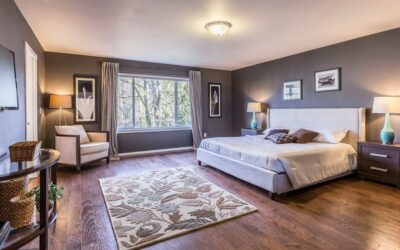
Behind a bed, sofa, TV or fireplace, it creates depth and hides screen glare better than light walls. Pair with lighter walls in one of its coordinating grays for a cohesive room.
Bathrooms and powder rooms
In a small powder room, Grizzle Gray walls with white fixtures and brass or black hardware look dramatic and intentional. Use a moisture-resistant finish and make sure the exhaust fan works.
How to Sample and Paint a Dark Gray
- Sample big. Use peel-and-stick paint sample swatches or a painted board of at least 12 by 12 inches. Place them on several walls or on the siding in sun and shade.
- Check in all light. Look in morning, afternoon and under your evening lamps.
- Use a tinted primer. A gray-tinted primer helps dark colors cover in two coats.
- Cut in carefully. Dark walls against a white ceiling show every wobble. Use painter’s tape or a steady angled brush.
- Roll full height and keep a wet edge. Lap marks and roller stipple are more visible on deep colors.
- Plan two coats. Even with primer, dark grays look richer and more even with a second coat.
Coordinating Colors and Pairings
The manufacturer lists three coordinating colors:
- Nebulous White (SW 7063): a pale gray-white, ideal for trim, ceilings or adjoining walls.
- Passive (SW 7064): a light gray, good for main walls in a room with a Grizzle Gray accent.
- Foxy (SW 6333): a warm, earthy accent that adds energy against the charcoal.
Beyond those, Grizzle Gray pairs well with natural cedar, white oak, warm brick, black metal light fixtures, terracotta pots and greenery. On exteriors, white trim and a stained wood door create a classic, balanced look.
Grizzle Gray vs Iron Ore and Peppercorn
These three dark neutrals are often compared. The figures are from each color’s manufacturer page.
| Color | LRV | Hex | How it compares |
|---|---|---|---|
| Grizzle Gray (SW 7068) | About 13 | #636562 | Lightest of the three; clearly a dark gray with a slight green cast |
| Peppercorn (SW 7674) | About 10 | #585858 | Slightly darker and more evenly neutral; a true charcoal |
| Iron Ore (SW 7069) | About 6 | #434341 | Much darker; reads as a soft black |
Choose Grizzle Gray when you want a dark color that still reads as gray, especially on a large exterior surface or in a room that does not get much light. Choose Peppercorn for a cleaner, more neutral charcoal. Choose Iron Ore when you want the look of black with a little softness, such as on trim, window frames or a front door.
Troubleshooting Common Issues
It looks green: cool light and nearby green finishes bring out its faint green cast. Switch to warmer bulbs or try Peppercorn for a more neutral charcoal.
It looks too light outside: sun washes out dark colors. If you want a darker look on the house, sample Iron Ore next to it.
It looks flat and lifeless indoors: add warm light and texture, or move up to eggshell sheen.
Visible roller marks: use a high-quality roller cover, keep a wet edge and avoid rolling over partially dry paint.
Scuffs on cabinets: use a cabinet-grade enamel and allow the full cure time printed on the label before heavy use.
Cost and When to Hire a Painter
An accent wall usually needs about a gallon, and a medium room about two gallons for two coats. Premium interior and exterior paints commonly fall in the range of $50 to $90 per gallon. Professional exterior painting for a typical single-family home often runs into several thousand dollars depending on size, condition and the amount of prep and ladder work.
Hire a pro for two-story exteriors, homes that need extensive scraping or repairs, and cabinets if you want a sprayed finish. If your home was built before 1978 and the existing paint is peeling, have it tested for lead before any scraping or sanding, and use a lead-safe certified contractor if it is present.
Frequently Asked Questions
What color is Grizzle Gray?
Grizzle Gray (SW 7068) is a deep, earthy charcoal gray with an LRV of about 13. It is mostly neutral, with a faint green cast that shows in cool light.
Is Grizzle Gray warm or cool?
It sits close to neutral. Under warm light it reads as a warm, soft charcoal, and under cool light it looks more stony and slightly green.
Is Grizzle Gray darker than Peppercorn?
No. Grizzle Gray has an LRV of about 13, while Peppercorn is about 10, so Peppercorn is slightly darker. Iron Ore, at about 6, is darker than both.
Is Grizzle Gray good for exterior siding?
Yes. It is rated for exterior use and is a popular body and trim color. It will look lighter in full sun, so test it on the house first.
What trim color goes with Grizzle Gray?
White or soft white trim gives the cleanest contrast. The manufacturer suggests Nebulous White (SW 7063) as a coordinating light color, and Iron Ore works for darker, tonal trim.