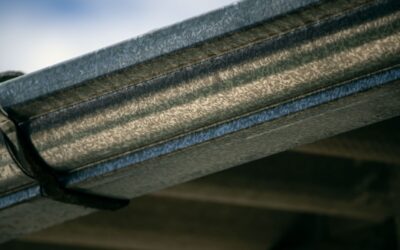
I have repaired enough rotted fascia, flooded basements, and heaved foundations to say this plainly: gutters are cheap insurance, and bad gutters are worse than none because they concentrate water exactly where you do not want it. Done right, gutter installation is a straightforward job with unforgiving details: slope, hanger spacing, downspout placement, and sealed outlets. Get those four right and a gutter system runs twenty years without drama. This guide covers what the job costs in 2026, how seamless and sectional systems differ, the full installation sequence I use, and an honest read on which homeowners should DIY and which should write the check.
Part of our Roofing guide — explore the full guide →
- Gutter Installation Cost in 2026
- Seamless vs Sectional: The Real Difference
- Sizing: 5-Inch vs 6-Inch, and Downspout Math
- The Detail That Makes or Breaks the Job: Slope
- Gutter Installation Step by Step
- DIY vs Pro: The Honest Breakdown
- Gutter Guards: Worth It or Not?
- Maintenance That Protects the Investment
Gutter Installation Cost in 2026
| Material | Installed Cost per Linear Foot | Lifespan | Notes |
|---|---|---|---|
| Vinyl (sectional, DIY) | $3-$6 | 10-15 years | Brittle in cold climates; DIY only |
| Aluminum sectional (DIY) | $4-$8 | 20 years | Best DIY value |
| Aluminum seamless (pro) | $6-$14 | 20-25 years | The standard; roll-formed on site |
| Steel | $9-$18 | 20-25 years | Snow country and impact resistance |
| Copper | $25-$50+ | 50+ years | Premium homes; soldered joints |
A typical single-story ranch needs 120 to 160 linear feet of gutter plus three or four downspouts, so a pro seamless aluminum job usually lands between $1,000 and $2,200. Two-story homes add 20 to 40 percent for height. Extras that move the number: fascia repair at $8 to $20 per foot (rotten fascia must be fixed first, no exceptions), gutter guards at $5 to $12 per foot installed, and oversized 6-inch gutters, which add roughly 15 to 25 percent over standard 5-inch.
Seamless vs Sectional: The Real Difference
Seamless gutters are roll-formed from coil stock on a machine in the installer’s trailer, cut to the exact length of each run, so the only joints are at corners and outlets. Sectional gutters come in 10-foot lengths you join with snap or riveted seams every 10 feet. Every seam is a future leak; that is not marketing, it is just what happens to sealant over 15 to 25 freeze-thaw cycles a year. If you are hiring the work out, seamless is the default and costs barely more than a pro sectional install. If you are DIYing, sectional aluminum is your realistic option, and it performs well if you rivet and seal the seams properly rather than trusting snap connectors alone.
Sizing: 5-Inch vs 6-Inch, and Downspout Math
Standard 5-inch K-style gutters with 2×3-inch downspouts handle most roofs. Step up to 6-inch gutters with 3×4 downspouts when any single roof plane exceeds about 1,400 square feet, when you have a steep roof (8/12 or more sheds water fast), or when you live in a heavy-rain region like the Gulf South. The bigger downspout matters more than the bigger gutter; a 3×4 downspout moves nearly double the water of a 2×3 and clogs far less with maple seeds and shingle grit. Rule of thumb I install to: one downspout per 30 to 40 feet of gutter, and never let a run longer than 40 feet drain to a single outlet.
The Detail That Makes or Breaks the Job: Slope
Gutters must fall toward the downspout at roughly 1/4 inch per 10 feet. Less and water stands, breeding mosquitoes and rusting steel; noticeably more and it looks crooked from the curb and overshoots the outlet in heavy rain. On runs over 40 feet, high-point the middle and slope both directions to downspouts at each end. I set slope by snapping a chalk line on the fascia: mark the high end 1/2 inch to 1 inch below the drip edge, measure down 1/4 inch per 10 feet to the outlet end, and snap the line. Every hanger goes to that line. Eyeballing slope is how you get the puddled gutter I find on half the DIY jobs I inspect.
Gutter Installation Step by Step
- Inspect and repair the fascia. Probe with a screwdriver; soft wood gets replaced, not screwed into. Hangers in punky fascia pull out under the first ice load.
- Plan downspout locations. Corners of the house, discharging away from foundations, walkways, and AC condensers. Confirm each location has somewhere for water to go, ideally a 4- to 6-foot extension or a drain line carrying it at least 6 feet from the foundation.
- Snap the slope line as described above, on every run.
- Cut the gutter to length. Tin snips or a miter saw with a fine-tooth blade reversed for aluminum. For sectional runs, join sections on the ground with seamers or 1/8-inch rivets plus a full bed of gutter-grade sealant inside the joint.
- Cut outlets and install drop fittings. Trace the outlet on the gutter bottom near the run’s low end, cut with snips or a hole saw, and rivet and seal the drop outlet. Sloppy outlet sealing is the number one leak point on any system.
- Cap the ends. Rivet and seal end caps. Sealant alone lets go within a few years.
- Hang the gutter. Hidden hangers with 2- to 3-inch screws into the fascia, and into rafter tails wherever you can hit them. Spacing: every 24 inches in snow country, 30 to 36 inches elsewhere. This is where cheap installs fail; hangers at 48 inches sag under ice and the slope goes with them. Tuck the gutter’s back edge behind the drip edge flashing, or add flashing so roof runoff cannot get behind the gutter and rot the fascia.
- Assemble downspouts. Crimp elbows and sections so upper pieces insert into lower pieces (water flows over joints, not into them), fasten each joint with two short zip screws, and strap to the wall every 6 to 8 feet.
- Test with a hose. Run water at the high end. Look for standing water deeper than 1/4 inch, drips at seams, and overshoot at corners. Fix now, while the ladder is out.
DIY vs Pro: The Honest Breakdown
DIY sectional aluminum on a single-story house saves real money: about $400 to $700 in materials versus $1,200 to $2,000 for pro seamless, and it is a reasonable two-person weekend project if you are steady on a ladder. I do not recommend DIY when any of the following apply: two-story eaves (ladder work at 20-plus feet with a 10-foot piece of gutter in the wind is genuinely dangerous), runs over 30 feet (aluminum sections flex and kink when mishandled, and long runs are miserable to hang solo), steep-slope landscaping under the eaves, or copper and steel systems. Also weigh the seam issue: your DIY sectional system will have seams every 10 feet that need resealing every 5 to 10 years, while the pro’s seamless run will not. On a house you plan to keep for decades, seamless quietly wins the total-cost math even at double the upfront price.
Gutter Guards: Worth It or Not?
Under trees, yes, with expectations managed. Micro-mesh guards at $5 to $12 per foot installed keep out everything but pollen film and shingle grit, and they turn twice-a-year gutter cleaning into a quick annual rinse. Cheap snap-in plastic screens at $1 to $2 per foot are better than nothing for big leaves but let seeds and needles through. Foam inserts I pull out and throw away on every job I service; they hold moisture, grow seedlings, and choke flow. No guard is maintenance-free regardless of what the sales pitch says, so keep guards accessible and skip any system that installs under your shingles.
Maintenance That Protects the Investment
- Clean or rinse gutters twice a year, spring and after leaf drop, or annually with quality guards.
- Check slope with a hose test each fall; hangers loosen and settle.
- Reseal any weeping seam immediately with gutter-grade polymer sealant, applied to a clean, dry interior surface.
- Keep downspout extensions attached; the most common foundation-water problem I diagnose is a downspout dumping at the corner of the house because the extension got kicked off by the mower.
Final word from the field: the gutter itself is a commodity; the installation details are the product. Whether you DIY sectional or hire seamless, insist on slope snapped to a line, hangers every 24 to 30 inches screwed into sound wood, riveted-and-sealed outlets and caps, and downspouts that discharge at least 6 feet from the foundation. Water damage is slow, silent, and expensive, and every dollar of proper gutter installation buys back many times its cost in the fascia, siding, and basement repairs you never have to make.