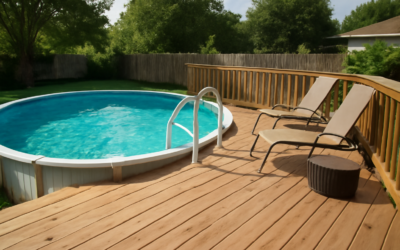
Caught between the low cost of an above-ground pool and the polished look of an in-ground one? A half in ground pool with deck splits the difference, sunk partway into the earth and wrapped with decking that hides the exposed walls and creates a finished, in-ground appearance for a fraction of the price. It’s an especially smart solution for sloped yards, where one side of the pool sits at grade while the other is bermed or decked up to meet it. This guide covers how these pools work, what they cost, the deck design options, and the practical considerations that determine whether one fits your yard and budget.
Part of our Decks & Outdoor guide — explore the full guide →
What Is a Half In Ground Pool
A half in ground pool is an above-ground pool, typically a sturdy steel- or resin-walled model, that’s partially buried, usually with one to four feet of the wall set below grade. The portion that remains above ground is then concealed and surrounded by a deck, retaining wall, or earthen berm. The result mimics the seamless look of a true in-ground pool while keeping much of the cost and simpler installation of an above-ground unit.
This hybrid approach shines on sloped lots. Rather than excavating a massive flat pad, you sink the pool into the high side and build the deck up on the low side, working with the grade instead of fighting it. Many sloped backyards that couldn’t easily host a full in-ground pool can accommodate a half in ground installation.
After the flooring is sorted, the right furniture makes all the difference. A set of poolside lounge chairs and a gazebo for shade can turn a basic pool deck into something that actually feels like a backyard retreat.
We may earn a commission when you purchase through our links.
Cost Compared to Full In-Ground
The biggest draw is price. A full in-ground gunite or vinyl pool commonly runs $35,000 to $65,000 or more once you add decking and landscaping. A half in ground pool with a quality deck typically lands in the $10,000 to $25,000 range, depending on pool size, how deep you sink it, deck materials, and how much site work the slope demands.
Where does the savings come from? Less excavation, no full concrete shell, and a faster install. Where does cost climb? Partial burial still requires digging, leveling, and proper backfill, and a large multi-level deck can rival the pool itself in price. Always price the pool and the deck together, since the deck is what delivers the in-ground look you’re paying for.
Deck Design Options
The deck is what transforms a buried above-ground pool into something that looks custom. Common configurations include:
- Full wraparound deck — surrounds the entire pool for a true in-ground appearance and easy access from all sides.
- Partial or single-side deck — a more affordable platform along the most-used edge, often where the pool meets the high side of the slope.
- Multi-level deck — stepped platforms that follow a sloped yard, adding lounging zones and visual interest.
- Deck-to-house connection — ties the pool deck into an existing patio or back porch for a unified outdoor living space.
For materials, pressure-treated lumber is the budget choice, composite decking offers low maintenance and resistance to pool chemicals and moisture, and natural hardwoods deliver premium looks at a premium price. Composite is especially popular around pools because it resists rot, splinters, and the constant splashing that punishes wood.
Working With a Sloped Yard
Slopes are where half in ground pools earn their keep, but they also demand careful planning. The downhill side often needs a retaining wall or structural support to hold back soil and to anchor the deck. Proper drainage is critical, since you don’t want runoff pooling against the pool wall or undermining the deck footings.
An engineer or experienced pool contractor should evaluate the grade, soil, and water flow before excavation. Done right, the slope becomes an asset, giving you natural separation between the pool and the rest of the yard and a built-in reason for the attractive multi-level deck design. Done wrong, you risk erosion, shifting, and water intrusion.
Installation Considerations
A few technical points separate a lasting half in ground pool from a problem-prone one. The pool wall must be rated for partial burial; not every above-ground model can handle the soil pressure of being sunk several feet, so confirm the manufacturer approves it. Backfill matters, too, gravel or another approved material is packed around the buried portion to support the wall evenly and allow drainage.
Permits are almost always required. Most jurisdictions regulate pool depth, fencing, and barriers regardless of whether the pool is above, below, or half in ground, and many require a permit and inspection. Build in proper safety barriers and self-closing gates from the start, both for code compliance and because a partially raised pool still needs to keep children and pets out when unsupervised.
Maintenance and Longevity
A half in ground pool maintains much like any above-ground pool: a pump and filter, regular water testing, and balanced chemicals. The buried portion of the wall, though, deserves extra attention because you can’t see it. Proper backfill, drainage, and a moisture barrier protect the steel or resin wall from constant soil contact, which is the main factor in how long the pool lasts. A well-installed unit can last 15 years or more, comparable to a quality above-ground pool.
The deck has its own maintenance rhythm. Composite needs little more than periodic washing, while wood requires resealing or staining every couple of years to fend off the moisture and pool chemicals that punish it. Inspect deck footings, fasteners, and any retaining wall annually for shifting or rot, especially on a sloped installation where soil pressure and water flow are constant forces. Catching a small drainage issue early prevents a costly structural one later.
Pros and Cons at a Glance
Weigh the trade-offs before deciding:
- Pros: dramatically lower cost than full in-ground, finished in-ground appearance, excellent fit for sloped yards, faster installation, and a built-in deck for lounging.
- Cons: still requires excavation and site work, not every pool is rated for partial burial, sloped sites may need retaining walls and engineering, and the buried wall is harder to inspect than a fully above-ground one.
For many homeowners, the pros win handily, especially when a true in-ground pool is out of budget or the yard’s slope makes one impractical. The key is honest cost estimating and proper installation rather than the cheapest possible shortcut.
Is It Right for Your Yard
A half in ground pool with deck is an excellent middle path for homeowners who want the look of an in-ground pool without the full price, especially on a sloped lot where excavation for a true in-ground pool would be costly. You get a finished, integrated appearance, a usable deck for lounging and entry, and meaningful savings, all while working with your terrain rather than against it.
Before you commit, get quotes that bundle the pool, the burial work, and the deck together, confirm your chosen pool is rated for partial burial, and have your slope and drainage assessed by a pro. With smart planning, a half in ground pool can deliver resort-style backyard living at a price that keeps the project firmly within reach.