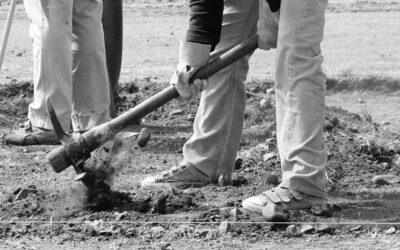
Most sagging, heaving or wobbly decks fail at the ground, not at the boards. Properly sized cement footings for deck posts spread the weight of the structure, the furniture, the grill and a crowd of guests across enough soil that nothing sinks, and they sit deep enough that winter frost cannot push them up. A typical residential deck footing is a round or square pad of poured concrete roughly 12 to 24 inches across, set to your local frost depth, with a galvanized post base cast into the top so the wood post never touches dirt.
Part of our Decks & Outdoor guide — explore the full guide →
Getting the size right comes down to three things: how much load each post carries, how strong your soil is, and how deep the ground freezes where you live. Your local building department sets the frost depth and minimum footing dimensions, so a quick call before you dig saves a failed inspection. Everything after that is physical but straightforward: lay out the holes, dig or auger them, set forms, pour, and anchor the hardware while the concrete is still workable.
- How Cement Footings for Deck Posts Carry the Load
- Sizing Footings: Diameter, Depth and Soil
- Tools and Materials
- Step-by-Step: Dig and Pour Cement Footings for Deck Posts
- Post Connections: Why Posts Should Not Be Buried in Concrete
- Precast and Alternative Options
- Troubleshooting Common Footing Problems
- Cost Ranges
- Safety: Concrete, Digging and Structure
- When to Call a Professional
- Frequently Asked Questions
How Cement Footings for Deck Posts Carry the Load
Every deck post delivers a concentrated load to a small spot on the ground. Soil cannot handle that concentrated pressure on its own, so the footing widens the contact area. Think of it like snowshoes: the same weight spread over a bigger surface sinks far less. That is why the diameter of the bottom of the footing matters more than the size of the visible pier on top.
Load per post depends on the tributary area, which is the patch of deck each post supports. A post in the middle of a beam with posts 8 feet apart and joists spanning 12 feet supports roughly 48 square feet. Residential decks are usually designed for a live load of 40 pounds per square foot plus about 10 pounds per square foot of dead load, so that post carries around 2,400 pounds. Hot tubs, planters and snow country push those numbers far higher, which is when an engineer or the building department should size the footing for you.
A quick note on terms: cement is the powdered binder, and concrete is the finished mix of cement, sand, gravel and water. People search for cement footings, concrete deck footings and deck post footings interchangeably, and they all mean the same poured-concrete pad under a post.
Sizing Footings: Diameter, Depth and Soil
Soil bearing capacity is the number that ties everything together. Many jurisdictions assume a conservative 1,500 pounds per square foot for undisturbed native soil unless you have a soil report. Divide the post load by that figure to get the bearing area you need. Using the 2,400 pound example, you would need about 1.6 square feet of bearing, which works out to a round footing roughly 17 to 18 inches in diameter.
- 12 inch diameter: about 0.79 sq ft of bearing, suited to small, low decks with short spans and close post spacing.
- 16 inch diameter: about 1.4 sq ft, a common size for mid-sized decks.
- 18 to 21 inch diameter: 1.8 to 2.4 sq ft, typical for larger tributary areas or weaker soils.
- 24 inch or larger: heavy loads, hot tubs, roof-covered decks, or soft clay.
Thickness matters too. The concrete pad itself should generally be at least 6 to 8 inches thick at the bottom so it can spread the load without cracking. A belled or flared bottom (wider at the base than the tube on top) is a smart way to get a big bearing area without filling a huge column with concrete.
Depth is a separate rule. The bottom of the footing must sit beneath the local frost line, on undisturbed soil. In mild southern climates that may be 12 inches; across much of the Midwest and Northeast it runs 36 to 48 inches, and in the coldest northern areas it can exceed 60 inches. Never pour onto loose fill or topsoil, because it compresses over time.
Tools and Materials
- Stakes, mason’s string, line level and a tape measure for layout
- Post hole digger, digging bar and a gas-powered earth auger for multiple or deep holes
- Cardboard tube forms sized to the pier diameter, plus optional plastic footing bell forms
- Bagged concrete mix rated around 4,000 psi, or ready-mix for big jobs
- Wheelbarrow or mixing tub, hoe, or a rented drum mixer
- Rebar (two or three #4 bars per pier is common) and tie wire
- Galvanized or stainless post bases with standoff, or wet-set anchor bolts
- 4 foot level, framing square and a handsaw for trimming tubes
- Gloves, safety glasses, a dust mask and rubber boots
An earth auger is worth renting when you have more than four or five holes or deep frost lines. A two-person auger handles rocky or clay soils better than a one-person unit, and a towable or skid-steer auger makes short work of 48 inch holes. Expect to still clean out the bottom by hand.
Step-by-Step: Dig and Pour Cement Footings for Deck Posts
- Get the permit and plans. Most decks attached to a house or higher than 30 inches need a permit. The plan review confirms footing size, spacing and frost depth. Many inspectors want to see the open holes before any concrete goes in.
- Call 811. Request utility locates at least a few business days before digging. Gas, electric, water and communication lines are often shallower than you expect.
- Lay out the posts. Build batter boards at the corners, run string lines for the beam locations, and square them using the 3-4-5 method or by matching diagonal measurements. Mark each hole center with spray paint.
- Dig the holes. Auger or dig to the required depth plus a few inches for a gravel base where local practice calls for it. Keep the sides as vertical as possible and remove loose soil from the bottom so the footing bears on firm, undisturbed ground.
- Check depth and get the inspection. Measure each hole from the planned finished grade. Call for the footing inspection if your jurisdiction requires it.
- Place bell forms and tubes. Set the bell form at the bottom, attach the tube, and brace it plumb with scrap lumber screwed to stakes. Leave the top of the tube 2 to 4 inches over grade so water drains away from the post base.
- Add rebar. Set vertical bars inside the tube, held a couple of inches off the soil and a couple of inches from the sides, so steel stays fully embedded in concrete.
- Mix and pour. Mix concrete to a stiff, oatmeal-like consistency. Too much water weakens it. Fill in lifts and rod each lift with a stick or rebar to work out air pockets, then tap the outside of the tube.
- Set the hardware. Strike the top flat, then push the anchor bolt or post base into the wet concrete, using the string lines to align it exactly. Check that it is plumb and at the right height.
- Cure. Keep the tops damp and covered for several days. Wait at least 2 to 3 days before setting posts and about a week before loading framing, longer in cool weather.
Plan concrete quantity before you start. A 12 inch tube holds about 0.79 cubic feet per foot of depth, and a 60 pound bag yields about 0.45 cubic feet, so a 4 foot deep 12 inch pier needs roughly seven bags. Bell forms add several bags apiece. For more than 30 or 40 bags, ready-mix delivery is usually easier.
Post Connections: Why Posts Should Not Be Buried in Concrete
Setting a wooden post directly in a hole of concrete is common for fences, but it is a poor choice for a deck. Water wicks into the end grain, sits trapped against the wood, and the post rots from the inside out, usually right at grade where you cannot see it. A raised post base cast into the top of the footing keeps the bottom of the post an inch or so off the concrete, lets it dry, and resists uplift and lateral movement.
Match the base to the post size. A concrete footing for a 6×6 post needs a base rated for 6×6 lumber (actual 5.5 inches square), and many codes now favor 6×6 posts for decks over a certain height. Use hot-dip galvanized or stainless fasteners with pressure-treated lumber, since the treatment chemicals corrode plain steel.
Precast and Alternative Options
Precast concrete pier blocks and decorative concrete pillars for a deck look tempting because they skip the pour. Most sit on the surface and only work for freestanding, low, ground-level decks in areas where the building department allows them. For attached or elevated decks, poured footings to frost depth remain the standard. Concrete posts for decking (full-height precast columns) exist but are uncommon in residential work and still need a proper footing beneath them.
Troubleshooting Common Footing Problems
- Water filling the hole: Pump or bail it out before pouring. Concrete can be placed into a little standing water if you pour from the bottom up, but mud at the bottom must go.
- Hitting rock or roots: Small roots can be cut. A large boulder may require shifting the post location, which may need an updated plan or engineer review.
- Tube bulging or floating: Backfill around the outside of the tube as you pour and brace it firmly. Wet concrete is heavy and pushes outward.
- Anchor off-line: If the concrete has set, use an adjustable post base or epoxy-set anchor rather than chipping the pier.
- Footing heaving after winter: Usually means it is too shallow, or the tube walls are rough enough for frost to grip. Smooth tubes and proper depth prevent it.
- Cracked tops: Often from too much water in the mix or freezing before cure. Protect fresh concrete from frost with insulated blankets.
Cost Ranges
Doing it yourself, materials for a single footing usually run roughly $25 to $90 depending on diameter, depth and hardware, with bell forms and larger tubes at the high end. Renting an earth auger is typically a day-rate rental in the range of a modest tool rental. Hiring a contractor to dig and pour footings commonly runs a few hundred dollars per footing, with rocky soil, deep frost lines and difficult access pushing costs higher. Prices vary widely by region, so get at least two or three quotes.
Safety: Concrete, Digging and Structure
Wet concrete is highly alkaline and causes chemical burns on bare skin. Wear waterproof gloves, long sleeves, eye protection and rubber boots, and rinse any splashes off immediately with clean water. Dry mix creates fine dust containing silica, so mix outdoors, stand upwind, and wear an N95 or better respirator when opening and dumping bags. Lift bags with your legs and use a cart for long carries.
Holes are a hazard for kids, pets and you. Cover open holes with plywood at the end of each day. Augers can kick hard when they bind on rock, so keep a firm stance, use two people on large units, and follow the rental shop’s instructions. Most importantly, call 811 before you dig every time.
When to Call a Professional
Bring in a licensed contractor or structural engineer for decks more than one story high, roof-covered decks, hot tub loads, steep slopes, expansive clay, high water tables or anywhere snow loads are significant. They can size footings to the actual load and soil and handle permit drawings. Also call a pro if you find buried utilities, old foundations or septic components in the dig area. A properly built set of cement footings for deck posts is the cheapest insurance you can buy for the decades of use the deck should give you.
Frequently Asked Questions
How deep should cement footings for a deck be?
The bottom must sit beneath your local frost line on undisturbed soil. That ranges from about 12 inches in warm climates to 48 inches or more in cold regions. Your building department publishes the required depth.
How wide should a deck post footing be?
Most residential deck footings are 12 to 24 inches in diameter. Divide the load on the post by the soil bearing capacity to find the bearing area needed, then choose a diameter or bell form that meets it.
Can I set deck posts directly in concrete?
It is not recommended. Posts buried in concrete trap moisture and rot at grade. Use a galvanized post base cast into the top of the footing to hold the post off the concrete.
How many bags of concrete does a deck footing take?
A 12 inch tube 4 feet deep needs roughly seven 60 pound bags, and a bell form at the base adds several more. Larger diameters increase the count quickly, so calculate volume before buying.
How long should footings cure before building on them?
Wait at least 2 to 3 days before setting posts and about a week before adding significant framing load. Cool weather slows curing, so allow extra time in spring and fall.