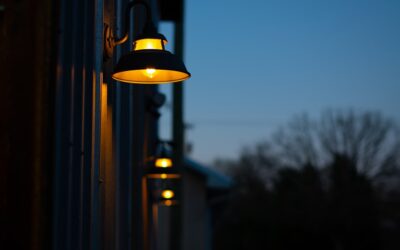
Most hallways are lit by a single ceiling fixture that leaves the ends dim and every picture frame in shadow. Hallway wall lights solve that by spreading light along the length of the corridor at eye level, where you actually need it. They also turn a pass-through space into something that looks designed.
The short version: in a typical hallway, mount sconces about 60 to 66 inches above the floor, space them roughly 8 to 10 feet apart, keep them about 4 to 5 feet from each end, and choose fixtures that stick out no more than about 4 inches from the wall in narrow halls. Pair them with a flush mount or recessed lights if the hall is long or windowless.
- Planning Hallway Wall Lights Along a Corridor
- Mounting Height
- Projection Limits in Narrow Halls
- Pairing Sconces With Ceiling Lights
- Choosing Bulbs and Brightness
- Style Ideas
- Wiring Options and Safety
- Troubleshooting Hallway Lighting
- Typical Cost Ranges
- When to Call a Licensed Electrician
- Frequently Asked Questions
We cover spacing, height, projection limits, layout patterns, bulbs, controls and wiring safety, plus cost ranges and when to bring in an electrician.
Planning Hallway Wall Lights Along a Corridor
Start by measuring the hallway length and width and marking doors, windows, art and the switch locations. Wall sconces for hallway use work best when they are placed with the doors in mind, because nothing looks worse than a fixture squeezed against a door casing.
Spacing
- Space sconces about 8 to 10 feet apart in most homes. Closer spacing (6 to 8 feet) gives brighter, more even light; wider spacing creates pools of light and shadow, which can be dramatic in a gallery-style hall.
- Place the first and last fixtures about half the spacing distance from each end, so roughly 4 to 5 feet in.
- Center fixtures between doors when possible, and keep at least a few inches clear of door trim.
- For a short hall under 10 feet, one or two sconces on one wall, or a pair facing each other at the midpoint, is usually enough.
Staggered vs opposite placement
In a narrow hall, staggering fixtures on alternating walls spreads light evenly and keeps the corridor from feeling crowded. In a wider hall (about 5 feet or more), placing sconces directly opposite each other creates a formal, symmetrical look. Single-wall placement works when one side is lined with doors or built-ins.
Mounting Height
The standard guideline puts the center of the fixture about 60 to 66 inches from the finished floor, which places the light source just above eye level for most adults. Adjust for your situation:
- With 9 or 10-foot ceilings, you can go up to about 68 to 72 inches so fixtures do not look low on a tall wall.
- Uplight sconces that wash the ceiling can sit a little higher.
- Keep the bottom of the fixture high enough that nobody bumps it, particularly with sconces that drop down or hang.
- Keep all hallway wall light fixtures at the same height so they line up visually along the hall.
Projection Limits in Narrow Halls
Projection is how far a fixture sticks out from the wall, and it matters more in hallways than anywhere else. Accessibility guidelines commonly limit wall-mounted objects to about 4 inches of projection when their bottom edge is between roughly 27 and 80 inches above the floor, so people with low vision do not walk into them. Many homeowners use the same 4-inch limit as a practical rule for any hall under about 42 inches wide.
Low-profile choices include flush wall sconces, half-cylinder up-and-down lights, slim LED wall sconce bars and shallow glass shades. Save deeper lantern or swing-arm styles for wider halls or for the ends of a corridor where they will not be in the walking path.
Pairing Sconces With Ceiling Lights
Sconces alone can light a short, open hallway, but long or windowless corridors usually need layered lighting:
- Flush mounts: a low-profile ceiling fixture every 8 to 12 feet gives general light, while sconces add warmth and interest.
- Recessed lights: small cans or wafer lights spaced along the hall can wash the walls if placed about 2 to 3 feet out from them.
- Hanging lights for hall spaces: pendants and small chandeliers suit wide entry halls with ceilings of 9 feet or more. Keep at least 7 feet of clearance under the fixture.
Put ceiling lights and sconces on separate switches or dimmers so you can choose a soft evening mood or full brightness.
Choosing Bulbs and Brightness
LED fixtures and bulbs are the default today: they run cool, last for years and use far less electricity. Aim for a color temperature of 2700K to 3000K for a warm, residential feel. For brightness, around 300 to 500 lumens per sconce is comfortable in most halls; integrated LED sconces list their output on the box.
Check that fixtures and bulbs are dimmable if you plan to use a dimmer, and buy a dimmer rated for LED loads to avoid flicker or buzzing. A high color rendering index (90 or above) helps artwork and paint colors look accurate.
Style Ideas
- Gallery hall: picture-light style sconces or adjustable heads aimed at art.
- Modern: slim vertical LED bars or cube up-and-down lights in black or white.
- Farmhouse: small gooseneck or barn-style shades in a wider hall.
- Traditional: fabric-shade or candle-style sconces in brass or bronze.
- Mid-century: globe sconces with a short arm, kept shallow for narrow corridors.
Match finishes to door hardware and nearby ceiling fixtures for a coordinated look along the whole hall.
Wiring Options and Safety
Hardwired sconces connect to a junction box in the wall and are controlled by a wall switch. Plug-in sconces with a cord cover or rechargeable battery models are useful for renters or where running new wire is impractical, though they offer less brightness and a cord to manage.
If you are replacing an existing sconce on an existing box, the job is often manageable for a confident DIYer:
- Turn off the breaker for the circuit, then confirm power is off at the fixture wires with a non-contact voltage tester before touching anything.
- Remove the old fixture and note how the wires were connected.
- Check that the box is secure and rated for the new fixture’s weight.
- Connect the ground, then the neutral and hot conductors according to the fixture instructions, using properly sized wire connectors.
- Fold wires neatly into the box, mount the bracket and fixture, install the bulb and restore power.
Never test or work on wires while the circuit is energized. Most hallway sconces are line-voltage (120-volt) fixtures. Some slim LED systems use a low-voltage driver, which still needs to be properly installed in an accessible location per the instructions.
Adding new sconce locations, new switches or a new circuit means running wire inside walls and adding boxes, which is work for a licensed electrician. Many areas require a permit for new wiring. A three-way switch at each end of the hall is a convenient upgrade an electrician can include.
Troubleshooting Hallway Lighting
- Hall still feels dark: add a ceiling fixture or move to brighter, warmer LEDs; light-colored walls also help.
- Glare in your eyes: switch to shaded or up-and-down fixtures, or raise mounting height slightly.
- LEDs flicker on a dimmer: use an LED-compatible dimmer and dimmable bulbs.
- Fixtures look uneven: remeasure and align heights; a laser level makes this easy.
- Breaker trips: stop and call an electrician, since this can signal a wiring fault.
Typical Cost Ranges
Basic hallway sconces can be inexpensive, while designer and integrated LED fixtures cost considerably more apiece. Swapping a fixture on an existing box is usually a modest service call if you hire it out. Adding new hardwired locations involves running wire and patching drywall, so costs per fixture rise, often into the low hundreds per location or more depending on wall access, attic space and local rates.
When to Call a Licensed Electrician
Hire a licensed electrician for any new boxes, new switches, new circuits or if you find aluminum wiring, scorched wires, loose boxes or no ground in an older home. An electrician can also plan a full layout of hallway wall lights and ceiling fixtures on dimmers and three-way switches so the corridor works well from both ends.
Frequently Asked Questions
How far apart should hallway sconces be?
About 8 to 10 feet apart is a good starting point, with the end fixtures roughly 4 to 5 feet from each end of the hall. Space them closer for brighter, more even light.
What height should wall sconces be in a hallway?
Center them about 60 to 66 inches above the floor. With tall ceilings, you can raise them to around 68 to 72 inches.
How far can a sconce stick out in a narrow hallway?
Aim for about 4 inches or less of projection in halls under roughly 42 inches wide, so people do not bump into fixtures.
Should hallway sconces be on the same switch as the ceiling light?
Separate switches or dimmers give more control. Many homeowners use sconces alone at night and add ceiling light when needed.
Can I install a hallway sconce without wiring?
Yes. Plug-in sconces with cord covers and rechargeable battery sconces work without opening walls, though they are typically less bright than hardwired fixtures.