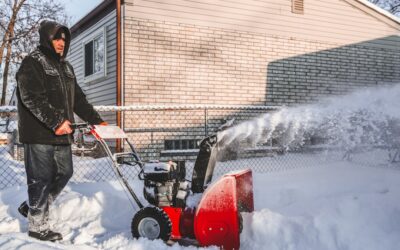
When the forecast says three inches overnight, the last thing you want is to wrestle a 200-pound two-stage machine out of the garage for a job a shovel could almost handle. A hand held snow blower fills that exact gap, clearing light, fluffy snow off decks, porches, steps, and walkways in a fraction of the time and effort. These compact tools, sometimes called electric snow shovels, weigh as little as 10 to 15 pounds and let you skip the back-straining scoop-and-toss routine entirely.
Having cleared plenty of urban walks and tight condo steps with these little machines, I can tell you exactly where they excel and where they leave you stranded. Here is the practical breakdown before you spend the money.
What a Hand-Held Model Actually Is
These are single-stage tools built around a spinning plastic or rubber-edged auger that scoops snow and flings it forward through a fixed or slightly adjustable chute. There is no drive system, no gearbox, and no gas engine. You walk it forward yourself, which is easy because the whole unit is light. Think of it as a powered push-broom for snow rather than a scaled-down snow blower.
The category splits cleanly into two power sources. Corded electric models plug into a standard 120-volt outlet and run indefinitely as long as you manage the cord. Cordless models run on lithium-ion battery packs, commonly in the 24V, 40V, 60V, or EGO’s 56V platforms, and give you full mobility with no cord to drag across an icy walk.
The Specs That Actually Matter
Clearing width and intake height tell you how much snow the tool moves per pass. Most hand-held units clear a path between 11 and 13 inches wide and take an intake height of roughly 4 to 6 inches. That is your ceiling. Try to plow a foot-deep drift and the auger just packs and stalls.
- Clearing width: 11 to 13 inches is typical. Wider means fewer passes on a walkway.
- Intake height: 4 to 6 inches. This is the depth of snow it can take in one pass.
- Throw distance: 20 to 25 feet on the stronger cordless and corded models; closer to 15 feet on weaker units.
- Run time (cordless): roughly 15 to 40 minutes depending on battery amp-hours and snow density. A 4.0Ah pack on a 40V tool clears a couple of average walkways before needing a swap.
- Weight: 10 to 15 pounds, light enough to carry up porch steps one-handed.
Corded vs. Cordless: How to Choose
Corded electric wins on two counts: unlimited run time and a lower price, often $80 to $130. As long as you are within an extension cord’s reach of an outlet, you never worry about a dying battery mid-storm. The catch is the cord itself. Dragging a stiff, cold-weather-hardened cable around deck furniture and down steps is genuinely annoying, and you are tethered to the house. Use a 12- or 14-gauge outdoor-rated cord kept under about 50 feet, because a thin, overlong cord causes a voltage drop that saps auger power right when you need it.
Cordless models cost more, generally $130 to $250 with a battery and charger, but the freedom is worth it for most people. No cord means no snagging, no tripping, and you can clear a detached patio or a walk that runs away from the house. The limitation is run time and cold-weather battery drop-off, which I will come back to. If you already own tools on a battery platform like EGO, Greenworks, or Ryobi, buying a bare tool and reusing your packs is the smart move, since the battery and charger are usually more than half the sticker price.
Top Picks Worth a Look
A few models have earned solid reputations in this niche:
- Snow Joe 24V and 48V shovels: Budget-friendly, light, and widely available. The 24V single-battery version handles steps and short walks; the 48V dual-battery version throws farther and lasts longer.
- Greenworks 40V snow shovel: A 12-inch clearing width and a roughly 6-inch intake, with throw distances around 20 feet. A dependable middle-of-the-road pick if you are already on the 40V platform.
- EGO Power+ 56V snow shovel: The premium option. Its steel auger and strong 56V pack push snow farther and chew through slightly heavier, wetter snow than the plastic-auger competitors. Expect to pay a premium, but it feels the most like a real machine.
Where These Tools Hit Their Limit
Be honest about your climate before buying, because this is where people get disappointed. A hand-held snow blower is built for light, dry, powdery snow up to about 6 inches deep. Give it that and it is a joy. Ask it to do more and it struggles.
Heavy, wet snow, the kind that falls near freezing and packs like a snowball, will bog the auger and cut throw distance dramatically. Anything over 6 to 8 inches means multiple skimming passes instead of one clean sweep. And forget the end-of-driveway berm that the plow leaves behind, which is dense, icy, and compacted. That is two-stage territory. If you regularly get storms that drop a foot of wet snow or you have a long gravel driveway, a hand-held unit is a supplement, not your only tool.
Getting the Most Out of One
A few habits make these tools far more effective. Clear early and often; skimming 2 inches twice during a storm beats fighting 6 inches once. On cordless models, keep the spare battery indoors until you start, because lithium packs lose noticeable capacity in the cold and a warm battery both runs longer and charges better afterward.
Angle the chute with the wind, not against it, or you will wear half of what you throw. Overlap each pass by a few inches so you are not leaving thin ribbons behind. And after every use, knock off the packed snow and let the auger housing dry so it does not freeze into a solid block before the next storm.
Auger Material and Build Quality
Not all hand-held units are built the same, and the auger is where the difference shows. Budget models use an all-plastic auger, which is fine for dry powder but flexes and loses efficiency in heavy snow. Better units, like the premium EGO shovel, use a metal auger or a rubber-edged auger with a stiffer core that keeps its shape under load and scrapes closer to the surface. If you expect to fight anything denser than fluff, pay for the sturdier auger.
Look at the handle and controls too. A pivoting or adjustable handle lets you match the grip to your height and reduces the stooping that makes clearing a long walk miserable. Trigger design matters on cordless units; a comfortable, glove-friendly trigger you can hold without hand fatigue makes a real difference on a 20-minute job. Weight distribution counts as well, because a nose-heavy unit forces you to lift the auger housing constantly.
Cost of Ownership Over Time
Beyond the sticker price, these tools are cheap to live with. There is no gas, oil, or spark plug, so the only recurring cost is eventual battery replacement on cordless models, and a good lithium pack lasts several winters. The plastic scraper strip and auger paddles wear over years of pavement contact and are inexpensive replacement parts, usually $15 to $30, that restore full performance.
Compare that to a gas single-stage blower, which needs fuel, stabilizer, occasional carburetor cleaning, and winterizing every year. For someone clearing only a deck and a short walk, the hand-held unit’s near-zero maintenance is a genuine advantage that adds up season after season. Store it indoors in a dry spot, keep the battery off a freezing concrete floor, and one of these tools will serve reliably for the better part of a decade.
Who Should Buy One
This tool is ideal for apartment dwellers, condo owners, and anyone with a deck, a set of steps, a short front walk, or a one-car driveway in a region that gets light to moderate snow. It is also a great companion to a full-size snow blower for the tight spots the big machine cannot reach. If your winters routinely bury you in heavy, deep snow, treat a hand-held unit as a handy sidekick rather than the main event, and pair it with something bigger for the driveway. For everyone else, it is the fastest way to skip the shovel and keep your back happy all winter.