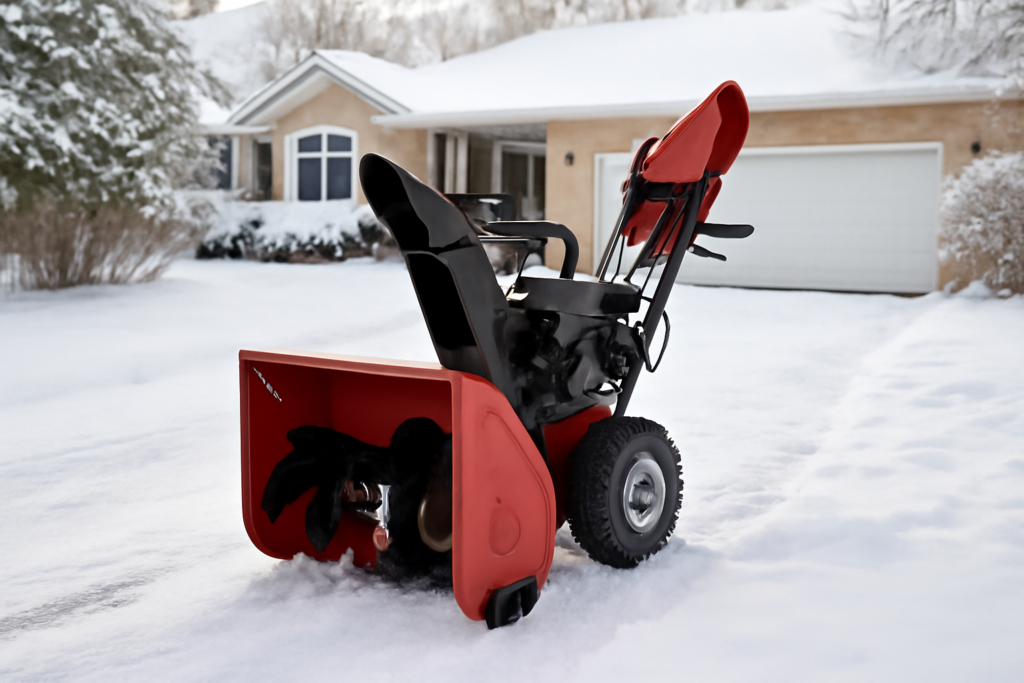
When a foot of snow buries your driveway, the right machine turns an hour of shoveling into ten minutes of walking. A Toro snow blower is one of the most popular choices in North America because the lineup spans light electric single-stage units to heavy two-stage machines that eat deep drifts. This guide walks through the Toro snow blower range, how to pick the right one, and how to run it safely.
- Single-Stage vs. Two-Stage vs. Three-Stage
- The Toro Lineup at a Glance
- Key Specs to Compare
- Price Ranges
- Helpful Features
- Starting and Operating
- Maintenance
- Critical Safety Rules
- Gas vs. Battery Toro Snow Blowers
- Sizing to Your Driveway and Climate
- Common Problems and Fixes
- Quick Answers to Common Questions
- The Bottom Line
Single-Stage vs. Two-Stage vs. Three-Stage
Toro builds all three, and matching the type to your snowfall is the key decision:
- Single-stage (Power Clear): a spinning rubber-tipped auger both pulls in snow and throws it. Light, easy to maneuver, and its paddle touches the pavement so it scrapes clean. Best for flat paved surfaces and up to about 8-9 inches of snow.
- Two-stage (Power Max): a metal auger feeds snow to a separate impeller that throws it far. It handles deep, heavy, and wet snow, gravel driveways, and larger areas. The auger does not touch the ground, so it works on uneven surfaces.
- Three-stage (Power Max HD): adds an accelerator to feed the impeller even faster, chewing through the deepest, heaviest snow for large properties.
The Toro Lineup at a Glance
Understanding the model families helps you shop:
- Power Clear (single-stage): gas and 60V battery models with clearing widths around 18-21 inches. Ideal for city and suburban driveways with moderate snowfall.
- Power Max (two-stage): gas machines with 24-28 inch widths, self-propelled drive, and powerful chute control for serious snow country.
- Power Max HD (three-stage / heavy-duty): the biggest units, 26-30 inch widths with commercial-grade build for long driveways and deep accumulation.
- 60V Flex-Force battery models: quiet, no-fuel single-stage and even two-stage options for those avoiding gas.
Key Specs to Compare
When choosing, weigh these numbers:
- Clearing width: wider clears faster but is harder to store. 18-21 inches for small driveways, 24-28 for large.
- Intake height: how deep a drift it can bite in one pass, often 12-21 inches.
- Engine displacement (cc): larger engines throw snow farther and handle wet snow better.
- Throw distance: good two-stage units toss snow 30-40 feet.
- Drive type: single-stage machines are semi-self-propelled by the auger; two-stage units have powered wheels or tracks.
Price Ranges
Budget according to type and duty:
- Single-stage gas or 60V battery: $400-$800.
- Two-stage (Power Max): $900-$1,600.
- Three-stage / HD: $1,600-$2,500+.
For most suburban homeowners with a two-car driveway and moderate winters, a single-stage Power Clear or a smaller Power Max around $500-$1,200 hits the sweet spot.
Helpful Features
Toro packs in several worthwhile conveniences:
- Quick Stick chute control: a single joystick aims the chute up, down, left, and right on the fly.
- Electric start: push-button starting so you skip the recoil pull in the cold.
- Anti-clogging systems: designs that keep wet snow moving through the chute.
- Heated hand grips on premium two-stage models.
- Zip Deflector for fast one-hand throw-distance adjustment.
Starting and Operating
Get a smooth start with the right routine:
- Check the oil (four-stroke models) and fill with fresh fuel; use stabilizer since snow blowers sit for months.
- Set the choke and prime if equipped, then pull the recoil or press electric start.
- Let it warm briefly, then engage the auger and, on two-stage units, the drive.
- Aim the chute downwind and away from the house, cars, and people.
- Take overlapping passes and slow down in deep or wet snow to avoid bogging.
Maintenance
A little off-season care prevents spring headaches:
- Change the engine oil per the manual, typically after the first few hours then annually.
- Use fresh fuel with stabilizer, or run the tank dry before storage to prevent carburetor gumming.
- Inspect and replace worn auger paddles and scraper bars on single-stage units, and shear pins on two-stage augers.
- Check the spark plug and belts each season.
- Grease fittings and store in a dry place off the cold concrete.
Critical Safety Rules
Snow blowers cause serious hand injuries every winter, almost always the same way. Follow these rules without exception:
- Never clear a clogged chute or auger with your hands. Shut off the engine, wait for all moving parts to stop, and use the clean-out tool or a sturdy stick. Stored energy in a jammed auger can suddenly spin and amputate fingers.
- Disconnect the spark plug (or remove the battery) before clearing jams or servicing.
- Never run a gas engine indoors or in a closed garage; carbon monoxide is deadly. Start and operate it outdoors.
- Keep children, pets, and bystanders far away, and never aim the discharge chute at people, windows, or cars. Thrown ice and hidden objects become projectiles.
- Wear eye protection, warm gloves, and non-slip boots, and handle fuel only on a cool engine.
Gas vs. Battery Toro Snow Blowers
Toro now offers strong options in both fuel types, and the choice shapes your ownership experience:
- Gas: unlimited runtime, strong throwing power for deep and wet snow, and the ability to refuel and keep going. The trade-offs are engine maintenance, fuel storage, noise, and the requirement to run only outdoors.
- 60V Flex-Force battery: quiet, push-button start every time, no fuel or oil, and no fumes so you can start it in an open garage. The limits are battery runtime per charge and reduced power in the heaviest, wettest snow, though modern two-stage battery units are closing that gap.
For moderate snowfall and smaller driveways, a 60V single-stage is a clean, low-hassle choice. For deep-snow country and long driveways, gas two-stage machines still lead on sustained power.
Sizing to Your Driveway and Climate
Buying the right size prevents both frustration and wasted money:
- Short paved driveway, light-to-moderate snow: an 18-21 inch single-stage Power Clear.
- Two-car driveway, regular winters: a 24-26 inch two-stage Power Max.
- Long or gravel driveway, heavy snow: a 28-30 inch two-stage or three-stage HD machine.
Also weigh storage space, since larger machines need more room, and your physical ability, because self-propelled two-stage units do the pushing for you on inclines and in deep snow.
Common Problems and Fixes
A few recurring issues are easy to solve:
- Won’t start after summer: almost always stale fuel gumming the carburetor. Use fresh, stabilized fuel and store it correctly.
- Auger won’t turn on a two-stage: a sheared shear pin, a cheap and intentional safety part designed to break before the gearbox does. Keep spares and replace as needed.
- Chute keeps clogging in wet snow: slow down, take smaller bites, and coat the chute with a silicone spray. Always clear clogs with the tool, never your hands.
- Poor throwing distance: worn auger paddles or belts on single-stage units, or a loose auger belt on two-stage models.
Quick Answers to Common Questions
Single-stage or two-stage? Choose single-stage (Power Clear) for paved driveways and up to about 8-9 inches of snow. Choose two-stage (Power Max) for deep, wet, or heavy snow, gravel driveways, and larger areas.
How do I unclog the chute safely? Shut off the engine, wait for all moving parts to stop, and use the clean-out tool or a sturdy stick. Never put your hand in the chute or auger, even when it is off, because stored energy can spin the auger suddenly.
Why won’t it start after summer? Almost always stale fuel. Use fresh, stabilized gasoline and store it properly between seasons.
What is a shear pin? A cheap safety pin on two-stage augers that breaks before the gearbox does if the auger jams. Keep spares and replace them as needed.
Can I run it in the garage? No. Start and operate a gas model outdoors only, since the engine produces deadly carbon monoxide.
The Bottom Line
A Toro snow blower matched to your climate turns winter’s worst mornings into a quick chore. Choose a single-stage Power Clear for moderate snow on paved driveways, a two-stage Power Max for deep or wet snow and larger areas, and the HD line for the biggest jobs. Keep fresh fuel in it, replace wear parts each season, and above all never clear the chute by hand, and it will serve you reliably winter after winter.