
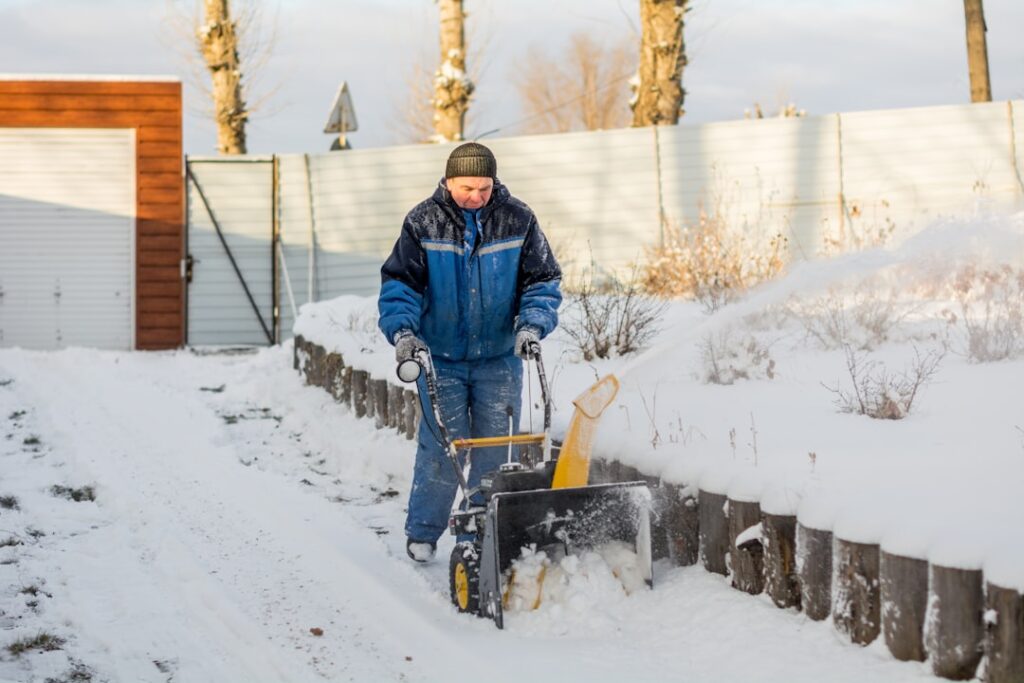
When the first real storm drops a foot of wet snow across the driveway, the machine in your garage matters more than the coffee in your hand. A Craftsman snow blower is one of the more common choices in American garages for good reason: the lineup is broad, the pricing is reasonable, and you can walk into a Lowe’s or an Ace Hardware and put hands on one before you buy. Below is a breakdown of what each type does, what it costs, and how to keep it running.
Craftsman is owned by Stanley Black & Decker now, and the current snow-blower catalog spans battery-powered single-stage units all the way up to serious three-stage gas machines. Picking the right one comes down to how much snow you get, how big your area is, and whether you want to deal with gas at all.
- Single-Stage, Two-Stage, and Three-Stage Explained
- Gas Models and Engine Sizes
- Battery-Powered V20 and V60 Options
- Auger Types and Clearing Performance
- Pricing: What You Will Actually Spend
- Where They Are Sold and the Warranty
- Features and Matching the Machine to Your Snow
- Maintenance That Keeps It Running
Single-Stage, Two-Stage, and Three-Stage Explained
The stage count describes how the machine moves snow, and it is the single most important spec to understand before you buy.
- Single-stage: A rubber-tipped auger both scoops and throws the snow in one motion. The auger touches the ground, so these machines are best on paved surfaces and light-to-moderate snow, roughly up to 8 or 9 inches. Clearing widths run 21 to 24 inches. They are light, easy to store, and self-propel by pulling themselves forward through the paddles.
- Two-stage: A metal auger feeds snow to a separate high-speed impeller that flings it out the chute. The auger sits above the ground, so these handle gravel driveways, deeper snow, and heavier, wetter accumulation. Clearing widths span 24 to 28 inches, and powered wheels or tracks do the driving.
- Three-stage: Adds an accelerator that chops and feeds snow into the impeller faster, boosting throughput on deep, packed, end-of-driveway plow piles. Widths reach 28 to 30 inches. This is overkill for most suburban lots but a lifesaver in snow-belt regions.
Gas Models and Engine Sizes
The gas lineup is where Craftsman does its heaviest lifting. Two- and three-stage machines use Craftsman-branded overhead-valve engines typically ranging from about 179cc on smaller units up to 357cc on the big three-stage models. As a rough rule, more cc means the impeller can throw heavier snow farther, with throw distances of 30 to 40 feet on the larger machines.
Look for convenience features that genuinely matter in a blizzard: an electric push-button start that plugs into a wall outlet so you are not yanking a frozen recoil cord, heated hand grips on premium models, LED headlights for pre-dawn clearing, and a chute you can aim from the dash without stopping. Power steering on the biggest units makes turning a 200-pound machine far less of a workout.
Battery-Powered V20 and V60 Options
Not everyone wants to store gas and pull a cord. Craftsman’s cordless snow blowers run on the V20 platform for the smallest units and the V60 platform for more serious single-stage clearing. The V60 machines deliver clearing widths around 21 inches and can push through several inches of snow on a charge, with runtime scaling to the number and size of batteries you install.
Battery blowers start instantly, need no oil changes or fuel stabilizer, and are quiet enough to run at 6 a.m. without waking the neighborhood. The trade-off is runtime and raw throwing power. For a short two-car driveway in a region that sees moderate snow, a V60 unit is genuinely all many homeowners need. If you share the V20 or V60 batteries with other Craftsman tools already, the value gets even better.
Auger Types and Clearing Performance
On single-stage units the auger is a rubber-edged paddle that contacts the surface. Those paddles wear down over a few seasons and are a cheap, replaceable service part. On two- and three-stage machines the auger is serrated steel, which is what lets it chew through icy plow piles without touching the pavement, making it safe for gravel and uneven surfaces.
Match the clearing width to your area honestly. A 21-inch single-stage clears a walkway and a compact driveway quickly, but on a wide three-car apron you will make far too many passes. Step up to a 26- or 28-inch two-stage and you cut the job time roughly in half.
Pricing: What You Will Actually Spend
Craftsman spans a wide price band, which is part of the brand’s appeal. Here is the realistic lay of the land:
- Battery single-stage (V60): roughly $400 to $600 depending on battery kit.
- Gas single-stage: about $400 to $600.
- Gas two-stage, 24 to 28 inch: roughly $800 to $1,300.
- Gas three-stage, 28 to 30 inch: $1,300 to $1,500 and up.
Prices move with the season. Late-winter and early-spring clearance is the smart time to buy, when retailers discount leftover inventory. Buying in the panic before a forecasted storm is the worst time, and stock disappears fast.
Where They Are Sold and the Warranty
Craftsman snow blowers are stocked primarily at Lowe’s, which carries the deepest selection, along with Ace Hardware and various online retailers. Being able to see the machine, check the build quality of the chute and controls, and confirm the assembled weight before buying is a real advantage over ordering blind.
Warranty coverage on Craftsman gas snow blowers is typically a limited residential warranty in the range of two to three years, with the engine covered under the same or a separate term. Battery units carry a tool warranty plus a separate battery warranty, often around three years. Register the product and keep your receipt, because warranty claims go smoother when you can prove the purchase date.
Features and Matching the Machine to Your Snow
Not every add-on justifies its price, but a few genuinely change how the machine feels at 5 a.m. in a driving storm. Electric push-button start is the first one worth insisting on, because a frozen recoil cord is miserable and a plug-in start solves it for pennies of electricity. Heated hand grips are a real comfort upgrade on the premium two- and three-stage units when you are out for 30 minutes clearing a long driveway.
Beyond those, look at the chute control. A dash-mounted joystick or crank that lets you redirect the throw without stopping and walking around the machine saves time and keeps you from dumping snow where you just cleared. LED headlights matter more than people expect, since a huge share of snow clearing happens before sunrise or after dark. On the biggest three-stage machines, power steering and single-hand trigger controls turn a 200-pound beast into something you can actually maneuver around cars and around tight walkway corners.
Buy for your climate, not for the worst storm of the decade. If you live somewhere that sees a handful of light snows under 6 inches, a single-stage or a V60 battery unit clears fast and stores in a corner of the garage. Regions that get regular 8 to 14 inch storms and end-of-driveway plow piles want a two-stage in the 26 to 28 inch range. True snow-belt homeowners dealing with lake-effect dumps and packed drifts are the buyers who actually benefit from a 28 to 30 inch three-stage.
Driveway surface matters just as much as snowfall. Gravel and dirt drives rule out single-stage machines because the ground-contact auger will fling rocks; you need the raised steel auger of a two- or three-stage unit. Length and width of the area set the clearing width, and a helpful rule is that every extra 2 inches of width meaningfully cuts the number of passes on a wide apron.
Maintenance That Keeps It Running
A snow blower sits idle for eight or nine months, and that storage is where most of them die. For gas machines, do these things and yours will start every November:
- Change the engine oil at the start of each season, roughly every 25 to 50 hours of run time.
- Add fuel stabilizer to fresh gas, or run the tank dry before summer storage so the carburetor does not gum up.
- Check the auger shear pins and carry spares; they are designed to break to protect the gearbox when the auger hits an obstruction.
- Inspect the skid shoes and scraper bar for wear each fall, and replace paddles on single-stage units when they thin out.
- Keep the chute clean and coat it with silicone spray so wet snow does not clog it.
For battery units, maintenance is far simpler: store the batteries indoors at moderate temperature, keep them partially charged over the off-season, and clear ice from the auger housing after each use. Choosing the right Craftsman snow blower is really about matching stage count and clearing width to your snowfall, then keeping up with a few minutes of seasonal service so the machine is ready the morning you actually need it.


