Cold mornings and gas snow blowers do not mix well. Stale fuel gums up the carburetor, the pull cord fights you at 10°F, and you are left shoveling while the neighbors clear their drives. A toro battery snow blower sidesteps all of that with instant push-button starts, no fuel or oil, and enough power on Toro’s 60V platform to throw snow 30-plus feet. This guide covers the current models, how much snow they actually clear, real run times in the cold, and how to keep the batteries strong through a hard winter.
- Toro’s Battery Snow Blower Lineup
- Single-Stage vs Two-Stage: Which You Need
- Real Run Time in Cold Weather
- Performance in Real Snow
- Toro Battery vs Gas Snow Blower
- Battery Care Through Winter
- Is a Toro Battery Snow Blower Right for You?
- Setup and First Use
- Clearing Technique for Best Results
- The 60V Flex-Force Ecosystem Advantage
- Final Thoughts
Toro’s Battery Snow Blower Lineup
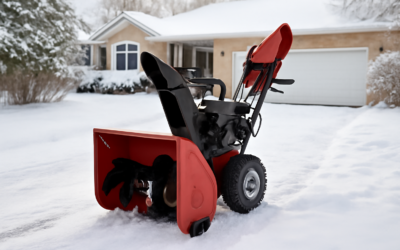
Toro built its cordless snow blowers on the 60V Flex-Force battery system, the same packs that run its mowers and trimmers. The lineup spans a few clearing widths to match different driveways:
- 60V 21-inch single-stage: The most popular homeowner model, ideal for 2-3 car driveways
- 60V 24-inch two-stage: More power and throw for heavier, deeper snow
- Power Max e26 two-stage: A dual-battery unit for serious snowfall regions
The single-stage 21-inch model is where most buyers land. It clears a 21-inch-wide path, handles snow up to about 8 inches deep in a pass, and throws it up to 35 feet with the adjustable chute.
Single-Stage vs Two-Stage: Which You Need
The right machine depends on how much snow your region drops. Single-stage blowers use a paddle auger that contacts the ground, scraping pavement clean and flinging snow in one motion. They excel on flat driveways and snowfalls up to about 8 to 9 inches.
Two-stage blowers add an impeller that throws snow farther and handle deeper, heavier, end-of-driveway plow piles. They do not scrape to the pavement, so they leave a thin layer, but they power through 12-plus inches. If you routinely get big storms or have a long gravel drive, step up to two-stage; otherwise the single-stage 21-inch is lighter, cheaper, and plenty.
Real Run Time in Cold Weather
Battery run time is the question every buyer asks. On the 60V single-stage with a 6.0Ah or 7.5Ah battery, expect roughly 20 to 40 minutes of clearing, depending on snow depth and density. Light, fluffy powder stretches that time; wet, heavy snow shortens it considerably.
Cold itself reduces lithium capacity, so a battery that runs 35 minutes at 40°F may deliver closer to 25 at 15°F. The fix is simple:
- Store batteries indoors and only bring them out when you are ready to clear
- Keep a second charged pack inside as a hot swap
- Clear snow soon after it falls, before it compacts and gets heavier
For most suburban driveways, one large battery finishes the job, and a spare guarantees you never stop mid-storm.
Performance in Real Snow
Owners consistently report that the 60V single-stage handles typical 4 to 8 inch snowfalls with ease, clearing a two-car driveway in 10 to 20 minutes. The variable-speed auger control and the LED headlight make early-morning and after-dark clearing genuinely comfortable.
Where it struggles is the dense, icy berm the town plow leaves at the end of your drive. That compacted mix taxes a single-stage machine, so you may need to take it in shallow bites. For regions where that plow pile is a regular reality, the two-stage e26 with its impeller and dual batteries chews through it far more easily.
Toro Battery vs Gas Snow Blower
The battery Toro wins decisively on convenience. There is no gas to buy or stabilize, no oil to change, no spark plug, no cord to yank, and no fumes in a closed garage. It starts every time with a button, even after sitting all summer, and runs at a fraction of the noise.
Gas still holds an edge for marathon clearing during a two-foot blizzard, since you can refuel in seconds and keep going indefinitely. But for the vast majority of homeowners who deal with periodic 4 to 10 inch storms, the battery model’s reliability and zero maintenance outweigh the runtime ceiling. The math favors battery unless you clear huge areas or live in a heavy-snow belt.
Battery Care Through Winter
Lithium packs are the heart of the machine, so protect them. Never store batteries in a freezing garage; keep them at room temperature and only take them into the cold to work. Charge a pack to full before an expected storm, and avoid letting batteries sit fully drained.
At season’s end, store the packs around 40 to 80 percent charge in a cool, dry indoor spot rather than dead or full. A well-treated 60V battery lasts several winters and 500-plus cycles. Replacement packs run roughly $150 to $300, so this care directly protects your investment.
Is a Toro Battery Snow Blower Right for You?
If you own a suburban driveway, get periodic snowfalls under about 10 inches, and value push-button reliability, the 60V single-stage Toro is an excellent choice. It is quiet, maintenance-free, and always starts. Owners already invested in Toro’s 60V mowers and tools gain the most, since the batteries cross over.
Choose the two-stage model if you routinely face deep snow, heavy plow piles, or a long driveway. And if you clear commercial-sized areas during major blizzards, a gas two-stage may still serve you better. For everyone in between, the battery Toro delivers the easiest snow clearing you can buy.
Setup and First Use
Getting a Toro battery blower ready takes minutes, not the fuel-and-oil ritual gas demands. Charge the battery fully, which takes roughly 60 to 150 minutes depending on pack size, attach it, and confirm the chute controls move freely. There is no oil to add, no fuel to mix, and no break-in period.
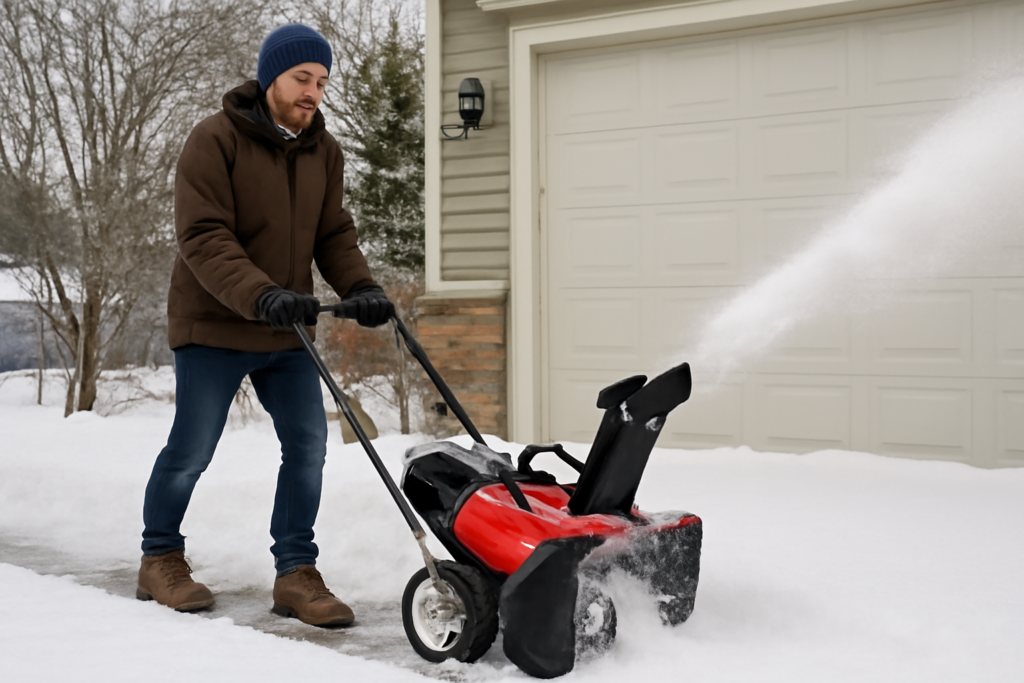
Before the first storm, practice aiming the chute and adjusting the throw distance so you are not fumbling with cold hands during actual clearing. Point the discharge downwind and away from cars, windows, and walkways you have already cleared. The single-stage models are self-propelling to a degree, since the spinning auger pulls the machine forward as it contacts the snow, so you guide rather than push it hard.
Clearing Technique for Best Results
Good technique stretches your battery and gives cleaner results. Work in overlapping passes, taking a slightly narrower bite than the full intake width so the auger never bogs down. In deep snow, take two shallow passes rather than one that stalls the machine and drains the pack faster.
A few field-tested habits make a difference:
- Clear early and often: Two passes during a long storm beat one through packed, heavy snow
- Angle the chute downwind so you are not fighting your own thrown snow
- Overlap passes by a few inches to avoid leaving strips
- Slow down in wet, heavy snow to let the auger keep up
- Keep the second battery indoors and warm for a fast swap
Because the machine starts instantly, clearing a fresh two-inch dusting the moment it stops falling is realistic, and that habit prevents the deep, compacted mess that taxes any blower.
The 60V Flex-Force Ecosystem Advantage
One of the strongest reasons to buy a Toro battery snow blower is the shared 60V Flex-Force battery platform. The same packs that power the snow blower also run Toro’s 60V mowers, string trimmers, leaf blowers, and hedge trimmers. If you already own Toro yard tools, adding a bare-tool snow blower means you may only need the machine itself, not another battery and charger.
This cross-compatibility pays off year-round. Your summer mowing batteries become your winter snow-clearing batteries, so the investment in packs works across every season instead of sitting idle half the year. For a homeowner building a single-brand cordless arsenal, the platform lock-in is a feature rather than a drawback, since one charger and a couple of large batteries cover an entire yard’s worth of equipment.
Final Thoughts
A Toro battery snow blower trades the frustrations of gas for instant starts and zero maintenance without giving up serious clearing power. Pick the single-stage for typical driveways or the two-stage for deep snow, keep a spare battery warm and charged, and store your packs properly between storms. Do that, and you will be back inside with hot coffee while the gas-blower crowd is still yanking pull cords in the cold.