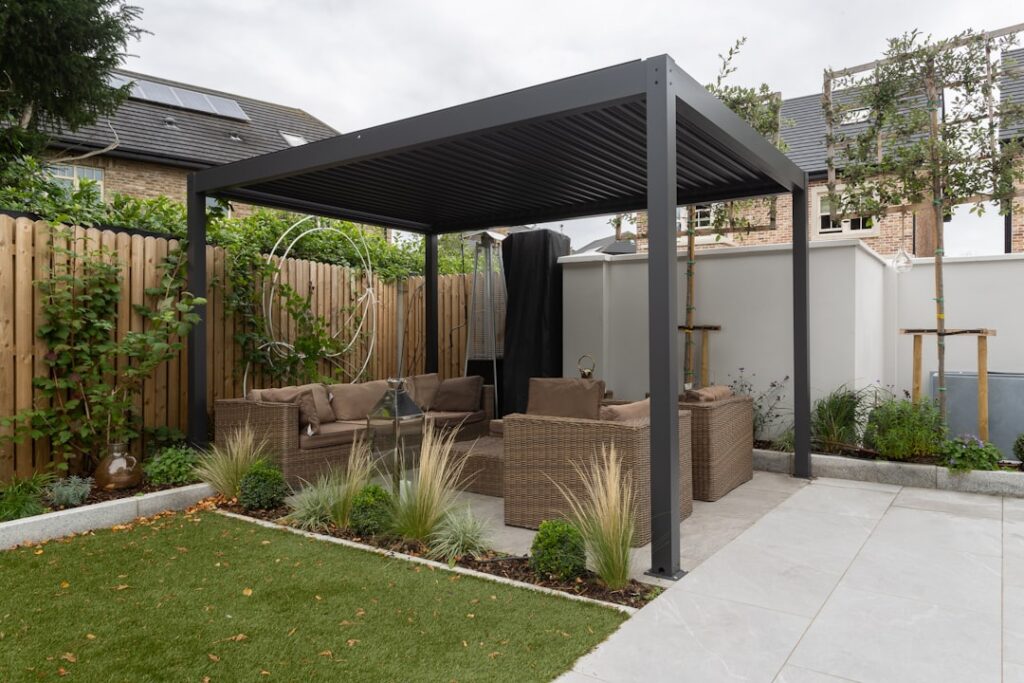
The louvered-pergola market split into two camps over the last few years: dealer-installed systems that start around $15,000, and direct-to-consumer aluminum kits that deliver 80 percent of the function for a quarter of the money. A hanso pergola sits squarely in the second camp — Hanso Home built its name selling adjustable-louver aluminum pergola kits online, shipped freight to your driveway, and assembled by you and a patient friend over a weekend. After the brand’s rapid rise on Amazon and its own storefront, the fair questions are the ones this review answers: what you actually get in the crate, how the build quality holds up, and whether the price advantage survives contact with assembly day.
Part of our Decks & Outdoor guide — explore the full guide →
- Hanso Pergola: The Brand in Brief
- The Core Lineup: Louvered Aluminum Kits
- Build Quality: What the Aluminum Tells You
- Assembly Day: The Honest Timeline
- Site Prep: The Part the Listing Photos Skip
- Living With It: Maintenance and Seasonal Habits
- Warranty and Support
- How It Stacks Up
- Verdict: Who Should Buy One
Hanso Pergola: The Brand in Brief
Hanso Home is an online-first outdoor living brand, and the pergola line is its flagship. The pitch is straightforward: powder-coated aluminum framing, integrated adjustable louvered roofs, and hardware engineered for homeowner assembly rather than dealer crews. Selling direct — through hansohome.com and marketplace listings — strips out the dealer margin and territory-protected installer markup that inflates the big louvered names. The tradeoff is equally straightforward: no local showroom, no factory install crew, and customer service that happens over email and phone rather than in your backyard. That bargain defines everything else about the ownership experience.
The Core Lineup: Louvered Aluminum Kits
Hanso’s catalog centers on freestanding louvered pergolas in the footprint sizes that cover most patios — roughly 10×10, 10×13, and 13×13 feet, with larger combined layouts possible by pairing units. The signature feature set across the range:
- Adjustable louvered roof: Extruded aluminum louvers rotate from closed (rain-shedding) through about 90-plus degrees open, letting you dial sun and airflow by season. Adjustment is by hand crank on the standard kits, with motorized operation appearing on upper trims.
- Integrated drainage: Closed louvers channel rainwater into gutters built into the frame and down through the posts — the detail that separates a true louvered pergola from a slatted roof that merely slows the rain.
- Powder-coated aluminum structure: Posts in the 4-6 inch class and boxed beams, finished typically in matte black or dark gray. Aluminum means no rust, no repainting, and a structure light enough for two people to raise.
- Accessory ecosystem: Privacy screens, shade curtains, and mosquito netting tracks sized to the frame, plus pre-drilled provisions for lighting.
Street pricing generally lands between $2,000 and $5,000 depending on footprint and trim — a bracket where the main competition is Purple Leaf, SunVilla, and the Costco seasonal imports rather than the $18,000 StruXure quote from a dealer.
Build Quality: What the Aluminum Tells You
Judged against dealer-installed systems, a Hanso kit uses thinner extrusions and simpler corner castings — that is where the price difference physically lives. Judged against its actual DTC peers, the kits hold up well: wall thicknesses are competitive, the powder coat is even, and the louver bearings and crank gear are serviceable parts rather than sealed mysteries. Owners in snow country should treat the published snow and wind ratings as hard limits, not suggestions — louvered roofs of every brand at this price want louvers opened before a heavy snow load and a bolted, plumb footing to hit their wind numbers. Concrete anchoring is not optional; every published rating assumes it. If your site sees regular 60-mph gusts or lake-effect dumps, that is an argument for either a heavier dealer system or a simple open-slat structure like a Toja Grid pergola that carries no rain-sealing pretensions to maintain.
Assembly Day: The Honest Timeline
The crate arrives by freight — typically 400-700 pounds across several boxes, curbside delivery, so plan the driveway-to-backyard haul. Budget realistically:
- Two capable adults, 6-10 hours for a 10×13, spread over a weekend. The louver roof assembly is the fiddly half; the post-and-beam frame goes fast.
- Tools: Impact driver, sockets, levels, a hammer drill and wedge anchors for the concrete pad, and two sturdy ladders.
- The critical hour is the first one: Squaring and leveling the posts. Louvers bind and gutters misdrain on a racked frame, and most complaints traceable to “poor quality” are actually poor squaring.
Instructions are diagram-heavy in the flat-pack tradition; the brand supplements with assembly videos, and third-party handyman assembly typically quotes $500-$900 if you would rather write a check than turn 400 bolts.
Site Prep: The Part the Listing Photos Skip
Every glossy product shot shows the pergola on a perfect slab, and that slab is your job before the freight truck arrives. The realistic requirements: a level concrete pad or footings at all four posts — 4 inches of slab minimum for wedge anchors, or 12-inch-diameter poured footings below frost line for installations over pavers or lawn (anchoring to loose pavers alone will not meet any wind rating). Check your dimensions against roof overhangs, and remember the louver roof needs open sky above it to justify itself. Permits deserve a phone call: many jurisdictions exempt freestanding structures under 120 or 200 square feet, but attached placement, HOA review, and setback rules catch people after assembly, when relocating 500 pounds of bolted aluminum is nobody’s idea of a weekend. Budget $300-$800 for a new pad if you do not already have one — a real number that belongs in the price comparison against dealer quotes that include site work.
Living With It: Maintenance and Seasonal Habits
Aluminum keeps the maintenance list short but not empty. Twice a year, hose out the gutters and post drains — leaves and cottonwood fluff are the number-one cause of “my roof leaks” complaints on every louvered brand, because blocked drainage backs water up over the louver laps. Wash the frame with car-wash soap when you do the patio furniture, lubricate the louver pivot points and crank gear annually with a dry silicone spray, and re-torque the structural bolts after the first month and each spring as the frame works through its first thermal cycles. In snow country, open the louvers before storms and knock heavy accumulation off with a soft broom. Fifteen minutes a season is the honest total — a fraction of what a wood pergola demands, which is much of why the aluminum kits took over this market.
Warranty and Support
Hanso backs the structure with a multi-year warranty on frame and finish, shorter coverage on moving parts and motors — read the current terms at purchase, because DTC warranty fine print evolves faster than dealer programs. The support experience is replacement-parts-by-mail: photograph the bent louver or stripped gear, email support, and a part ships. Owners report this works fine for what it is, but nobody is driving out to re-square your frame. Keep the box labels and part numbers; it shortens every support exchange.
How It Stacks Up
Against dealer louvered systems (StruXure, Equinox): Hanso costs 70-80 percent less and gives up motorized-everything refinement, thicker structure, integrated engineering for permits, and white-glove install. Against DTC peers (Purple Leaf, SunVilla): pricing and specs run neck-and-neck — compare current louver thickness, gutter design, and accessory pricing rather than brand reputation, because all of them iterate yearly. Against non-louvered kits: if you do not actually need a sealing, adjustable roof, a fixed-top or slat structure costs half as much and assembles in half the time — our vinyl pergola kits guide covers the low-maintenance fixed options worth considering before you commit to louvers.
Verdict: Who Should Buy One
A Hanso pergola makes the most sense for a homeowner with a concrete patio, moderate weather, basic tool competence, and a $2,500-$5,000 budget who wants the louvered-roof lifestyle — rain-proof dinners, adjustable shade — without financing a dealer install. It is the wrong buy for anyone unwilling to assemble and anchor it properly, for severe-weather sites pushing past its ratings, and for buyers who would be equally happy under a simple fixed canopy at half the price. Go in with a square frame, a torque-checked anchor bolt schedule, and realistic expectations of DTC support, and it is one of the stronger value plays in the category.