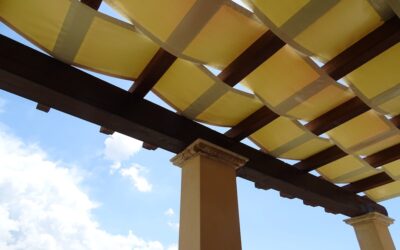
Traditional pergola builds stall on the same two obstacles: joinery skills and a free weekend crew. The Toja Grid pergola system attacks both by reducing the structure to powder-coated steel brackets that bolt standard dimensional lumber together like a giant erector set — you buy the 4x4s or 6x6s at the lumberyard, cut them to length, and drive structural screws into pre-positioned holes. TojaGrid’s pitch is a real pergola in an afternoon with a drill and a ladder. Having watched the system spread across patios for several years, here is an honest review: where it genuinely delivers, what it costs versus alternatives, and the weak points the marketing skips.
Part of our Decks & Outdoor guide — explore the full guide →
How the System Works
A Toja Grid kit is essentially a box of engineered connection points. Corner brackets (their TRIO three-way and QUAD four-way connectors) join posts to beams at the top; base brackets anchor posts to concrete, pavers, or a deck; and mid-connectors let you extend runs or hang shade sails. Everything is laser-cut steel with a matte black powder coat, sized for true big-box lumber — kits come in 4×4 and 6×6 versions. You supply and cut the wood, which is the clever part: lumber is the heavy, expensive-to-ship component, and sourcing it locally is why a bracket kit ships in a couple of compact boxes instead of a freight crate.
Assembly is honestly as advertised. A basic 10-by-10 single-bay pergola takes two people roughly 3 to 5 hours including lumber cutting, and the pre-drilled brackets keep everything square in a way DIY joinery rarely does. No notching, no rafter angles, no structural guesswork.
What It Costs, All-In
Bracket kits for a four-post 4×4 pergola run about $300 to $500; 6×6 kits run $500 to $800 depending on configuration. Then add lumber: eight to ten pressure-treated 4x4s or 6x6s plus top members runs $200 to $450 at 2026 prices, more if you upgrade to cedar ($400 to $800). Shade — TojaGrid’s own sail kits or third-party canopies — adds $150 to $400. Realistic totals: $650 to $1,100 for a treated-lumber 4×4 build, $1,200 to $2,000 for a cedar 6×6 with shade sails. That undercuts comparable cedar kit pergolas ($2,000 to $3,500) and aluminum louvered systems ($3,000-plus) while beating scratch-built cost only modestly — the premium buys speed and foolproof geometry, not materials savings.
The Modular Advantage
Modularity is the system’s best feature and not just a buzzword. Because every joint is a standard bracket, you can extend a single bay into an L-shape next summer, raise the height by swapping posts, unbolt everything and take the pergola when you move, or reconfigure it over a new patio layout. TojaGrid sells add-on bays, bench brackets, gate hardware, and shade-sail rings that reuse the same lumber sizes. For renters with landlord permission, deck-mounted bases make the whole structure legitimately removable — something no set-post pergola can claim. If you want to understand the hardware category more broadly before committing to one brand, our pergola brackets guide compares Toja-style systems against generic structural connectors.
Where the System Falls Short
Three honest criticisms. First, the aesthetic is fixed: black industrial brackets on square lumber reads modern-utilitarian, and no stain choice turns it into a traditional curved-rafter pergola. Second, you inherit lumber-quality problems — big-box 4x4s twist and check as they dry, and a bracket system cannot straighten a banana post; buy the straightest stock in the rack and seal it promptly. Third, wind and snow engineering is on you: the brackets are strong, but a fabric shade sail acts like a mainsail in storms and should come down in high-wind season, and unanchored deck mounting needs blocking under the deck boards. None of these is disqualifying; all of them surprise first-time builders.
Toja Grid vs the Alternatives
Against a scratch build, Toja wins on time and precision and loses slightly on cost and design freedom. Against wood kit pergolas from Backyard Discovery or cedar specialists, it wins on shipping, modularity, and future reconfiguration while giving up traditional styling. Against aluminum and vinyl systems — including the low-maintenance route we cover in vinyl pergola kits — Toja trades away zero-maintenance durability for real-wood warmth and a lower entry price; treated or cedar lumber will want restaining every 2 to 3 years, which is the ongoing cost the brochure omits. The right buyer is a confident-but-not-carpenter DIYer who likes modern styling and may want to expand later.
Build Tips From the Field
A few practices make the difference between a good build and a great one. Cut all lumber square with a circular saw and speed square — the brackets hide nothing. Seal every cut end before assembly; end grain drinks water and that is where rot starts. Use the structural screws supplied or GRK/Spax equivalents, never deck screws. Anchor to concrete with wedge anchors, not tapcons, for anything holding a shade sail. Check post plumb twice during assembly, because the system’s rigidity means an out-of-plumb post telegraphs through the whole frame. And stain or seal the lumber before final assembly while every face is reachable — brushing around installed brackets doubles the job and leaves misses at every joint.
Shade, Lighting, and the Add-On Ecosystem
A bare Toja frame throws almost no shade — the system’s top layout is a perimeter plus optional cross members, not a slatted roof — so the shade plan is part of the purchase, not an afterthought. TojaGrid’s own triangle and rectangle shade sails mount to ring hardware sized for the brackets and run $100 to $250 per sail; layering two triangles at different heights gives the adjustable, sculptural coverage the brand’s marketing photos show. Third-party options widen the range: standard shade sails from Coolaroo and others fit with eye-bolt hardware, wood slats screwed across the top members build a traditional dappled canopy from about $150 in lumber, and a wisteria or grape planting turns the frame into a living roof in three seasons. For rain protection you would need to bolt on polycarbonate panels with purpose-made hardware — doable, but at that point a roofed structure may have been the better starting purchase.
The ecosystem extends past shade. String-light hooks, planter brackets that hang boxes off the posts, privacy-wall panels, swing and hammock mounts rated for the 6×6 kits, and bench brackets that cantilever seating off the posts all reuse the same bolt pattern. That accessory depth is a quiet argument for the system: the pergola becomes a chassis you keep outfitting, and a $60 pair of bench brackets plus two 2x10s adds built-in seating no traditional kit offers.
Verdict
The Toja Grid pergola earns its popularity: it converts the hardest 40 percent of a pergola build — joinery, squareness, engineering — into bolt-together hardware, at a total cost between DIY-scratch and premium kits. Accept the modern black-bracket look, budget for decent lumber and periodic staining, and plan your anchoring, and it is one of the most genuinely DIY-achievable shade structures on the market. Skip it only if your heart is set on traditional pergola styling or a zero-maintenance material.
A final word on value over time. The brackets themselves are effectively permanent — powder-coated steel with no moving parts — so the system’s lifetime cost is really a lumber question: treated pine posts may want replacement in 12 to 15 years at a few hundred dollars, cedar longer, and the brackets simply bolt onto the new sticks. That replaceability is unique in the category; a rotted post on a traditional mortised pergola is a rebuild, while on a Toja Grid pergola it is a Saturday and two lumberyard 6x6s. Factor that in and the effective per-year cost lands below almost everything except a bare-bones scratch build, with none of the scratch build’s weekend count. For the renter, the mover, the expander, and the first-time builder, that math is the review in one sentence.