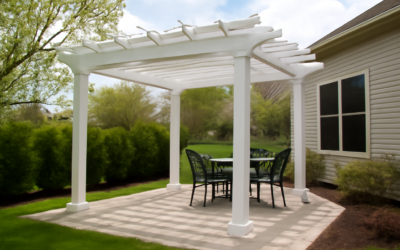
A pergola transforms a plain patio into an outdoor room, and you do not need a contractor or carpentry skills to get one. Vinyl pergola kits arrive pre-cut and pre-engineered, so a capable homeowner can assemble a clean, durable structure over a weekend. For anyone who wants the look of a classic pergola without the upkeep of wood, vinyl is a compelling option.
Part of our Decks & Outdoor guide — explore the full guide →
These kits use PVC vinyl components, often reinforced with internal aluminum, that resist rot, insects, and fading. The result is a structure that keeps its bright finish for years with little more than an occasional rinse.
Why Choose Vinyl Over Wood
Wood pergolas look beautiful but demand constant care. They need staining or sealing every couple of years, they can warp, split, and gray, and insects find them appealing. Vinyl sidesteps all of that.
The tradeoffs are real but manageable. Vinyl offers fewer natural-wood aesthetics, and the strongest kits rely on internal aluminum reinforcement for span and wind resistance. What you gain is a maintenance schedule that amounts to washing it occasionally and a finish that does not rot or fade quickly under sun and rain.
Common Styles and Configurations
Vinyl pergola kits come in several layouts to suit different spaces and shade needs. Pick the style that matches your patio and how much sun you want to block.
- Freestanding pergolas: Stand on their own anywhere in the yard, supported by four or more posts.
- Attached or wall-mounted pergolas: Connect to the house to shade a patio or deck off the back wall.
- Open-roof slatted designs: Classic rafters and purlins that cast striped shade.
- Louvered pergolas: Adjustable slats that open and close to control sun and rain.
- Pergola with canopy: Fabric tops added for fuller shade.
Freestanding open-roof kits are the most common starting point, balancing cost, looks, and ease of assembly.
Sizing Your Pergola
Measure your space and your intended use before choosing a size. Pergolas span a wide range, and the right footprint depends on the furniture or area you want to cover.
- Small kits (about 8 by 8 feet): Cover a bistro set or a cozy seating nook.
- Medium kits (about 10 by 12 to 12 by 14 feet): Shade a dining table or a lounge area.
- Large kits (16 feet and up): Cover an extended patio or outdoor kitchen.
- Height: Most stand 8 to 10 feet tall; confirm clearance for doors and fixtures.
Leave room around your furniture so the space does not feel cramped, and check local setback rules before placing a structure near property lines.
What Vinyl Pergola Kits Cost
Price tracks closely with size, style, and reinforcement. Use these figures as planning estimates.
- Small freestanding kits: roughly $1,200 to $2,500.
- Medium kits: about $2,500 to $5,000.
- Large or louvered kits: $5,000 to $10,000 or more.
- Professional installation: typically $500 to $2,000 if you do not assemble it yourself.
- Footings and concrete: a modest added cost for a permanent, anchored install.
Vinyl often costs more up front than basic wood, but the savings on stain, sealer, and replacement over the years frequently make up the difference.
Installation Basics
Most quality kits are designed for DIY assembly with common tools and a helper. The structure is the easy part; a solid, level foundation is what makes the project last.
- Confirm the site is level and check whether your area requires a permit for the structure.
- Set the post anchors into concrete footings or attach base brackets to an existing slab or deck per the instructions.
- Stand and plumb the posts, bracing them temporarily as you go.
- Attach the main support beams, keeping everything square and level.
- Install the rafters and purlins, spacing them as the kit specifies.
- Tighten all connections and add any decorative caps or hardware.
Work with at least one helper since the beams are long and awkward, and follow the manufacturer’s instructions and load ratings exactly. In windy regions, proper footings and anchoring are critical; if you are unsure about foundations or local code, consult a licensed contractor.
Choosing a Quality Kit
Not all vinyl kits are built the same. A few features separate a structure that lasts decades from one that sags in a few seasons.
- Internal aluminum reinforcement: Adds strength and span without sacrificing the vinyl look.
- UV-resistant vinyl: Resists yellowing and chalking under sun exposure.
- Quality hardware: Stainless or coated fasteners that will not rust.
- Clear instructions and support: A sign of a manufacturer that stands behind the product.
- Solid warranty: Look for meaningful coverage on the vinyl and structure.
Read reviews and confirm the wind and load ratings suit your climate before buying.
Maintenance and Longevity
The biggest selling point of vinyl is how little it asks of you after installation. There is no staining, sealing, or sanding, and the material does not rot, splinter, or feed insects. A typical maintenance routine is little more than an occasional wash to keep the finish bright.
Keep these simple practices in mind to get decades of service:
- Rinse the vinyl with a garden hose and mild soap a couple of times a year to remove dirt and pollen.
- Inspect connections and fasteners each season and tighten any that have loosened.
- Clear leaves and debris from the top so nothing traps moisture or stains the surface.
- Check the footings after major storms in windy regions.
- Address any cracks promptly, since small damage is easier to repair than a failed component.
With that minimal care, a quality vinyl pergola holds its appearance far longer than a comparable wood structure.
Is a Vinyl Pergola Right for You?
If you want backyard shade and structure without the endless maintenance of wood, a vinyl pergola kit is one of the easiest wins in outdoor living. It assembles over a weekend, holds its finish for years, and adds usable square footage and value to your home.
Choose a reinforced, UV-stable kit sized for your space, build it on a proper foundation, and follow the manufacturer’s guidance on anchoring and load. Do that, and you will have a clean, durable outdoor room that keeps looking sharp long after a wood version would need its next coat of stain.
Prefer to explore on your own?
See how new flooring looks in your actual room in seconds — free, no signup.
Try the free Floor Studio →