
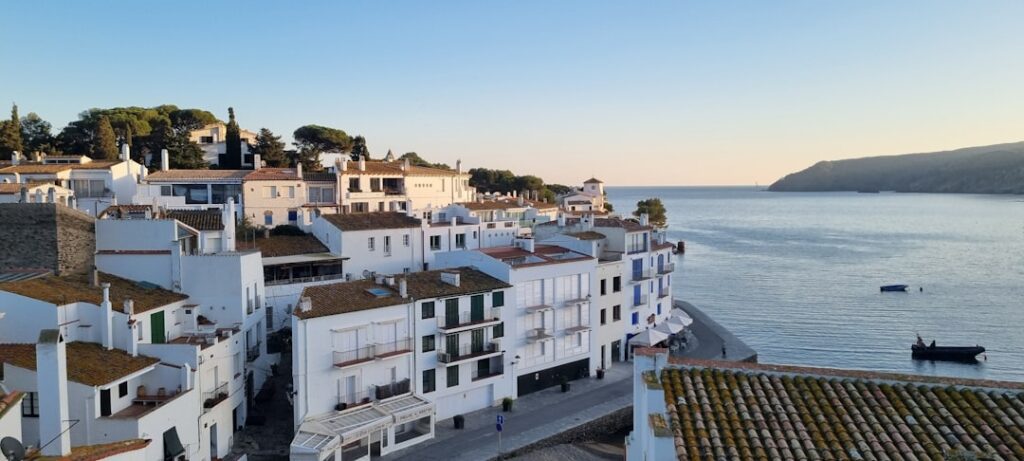
Blue roofs make up only a sliver of American shingle sales, which is exactly why they photograph so well — a blue-gray roof instantly separates a house from a street of browns and blacks. Harbor blue shingles sit in the smartest corner of that niche: not a crayon blue but a muted, gray-washed slate blue with coastal DNA, offered under names like Owens Corning’s Harbor Blue in the Oakridge and Duration lines. Paired with the right siding, the color reads sophisticated rather than novel. Here’s what the color actually looks like on a roof, which exteriors it flatters, what it costs, and the mistakes that make blue roofs go wrong.
Part of our Roofing guide — explore the full guide →
What Harbor Blue Actually Looks Like
On the shingle wrapper, harbor blue looks distinctly blue. On the roof, distance and daylight mute it into a blue-gray blend — most versions mix granules of slate blue, gray, and near-black, so the field shimmers between “gray roof with blue cast” on overcast days and unmistakable denim blue in full sun. That variability is the point: a solid, single-tone blue roof can look plastic, while a blended architectural shingle carries depth and shadow lines that flatter traditional and coastal architecture alike.
Owens Corning Harbor Blue is the flagship of the name, available in the mid-range Oakridge line and the heavier TruDefinition Duration line with the SureNail fastening strip. Comparable blues from other brands include GAF Timberline’s Biscayne Blue (in select regions) and CertainTeed’s Atlantic Blue in Landmark. Availability varies by region — blues are stocked along coasts and special-ordered inland, which can add one to three weeks of lead time and a small freight premium. Always evaluate a full board sample or, better, drive past an installed roof; your supplier or the Owens Corning “roofs near you” gallery can point to local addresses.
Siding Colors That Work With a Blue Roof
Harbor blue is friendlier than most strong roof colors because it behaves like a cool neutral. The proven pairings:
- White and cream: the coastal classic. Crisp white (SW Extra White, BM Chantilly Lace) delivers the Cape Cod/Nantucket look; softer whites like BM White Dove keep it relaxed. This combination is essentially mistake-proof.
- Light gray: tone-on-tone cool harmony — SW Repose Gray or BM Stonington Gray siding lets the roof supply the color. Modern and quiet.
- Warm tan and sandy beige: beach-house chemistry; sand-and-sea contrast makes both colors richer. SW Accessible Beige or natural cedar shakes both work.
- Navy or slate blue body: a daring monochrome that succeeds when siding sits several shades darker or lighter than the roof, with white trim doing the separating.
- Pale yellow: a historic seaside pairing — think butter-yellow cottage under a slate-blue roof with white trim. Charming on traditional forms, risky on contemporary ones.
Harder pairings: orange-toned brick and honey-stained wood fight the blue directly (blue and orange are complements — high energy, hard to calm down), and beige siding with pink undertones goes muddy next to it. If your brick is staying, sample carefully before committing to a blue roof; a brown-gray or black roof usually serves warm brick better.
Trim, Doors, and Fixed Elements
White trim is the default and the best answer 80 percent of the time — it frames harbor blue the way white mats frame a photograph. Black or bronze accents (gutters, railings, light fixtures) sharpen the scheme without competing. For the front door, the strongest plays are glossy black, coral or brick red for deliberate contrast, natural wood tones, or a deep navy that echoes the roof. Gutter color: white gutters on white trim disappear nicely; on gray or tan siding, dark bronze gutters read more intentional than white. If your home has stone, cool-toned gray stone harmonizes while warm tan stone needs the sandy-beige siding route to bridge it.
Cost, Availability, and Energy Notes
Blue architectural shingles price the same as other colors within a line — the premium, when one exists, is freight on special orders. Ballparks installed: Oakridge-class shingles run $4.50 to $6.50 per sq ft ($450 to $650 per square installed); Duration-class with the woven nailing strip runs $5.00 to $7.50. A typical 25-square roof lands between $11,000 and $18,000 depending on region, pitch, and tear-off. If you’re quoted identical numbers for a stocked color and the blue, confirm lead time in writing — crews sometimes swap “close” colors when a special order slips, and a Biscayne-for-Harbor substitution is not close enough on a whole roof.
Thermally, harbor blue is a mid-tone: cooler than black or dark brown roofs, warmer than light gray or white. In hot-summer states, some blues are available with rated “cool roof” granule technology; ask specifically, because standard harbor blue is not a cool-rated color in most lines. The difference on attic temps between a mid-blue and black roof is real but modest — attic ventilation matters more than the color choice.
How Blue Shingles Age
All asphalt shingles lighten as granules weather and UV oxidizes the asphalt beneath. Blues fade gracefully compared with reds (which can go pink) — harbor blue trends toward a softer gray-blue over 10 to 15 years rather than shifting hue outright. Two maintenance notes protect the look. First, algae: the black streaking of Gloeocapsa magma shows on mid-tone roofs, so buy the algae-resistant version (Owens Corning’s StreakGuard/copper-granule technology carries a 10- to 25-year algae warranty depending on line) — the upcharge is trivial against soft-wash cleanings at $400 a visit. Second, repairs: keep two or three spare bundles from your install in the garage. Matching a discontinued or regionally scarce blue five years later is genuinely difficult, and a mismatched repair patch is far more visible on a blue roof than on a gray one.
Architectural Styles That Wear Blue Best
Roof color reads through the filter of the house’s form, and harbor blue favors certain silhouettes. Cape Cods, coastal cottages, and shingle-style homes are its native habitat — the color originated in exactly that visual tradition, and steep gables give the blend room to show its depth. Farmhouses and four-squares in white or cream take it beautifully. Colonials work when the trim program is disciplined: white corners, white cornice, dark shutters. Craftsman bungalows are a maybe — their earth-tone palettes usually prefer green or brown roofs, but a gray-sided craftsman under harbor blue can succeed.
Where it struggles: Mediterranean and Spanish styles (blue fights the stucco-and-clay vocabulary), ranch homes clad in warm brick, and ultra-modern boxes, which usually want the severity of charcoal or black. Roof visibility matters as much as style — on a steep A-frame or a tall gable facing the street, the roof is 40 percent of what you see and the blue becomes the house’s identity, while on a low-pitched hip barely visible from the curb, the color choice is nearly academic and you can be braver. Walk across the street and estimate how many square feet of roof actually show before deciding how bold to go.
Should You Commit to a Blue Roof?
Run three checks before signing. Neighborhood context: harbor blue thrives among whites, grays, and coastal palettes and can look like a guest at the wrong party on a street of earth-tone stucco — and HOA architectural committees sometimes restrict non-earth roof colors, so get written approval first. Resale horizon: a blue roof is a mild taste statement; if you’re selling within two years, gray or weathered-wood colors are safer, while a 15-year hold means you should please yourself. Sampling: view full shingle boards against your actual siding in morning and evening light, because harbor blue reads grayer than its swatch in most daylight.
Get those three right and harbor blue shingles deliver something rare in roofing — a color people actually notice, executed with enough gray restraint that it still looks correct twenty years in. Pair it with white or sandy siding, keep the accents dark and few, and let the roof be the one bold decision on the elevation.


