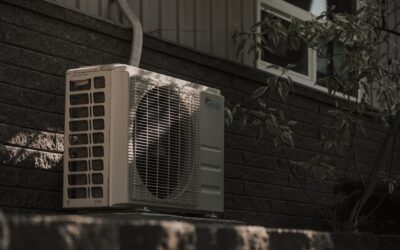
The heat pump compressor is the single most important part in your outdoor unit, and it is also the most expensive to replace. Sitting inside the condenser cabinet next to your foundation, this heat pump compressor pressurizes refrigerant so the system can move heat into your home in winter and out of it in summer. When it fails, the whole system stops doing its job, and homeowners are often blindsided by a repair bill that rivals the cost of a new unit.
After two decades in the field, I can tell you that most compressor failures are not sudden. They give you weeks of warning if you know what to listen and watch for. This guide walks through what the part actually does, how to spot early trouble, what replacement really costs, and when it makes more sense to walk away and buy a new system.
- What the Compressor Actually Does
- Scroll vs. Reciprocating Compressors
- Warning Signs of a Failing Compressor
- What Replacement Really Costs
- Repair or Replace? Do the Math
- Lifespan and the 10-Year Warranty
- The Hard-Start Kit and Other Life Extenders
- What Kills Compressors Early
- Getting a Second Opinion Before You Pay
What the Compressor Actually Does
Think of the compressor as the heart of the refrigerant loop. It takes low-pressure vapor coming back from the coils, squeezes it to high pressure, and pushes it forward as a hot, dense gas. That pressure change is what lets refrigerant like R-410A or the newer R-32 absorb and release heat as it cycles. Without that pressure, refrigerant just sits there and no heat transfer happens.
The motor and pump are sealed inside a welded steel shell filled with oil, which is why you cannot simply open one up and swap a worn bearing. When something inside fails, the entire hermetic unit gets replaced. A residential heat pump typically runs a compressor rated between 1.5 and 5 tons of capacity, drawing anywhere from roughly 15 to 40 amps under load.
Scroll vs. Reciprocating Compressors
Two designs dominate the residential market. Reciprocating compressors use pistons in cylinders, much like a car engine, and they were the standard for decades. They are durable but noisier and a bit less efficient.
Scroll compressors, which now ship in most quality systems, use two spiral-shaped scrolls that orbit against each other to trap and squeeze refrigerant. They run quieter, hit higher efficiency, and have fewer moving parts, so they tend to last longer. If you are buying a new heat pump, a scroll compressor is worth the small premium. Some premium units even use two-stage or variable-speed scroll compressors that ramp output up and down instead of running full-blast every cycle, which cuts wear and electric bills.
Warning Signs of a Failing Compressor
Catching problems early can be the difference between a $180 capacitor and a $2,500 replacement. Watch for these symptoms:
- No heating or cooling despite the fan running. If air moves but never changes temperature, the compressor may not be pumping refrigerant.
- Hard starts and stuttering. A compressor that hums, clicks, then falls silent is struggling to start against internal pressure, often a failing start capacitor or worn windings.
- Tripping the breaker. A compressor drawing too much current on startup will trip a 30-amp or 40-amp breaker. Never keep resetting it repeatedly; that points to a real electrical fault.
- Loud clattering, grinding, or metallic knocking. Internal parts breaking down make noise you have not heard before.
- Hissing or bubbling. This usually signals a refrigerant leak, which starves and eventually burns out the compressor.
- A sudden jump in your electric bill. A compressor working harder to move less heat quietly bleeds money for weeks before it dies.
Pro tip: put your hand near the large copper suction line during operation. It should feel cold in cooling mode. A warm suction line with the system running full-time is a classic sign the compressor is not doing its job.
What Replacement Really Costs
Here is where homeowners get sticker shock. Just the compressor part runs roughly $600 to $1,300 depending on tonnage and brand. Add labor, refrigerant recovery and recharge, a new filter drier, and a nitrogen leak test, and the installed total usually lands between $1,300 and $2,800. High-efficiency variable-speed compressors on premium systems can push past $3,000.
Two factors swing that number hard. First, whether the part is still under warranty. Second, how much labor your climate and unit location demand. A cramped rooftop or a rusted-out cabinet adds hours.
Repair or Replace? Do the Math
My rule of thumb: if the compressor fails and the system is more than 10 years old, seriously consider replacing the whole outdoor unit or the full system. Here is why. You are already paying $1,300 to $2,800 to open a sealed system. For $4,500 to $8,000 you can get a brand-new, more efficient heat pump with a fresh full warranty, current refrigerant, and another 12 to 15 years of service.
Pouring nearly $3,000 into a 12-year-old unit with an aging coil and a failing fan motor is throwing good money after bad. But if your system is only 5 or 6 years old and the compressor is covered under a parts warranty, repairing it is the smart move. Always ask the technician to confirm the failure with electrical readings before authorizing the work.
Lifespan and the 10-Year Warranty
A well-maintained residential compressor lasts 10 to 15 years. Systems in coastal salt air, or those that were undercharged or oversized from day one, fail sooner. Most manufacturers back the compressor with a 10-year limited warranty, but there is a catch: it typically covers the part only, not the labor or refrigerant, and only if you registered the unit within 60 to 90 days of installation. That registration step alone can save you $700 in labor down the road, so dig up your paperwork and confirm you are covered.
The Hard-Start Kit and Other Life Extenders
If your compressor is stuttering on startup but tests otherwise healthy, a hard-start kit can buy real time. This inexpensive add-on, usually $30 to $150 installed, gives the motor an extra jolt of torque to overcome pressure and spin up cleanly. It reduces strain during the most stressful moment of every cycle. It will not save a compressor that is mechanically failing, but it can rescue a marginal one and prevent repeat breaker trips.
To get the full 15 years out of a compressor, protect it with basic maintenance:
- Keep the outdoor coil clean. Rinse it each spring so the compressor is not fighting restricted airflow and high head pressure.
- Replace the indoor air filter every 1 to 3 months. A clogged filter starves airflow and overheats the system.
- Have refrigerant charge checked every couple of years. Running low burns compressors out faster than almost anything else.
- Keep at least 18 to 24 inches of clearance around the outdoor unit, free of shrubs, mulch, and grass clippings.
- Install a surge protector. A voltage spike can toast compressor windings in a fraction of a second.
What Kills Compressors Early
Understanding the failure modes helps you avoid them. The most common killer is refrigerant charge problems. An undercharged system, usually from a slow leak, lets the compressor run hot because refrigerant also carries oil and cooling back to the motor windings. Run it low for a season and the windings overheat and short. An overcharged system, often from a sloppy install, floods the compressor with liquid refrigerant, and liquid does not compress. That hydraulic shock, called slugging, can crack a scroll or bend a connecting rod in a reciprocating unit.
Electrical faults come next. A weak run capacitor forces the motor to draw excess amperage every cycle, cooking it slowly over months. That is why a $180 capacitor replacement, caught early, so often prevents a $2,500 disaster. Short cycling, where the system rapidly switches on and off, is another silent killer; every startup is the hardest moment for a compressor, and doubling the number of starts roughly halves the lifespan.
Getting a Second Opinion Before You Pay
Because the stakes are so high, I always tell homeowners to slow down when a technician says the compressor is dead. Ask to see the evidence. A genuine compressor failure shows up in specific readings: a shorted winding reads near-zero ohms to the metal housing, an open winding shows infinite resistance, and a seized compressor draws locked-rotor amperage and trips instantly. If the tech cannot show you a grounded winding or a mechanical lockup, the real problem may be a $30 to $200 part like a capacitor, contactor, or relay.
On a system under 8 years old, get a written quote and, if the number tops $1,500, call a second company for a diagnosis. I have seen plenty of good compressors condemned over a bad capacitor. Fifteen minutes of testing can save you thousands.
Bottom line: the compressor is expensive, but its failure is rarely random. Listen for hard starts, watch your electric bill, keep the coils clean, protect the charge, and confirm your warranty status before it fails. Do that, and you will either extend the life of the one you have or make a clear-eyed decision about replacing it when the time comes.