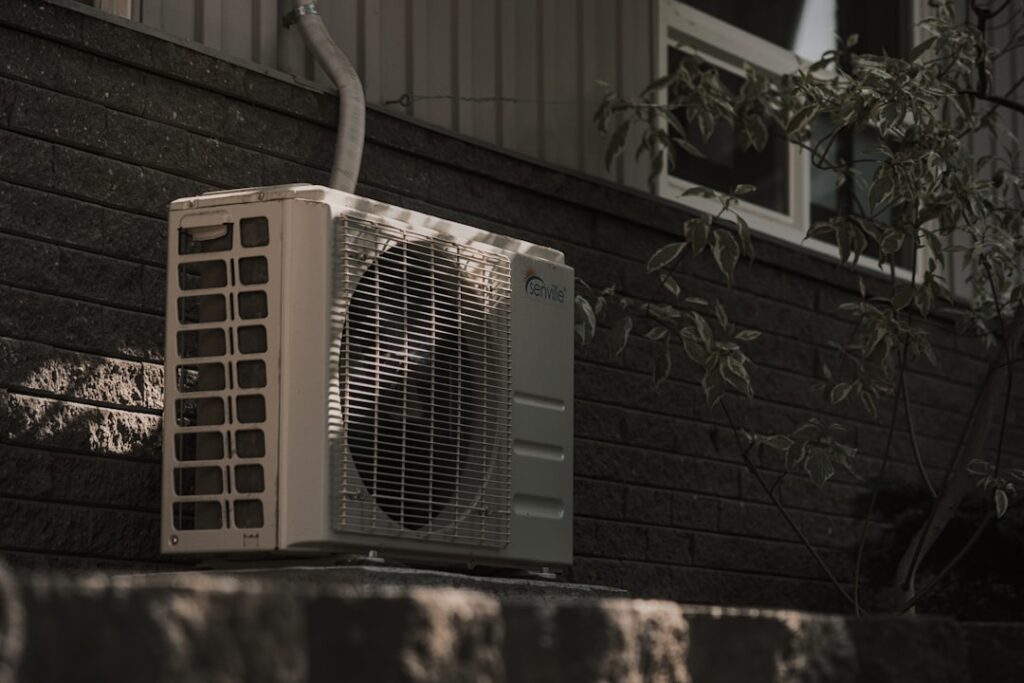
It’s the question every homeowner asks before writing a $6,000 check, and the honest answer is: it depends. How long does a heat pump last comes down to climate, run hours, sizing, and whether anyone ever changed the filter. As a rule of thumb, a residential heat pump lasts 10 to 15 years, but I’ve condemned units at 8 and I’ve serviced others still humming at 22.
Because a heat pump both heats and cools, it runs close to year-round in most of the country. That’s roughly double the run hours of a furnace-plus-AC setup, which is exactly why heat pump lifespans tend to land on the shorter end compared to a gas furnace’s 20-plus years.
Think of it the way you’d think about mileage on a truck. Two identical trucks can be the same age, but the one that logged 30,000 miles a year wears out long before the one that logged 8,000. A heat pump in Ohio that both heats and cools racks up far more “miles” than a gas-heated home’s AC that only runs four months a year. Age alone tells you very little; run hours and care tell you almost everything.
The Typical Lifespan Range
For planning purposes, use these benchmarks:
- 10 to 15 years is the realistic average for a system that gets basic upkeep.
- 15 to 20 years is achievable with annual professional maintenance and a mild climate.
- 20 to 25 years happens, but it’s the exception, usually a well-sized inverter unit in a temperate region with a diligent owner.
- Mini-split systems often edge slightly longer than central heat pumps because of variable-speed compressors that avoid hard starts.
Manufacturers design the compressor, the heart of the machine, to survive the warranty window and then some. But the surrounding parts, capacitors, contactors, and the reversing valve, wear on their own timelines.
For comparison, here’s how a heat pump stacks up against the equipment it often replaces. A standalone gas furnace commonly lasts 18 to 25 years because it only runs in winter. A central air conditioner runs 12 to 17 years. A heat pump does the job of both, which is why its lifespan lands closer to the AC number than the furnace number. When you’re comparing quotes, factor that shorter service life into your long-term cost, not just the sticker price.
What Shortens or Extends the Clock
Five factors do most of the work in deciding whether you get 10 years or 20.
- Coastal salt air. If you live within a few miles of the ocean, salt corrodes the outdoor coil and cabinet. Coastal units frequently fail in 7 to 10 years unless they have coated coils and get rinsed regularly.
- Run hours and cold climate. A heat pump grinding through single-digit winter nights in Minnesota logs far more compressor cycles than one in coastal Carolina. More run time equals more wear.
- Sizing. An oversized unit short-cycles, snapping on and off, which hammers the compressor and shortens life. A proper Manual J load calculation at install is worth its weight in gold.
- Maintenance. Dirty coils, low refrigerant, and clogged filters make the compressor work harder and hotter. This is the single biggest variable you actually control.
- Installation quality. A sloppy charge, poor line-set brazing, or wrong airflow at startup can shave years off before the unit is a month old.
Maintenance That Buys You Years
The difference between a 10-year unit and a 20-year unit is usually the owner. Here’s what actually moves the needle:
- Change the air filter every 60 to 90 days. A starved blower ices the coil and stresses the compressor.
- Rinse the outdoor coil each spring with a garden hose to clear pollen, grass clippings, and dust.
- Book an annual professional tune-up. A tech checks refrigerant charge, tests capacitors, and cleans the coils you can’t reach.
- Keep two feet of clearance around the outdoor unit so it can breathe.
- Address odd noises or short-cycling immediately instead of waiting for a total failure.
- Have the tech check and tighten electrical connections; a loose lug can burn a contactor and cascade into bigger damage.
To put real numbers on it: a professional maintenance visit runs $100 to $200 a year. Over a 15-year life that’s maybe $2,500. Skipping it to save that money routinely costs owners a premature compressor at year 9, and that failure alone can total the unit. The math isn’t close. Maintained systems don’t just last longer, they run more efficiently the whole time, so you pay less on utility bills every single month too.
Signs Your Heat Pump Is Failing
Machines usually warn you before they quit. Watch for these:
- Rising energy bills with no change in usage, a sign efficiency is slipping.
- Weak airflow, or air that never quite reaches your set temperature.
- Short-cycling, where the unit starts and stops every few minutes.
- Grinding, squealing, or hard-start clunks from the outdoor unit.
- Ice that won’t clear in winter, or the auxiliary heat strips running constantly.
- Frequent repairs, the classic death-by-a-thousand-cuts pattern past year 12.
Repair vs. Replace: Running the Math
When a big repair quote lands, I use the $5,000 rule: multiply the repair cost by the unit’s age in years. If the number tops $5,000, replace it. A $700 repair on a 9-year-old unit is $6,300, so replacement usually wins.
Also weigh these:
- A failed compressor or reversing valve on a unit past 10 years almost always means replacement. Those parts can run $1,500 to $2,800 installed, and the rest of the system is aging alongside them.
- If your system still uses R-22 refrigerant, phased out and now extremely expensive, any refrigerant repair pushes hard toward replacement.
- A new heat pump with a higher SEER2 rating can cut cooling costs 20 to 40 percent versus a 15-year-old unit, so replacement partially pays for itself.
Expect a new residential heat pump to run $4,500 to $9,000 installed, depending on capacity and efficiency, before any utility rebates or the federal tax credit.
One more factor tips the scale: comfort and reliability. A unit limping through its final years often can’t hold temperature on the hottest and coldest days, exactly when you need it most. If you’ve already sunk $1,500 into repairs over two seasons on a 13-year-old system, you’re not maintaining a heat pump anymore, you’re subsidizing a slow failure. At that point I tell homeowners to bank the repair money toward a new unit and stop the bleeding.
Squeezing the Most Out of a Replacement
When you do replace, a few choices at install directly determine whether the new unit sees 10 years or 20:
- Insist on a Manual J load calculation so the unit is sized to your home, not guessed from the old one’s tonnage.
- Consider a variable-speed inverter model. Soft starts and modulating output mean far less mechanical stress than a single-stage compressor slamming on and off.
- In coastal or humid regions, specify coated coils and a corrosion-resistant cabinet.
- Register the equipment immediately and set a recurring calendar reminder for the annual tune-up. The warranty and the lifespan both depend on it.
Get the sizing and installation right the first time, and you dramatically shift the odds toward the upper end of that lifespan range.
Don’t Forget the Warranty
Most manufacturers offer a 10-year parts warranty and a 10-year compressor warranty, but only if you register the unit within 60 to 90 days of installation. Unregistered systems often drop to a 5-year default. Labor is almost never included, so even a warrantied compressor swap can cost $600 to $1,200 in labor. Keep your registration paperwork; it directly affects the real-world answer to how long your heat pump lasts as a cost-effective machine.
It’s also worth knowing that warranty coverage doesn’t equal a free repair. A warrantied compressor still leaves you paying the labor, and shops charge $600 to $1,200 to recover refrigerant, swap the compressor, pull a vacuum, and recharge the system. On a unit near the end of its warranty, that labor bill on top of an aging cabinet is often the moment replacement makes more sense than repair.
So, how long does a heat pump last in practice? Plan on 12 to 15 years, aim for 20 with disciplined maintenance, and start budgeting for replacement once yours crosses the decade mark and repair bills climb. Catch the warning signs early and you’ll replace on your terms, not during a January cold snap, and you’ll get to shop deliberately instead of accepting whatever an emergency install crew can put in fastest.