
A thorough heat pump inspection is the difference between a system that quietly runs 15 years and one that dies on the coldest night of January. Plenty of no-heat emergencies are problems a $120 fall tune-up would have caught months earlier. A heat pump works year-round, so it racks up roughly twice the runtime hours of a furnace-and-AC pair, which means small problems compound fast.
Below is what actually happens during a real inspection, the checks you can do yourself between visits, and honest numbers on cost and frequency. This applies to both air-source split systems and mini-splits, plus a note for anyone buying a house with a heat pump.
- Refrigerant Charge: Subcooling and Superheat
- Coils, Airflow, and Static Pressure
- Defrost Cycle and Reversing Valve
- Electrical: Capacitors, Contactors, and Amp Draw
- Filters, Condensate, and Thermostat Calibration
- DIY Homeowner Checks Between Visits
- Why It Matters, How Often, and What It Costs
- What to Ask Your Technician
- Seasonal Timing and Regional Notes
Refrigerant Charge: Subcooling and Superheat
The single most important measurement is refrigerant charge. A system that’s just 10 percent undercharged can lose 20 percent of its heating capacity and run the compressor hot. A technician hooks up gauges and reads superheat on a fixed-orifice system or subcooling on a TXV system, comparing against the manufacturer’s charging chart printed on the unit or in the service manual.
Typical targets run around 8 to 12 degrees of subcooling and 10 to 20 degrees of superheat depending on the equipment and outdoor conditions. If numbers are off, that’s usually a leak, not just “low on gas.” Refrigerant doesn’t get consumed. A tech who just tops it off without finding the leak is selling you the same repair next year.
Coils, Airflow, and Static Pressure
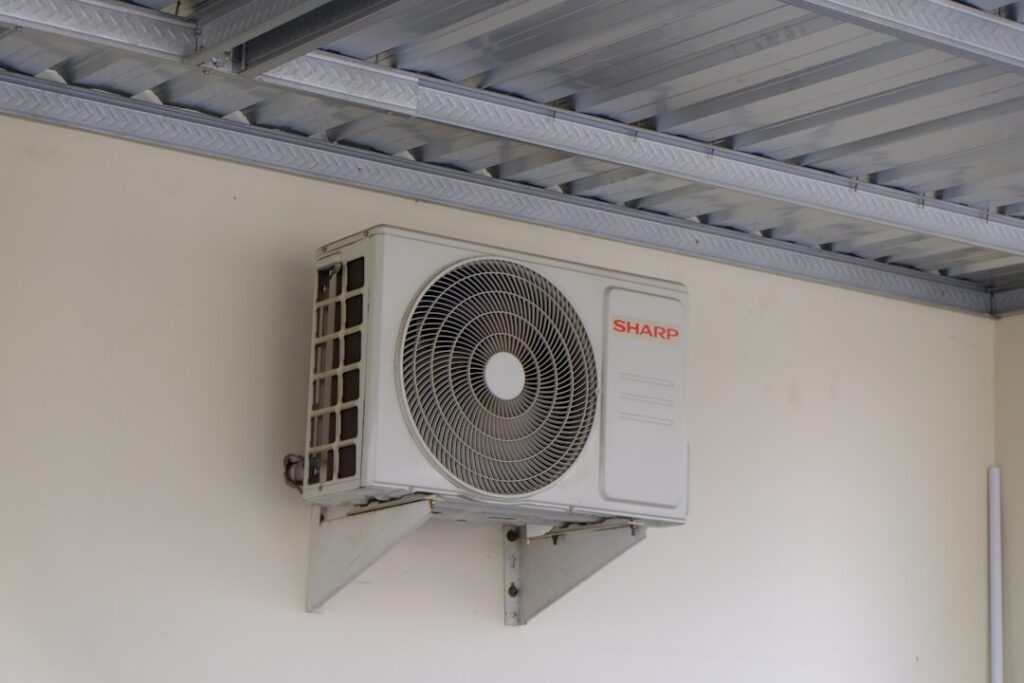
Both coils get inspected. The outdoor coil collects grass clippings, dryer lint, and cottonwood seed that choke heat transfer; the indoor evaporator coil grows a biofilm that insulates it. A dirty outdoor coil in cooling mode drives head pressure up and can spike your electric bill 15 to 30 percent.
On the air side, the technician measures total external static pressure across the air handler with a manometer. Anything over about 0.8 inches of water column on residential equipment usually means an undersized return, a crushed flex duct, or a filter that’s too restrictive. High static pressure kills blower motors and starves the coil of the airflow it needs, roughly 350 to 400 CFM per ton.
Defrost Cycle and Reversing Valve
Heat pumps ice up in cold, humid weather and must periodically reverse into cooling mode to melt the outdoor coil. A tech verifies the defrost board initiates and terminates properly, checks the defrost sensor, and confirms the auxiliary heat strips energize during defrost so you’re not blasted with cold air.
The reversing valve is what flips the system between heating and cooling. A stuck or bleeding-through valve shows up as a system that can’t reach setpoint or a suspiciously warm suction line. A technician checks the temperature split across the valve body and listens for the solenoid click. A failing valve is a several-hundred-dollar repair, but catching it early avoids a compressor overworking itself into failure.
Electrical: Capacitors, Contactors, and Amp Draw
Electrical components cause more summer failures than anything else. During an inspection, the technician tests:
- Run and start capacitors with a meter, comparing microfarad readings to the rated value. A dual-run cap rated 45/5 μF that reads 38 μF is on its way out and costs $15 to $40 to replace before it strands you.
- The contactor for pitting and chatter on the points.
- Compressor and fan motor amp draw against the nameplate rated load amps (RLA) and full load amps (FLA).
- Tightness of every lug and wire nut; loose connections arc, overheat, and melt.
- Whole-system voltage under load to rule out a weak breaker or undersized wiring.
A compressor pulling amps well above its RLA is running hot and won’t last. Catching a weak capacitor is the cheapest insurance in HVAC.
Filters, Condensate, and Thermostat Calibration
Filters get changed or cleaned, and the MERV rating gets noted; a lot of homeowners drop in a MERV 13 that their blower simply can’t pull air through. The condensate drain gets flushed and the pan checked. A clogged drain in cooling mode overflows and can rot a ceiling or trip a float switch that leaves you with no cooling and no obvious cause.
Finally, the thermostat gets checked for calibration and correct staging of auxiliary heat. A misconfigured stat that runs expensive electric backup heat when the compressor could carry the load alone can add $40 to $80 a month in winter. The balance point and lockout settings get verified so backup heat only kicks in when it’s genuinely needed.
DIY Homeowner Checks Between Visits
You don’t need gauges to stay ahead of trouble. Every season, do this:
- Change or wash the filter every 1 to 3 months.
- Keep two feet of clearance around the outdoor unit and gently rinse the coil fins with a garden hose (never a pressure washer).
- In winter, brush snow and ice off the top of the unit and make sure the base isn’t sitting in a block of ice.
- Listen for new grinding, buzzing, or rattling, and note if the air feels weak or the system runs constantly.
- Pour a cup of water down the condensate line periodically to keep it clear.
These simple habits catch many common problems, and they keep your warranty claims clean.
Why It Matters, How Often, and What It Costs
Three reasons to inspect: efficiency (a tuned system uses 10 to 25 percent less energy), warranty (most manufacturers require documented annual maintenance to honor a compressor claim), and early failure detection. Money spent on a $150 tune-up routinely prevents a $1,800 compressor or a $600 blower motor.
Schedule a heat pump inspection at least once a year, and ideally twice: spring before cooling season and fall before heating season, since the system serves both roles. A single visit runs $75 to $200 depending on region and depth, while annual maintenance plans run $150 to $300 a year and usually bundle two visits, priority service, and a discount on repairs.
If you’re buying a home, insist on a dedicated HVAC evaluation beyond the general home inspection. A generalist confirms the unit blows warm and cold air; a specialist checks refrigerant charge, compressor amp draw, and coil condition, and can tell you whether that 14-year-old unit has two years left or ten. A failed inspection typically reveals leaking refrigerant, a weak compressor, a bad reversing valve, or dangerously loose electrical connections, and knowing that before closing is worth every dollar of the service call.
What to Ask Your Technician
A tune-up is only as good as the person doing it, and the industry has its share of “spray the coil and leave” outfits that charge for a real inspection. When the tech packs up, ask for the actual numbers, not just a thumbs up. A conscientious pro will hand you a written report or read the figures off their gauges without hesitation.
- What were my subcooling and superheat readings, and how do they compare to the charging chart?
- What’s the compressor pulling in amps versus its rated load amps?
- What did my capacitors microfarad out at?
- What’s the temperature split across the indoor coil? A healthy system shows about a 16 to 22 degree difference between return and supply air in cooling.
- Did you measure static pressure, and what was it?
If the answer to any of those is a shrug, you didn’t get an inspection, you got a filter change. Those specific figures are also what create a paper trail for your warranty and a baseline to compare against next year.
Seasonal Timing and Regional Notes
Timing your inspection well saves money and gets you better service. Spring and fall are the shoulder seasons when HVAC companies aren’t slammed with emergency no-cool and no-heat calls, so you’ll get a longer, more careful visit and often an off-peak discount. Booking a tune-up in the middle of a July heat wave means a rushed tech and premium pricing.
Climate shapes the priorities, too. In the humid Southeast, coil cleaning and condensate management dominate because biological growth thrives. In the arid Southwest, dust-clogged outdoor coils and UV-degraded wiring insulation are the recurring culprits. Up North, the defrost cycle and auxiliary heat staging get the closest scrutiny, since a heat pump that can’t defrost properly turns into a block of ice by February. Tell your tech what problems you’ve noticed so they can focus where it counts, and you’ll get far more value out of the same service call.


