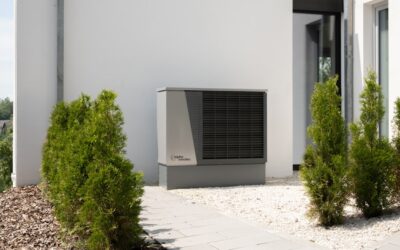
A whole-home heat pump can run $10,000 to $20,000 installed, which is enough to stop most homeowners in their tracks — until they discover how much of that comes back. Between federal tax credits, state and utility programs, and income-based incentives, heat pump rebates can slash thousands off the sticker price, sometimes covering the majority of the cost for qualifying households. The catch is that the programs stack in specific ways and each has its own rules. Here is how to find and claim what you are owed.
- Understanding Heat Pump Rebates and Credits
- The Federal Tax Credit (25C)
- State and Utility Rebate Programs
- Income-Based Rebates (HEEHRA/HOMES)
- How Much You Can Actually Save
- Steps to Claim Your Rebates
- Which Heat Pumps Qualify
- Common Mistakes That Cost You Money
- Making the Most of the Incentives
- The Long-Term Savings Beyond Rebates
Understanding Heat Pump Rebates and Credits
The term heat pump rebates covers two distinct kinds of savings that many people confuse. A tax credit reduces the income taxes you owe when you file, arriving months after your purchase. A rebate is an upfront or point-of-sale discount, or a check mailed after you submit paperwork, from a utility, state agency, or manufacturer. The best strategy usually combines both — take the manufacturer or utility rebate at purchase, then claim the federal tax credit at tax time.
Heat pumps are singled out for these incentives because they are dramatically more efficient than furnaces and electric resistance heat, moving heat rather than generating it. Governments and utilities want the efficiency and emissions savings, so they subsidize the switch. That policy tailwind is why the incentives available right now are unusually generous.
The Federal Tax Credit (25C)
The centerpiece for most homeowners is the federal Energy Efficient Home Improvement Credit, known by its tax code section 25C. It covers 30 percent of the cost of a qualifying heat pump, including installation labor, up to a maximum of $2,000 per year. Because it resets annually, you can claim it in one year for a heat pump and again the next year for other qualifying upgrades like insulation or a heat pump water heater.
To qualify, the heat pump must meet the efficiency tiers set by the Consortium for Energy Efficiency (CEE) for your region — generally the highest efficiency tier. You claim it on IRS Form 5695 when you file. Keep your invoice and the manufacturer’s certification statement showing the model qualifies. Note that this is a nonrefundable credit, meaning it can reduce your tax bill to zero but will not be paid out beyond what you owe.
State and Utility Rebate Programs
On top of the federal credit, most states and many local utilities offer their own heat pump rebates, and these are where the numbers get large. Utility rebates commonly range from $300 to $3,000+ per system, depending on the equipment’s efficiency and your provider. Some states layer in additional incentives through energy offices or clean-energy programs.
- Utility rebates: often paid by kilowatt savings or by unit; check your electric or gas provider’s website
- State energy office programs: vary widely by state; some offer flat rebates per ton of capacity
- Manufacturer rebates: seasonal promotions from brands like Mitsubishi, Carrier, and Trane
- Local clean-energy funds: city or county programs in some regions
The single best resource for finding what applies to you is the DSIRE database (Database of State Incentives for Renewables and Efficiency), which lists programs by ZIP code. Your installer usually knows the local utility rebates cold and often handles the paperwork.
Income-Based Rebates (HEEHRA/HOMES)
The largest incentives target low- and moderate-income households through the federal Home Electrification and Appliance Rebates program, sometimes called HEEHRA, funded under recent federal energy law and administered by each state. These are point-of-sale rebates, meaning the discount comes off the price at purchase rather than at tax time.
- Low-income households (under 80% of area median income): up to 100 percent of project cost covered, with a heat pump rebate cap around $8,000
- Moderate-income households (80% to 150% of AMI): up to 50 percent of cost, same $8,000 cap on the heat pump
- Additional caps apply for related upgrades like electrical panel work ($4,000) and wiring ($2,500)
These programs roll out state by state, so availability depends on when your state launches its program. Check your state energy office for current status, since timing varies across the country.
How Much You Can Actually Save
Stacked correctly, the savings are substantial. Consider a middle-income household installing a $14,000 cold-climate heat pump. The federal 25C credit returns $2,000, a typical utility rebate might add $1,500, and a state or manufacturer incentive another $500 to $1,000. That trims a $14,000 project to roughly $9,500 to $10,000 net.
For a qualifying moderate-income household able to tap HEEHRA, the point-of-sale rebate could cover up to $8,000 of that same project directly, potentially bringing the out-of-pocket cost below $5,000 after the tax credit. The exact stack depends on your income, location, and equipment, which is why running your specific numbers matters.
Steps to Claim Your Rebates
Getting the money is a process, and doing it in the right order matters:
- Check eligibility first: look up federal, state, and utility programs on DSIRE and your utility’s site before buying, since equipment must often meet specific efficiency tiers.
- Choose qualifying equipment: confirm the model meets the CEE tier for the federal credit and any local program requirements.
- Use a qualified installer: many rebates require a licensed contractor and proper permits.
- Keep all documentation: the invoice, model numbers, and manufacturer certification statement.
- Submit utility and state rebates promptly: these often have deadlines of 60 to 90 days after installation.
- File IRS Form 5695 with your tax return to claim the federal credit.
Which Heat Pumps Qualify
Not every heat pump earns the incentives, and buying the wrong model leaves money on the table. For the federal 25C credit, the equipment must meet the Consortium for Energy Efficiency’s highest tier for your region, which is stricter in the North than the South. In practice that means higher SEER2 (cooling efficiency), HSPF2 (heating efficiency), and EER2 numbers than a bare-minimum unit. Cold-climate heat pumps, which keep working efficiently well below freezing, are the ones that typically qualify in northern states.
Ask your contractor for the model’s AHRI certificate and the manufacturer’s tax-credit certification statement before you sign. Both ductless mini-splits and ducted central heat pumps can qualify if they hit the efficiency tiers. Heat pump water heaters have their own separate 25C credit of 30 percent up to $2,000, so pairing the two upgrades in the same or consecutive tax years multiplies your savings.
Common Mistakes That Cost You Money
Homeowners regularly forfeit rebates through avoidable errors. The biggest is buying first and checking eligibility second — many programs require pre-approval or specific paperwork submitted within a tight window after installation, and you cannot claim retroactively once the deadline passes. Another is choosing a cheaper, lower-efficiency unit that misses the qualifying tier, only to discover the lost credit would have more than covered the price of the better model.
Using an unlicensed installer or skipping permits disqualifies you from many utility and state programs outright. And people often forget that the federal credit is nonrefundable, so if you owe little or no federal tax, you may not capture the full $2,000 in that year. Run your expected tax liability before counting on the credit, and lean on point-of-sale rebates like HEEHRA if your tax bill is small.
Making the Most of the Incentives
The window for these generous incentives is a policy decision that can change, so if a heat pump is in your plans, moving sooner rather than later locks in today’s programs. Time larger projects across two tax years if you can, since the federal credit resets annually — install the heat pump one year and add insulation or a heat pump water heater the next to claim the credit twice.
Before you sign a contract, ask your installer to itemize which heat pump rebates your chosen system qualifies for and whether they handle the utility paperwork. A good contractor turns a confusing patchwork of programs into a clear net price, and that clarity is often the difference between an upgrade that feels out of reach and one you can comfortably afford.
The Long-Term Savings Beyond Rebates
The incentives get you in the door, but the ongoing energy savings are where a heat pump keeps paying you back. Because a heat pump moves heat rather than burning fuel to make it, it delivers two to four units of heat energy for every unit of electricity, far outperforming electric resistance heat and often beating a gas furnace on operating cost in mild-to-moderate climates. Households switching from electric resistance or older systems commonly cut heating costs by hundreds of dollars a year.
A heat pump also handles cooling, so it replaces both the furnace and the air conditioner in one system, consolidating maintenance and equipment. Factor in those annual savings alongside the rebates when you run the numbers: a system that nets $9,000 after incentives and saves $500 a year in energy pays back that difference over its life while keeping the house comfortable in both seasons. When you stack the upfront rebates on top of the recurring savings, the total value often makes the heat pump the cheapest path over the life of the equipment, not just the greenest one.