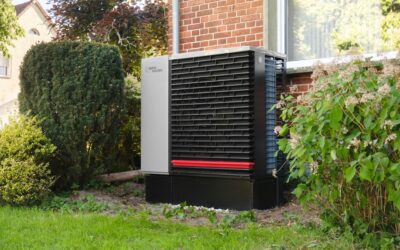
A heat pump tumble dryer dries your clothes using a fraction of the electricity of a conventional dryer, and it does it without a vent to the outside. That last part changes where you can put a dryer entirely, a closet, an interior wall, an apartment, a finished basement with no exterior run. Instead of heating fresh air and blowing it out a duct along with all that energy, a heat pump dryer recycles its own warm air in a closed loop, condensing the moisture out and reusing the heat. They fit condos and tight laundry closets where a vented dryer was never an option, and the energy savings over the life of the machine are substantial.
The trade-offs are longer dry times and a higher purchase price. This guide explains how the technology works, what it saves, how it installs, and whether the math works for your home.
How the Closed-Loop System Works
A conventional electric dryer is simple and wasteful: it pulls in room air, runs it across a resistance heating element to make it hot, tumbles it through the wet clothes, and blows the now-humid air straight outside through a vent. All that heat energy leaves the building. A heat pump dryer flips the logic. It uses the same refrigerant technology as a heat pump air conditioner to run a closed air loop.
Warm air passes through the drum and picks up moisture from the clothes. That humid air then passes over a cold evaporator coil, which condenses the water out, exactly like moisture beading on a cold glass. The now-dry air passes over a warm condenser coil that reheats it, and it cycles back through the drum. The compressor moves heat from the cold side to the warm side, so the machine keeps reusing its own heat instead of dumping it. The condensed water either drains through a hose or collects in a reservoir you empty.
Why No Vent Changes Everything
Ventless operation is the headline feature, and it matters more than people expect. A vented dryer needs a duct run to an exterior wall, which limits placement, leaks conditioned air, and, when the duct clogs with lint, becomes a genuine fire hazard, dryer vents cause thousands of house fires a year. A heat pump dryer eliminates that duct entirely.
Because it does not exhaust air outdoors, it also does not create negative pressure in the house. A vented dryer pulls hundreds of cubic feet of air out of your home every cycle, and that air, air you already paid to heat or cool, gets replaced by outside air leaking in. A ventless heat pump dryer keeps that conditioned air inside. In a tight, well-sealed modern home, that alone is a meaningful comfort and efficiency benefit.
The Real Energy Savings
Here is where the heat pump dryer earns its price. A standard vented electric dryer draws roughly 3,000 to 5,000 watts and uses about 3 to 5 kWh per load. A heat pump dryer typically uses 1 to 2 kWh for a comparable load, cutting energy use by 40 to 60 percent. Over a year of average use, four to five loads a week, that difference adds up.
At the U.S. average electricity rate of roughly 16 cents per kWh, the savings often land around $50 to $120 a year depending on how much laundry you do and your local rate. That is not life-changing on its own, but over the 12- to 15-year life of the machine it can total $600 to $1,800, which offsets a good chunk of the higher purchase price. There is a second, quieter benefit too: because the machine does not draw a huge current, most heat pump dryers run on a standard 120-volt outlet rather than a dedicated 240-volt circuit.
The Trade-Off: Longer Dry Times
Nothing is free, and the cost of a heat pump dryer’s efficiency is time. Because it dries at a lower temperature, typically topping out around 120°F to 130°F versus 150°F or higher in a vented dryer, cycles run longer. A load that a vented dryer finishes in 45 minutes can take 90 to 120 minutes in a heat pump dryer.
For most households that is a non-issue, you start a load and walk away, and the gentler heat is actually kinder to fabrics, reducing shrinkage and wear. But if you regularly need laundry turned around fast, or you run many loads back to back, the longer cycle time is a real consideration. The lower temperature also means clothes come out warm rather than piping hot, which surprises first-time owners but is not a defect.
Installation and Placement
Installation is simpler than a vented dryer in most respects. There is no duct to run, which is the whole point. You do need to deal with the condensed water in one of two ways:
- Drain hose: route a hose to a nearby drain, standpipe, or utility sink so the machine empties automatically. This is the set-and-forget option and the best choice whenever a drain is reachable.
- Collection reservoir: the machine collects condensate in a pull-out tank you empty after every one or two loads. Fine if no drain is nearby, but it is a chore you cannot skip, a full tank stops the cycle.
Because most units run on 120 volts and a standard 15- or 20-amp outlet, you often avoid the dedicated 240-volt circuit a conventional electric dryer needs, which can save an electrician visit. Do give the machine some breathing room and keep the room from getting too cold, heat pump dryers lose efficiency in an unheated space below about 40°F to 50°F, so a freezing garage is not the ideal spot.
What It Costs and Whether It Pays Off
Heat pump tumble dryers run $800 to $1,600 in 2026, versus $500 to $900 for a comparable vented electric dryer, so you are paying a premium of roughly $300 to $700 up front. Compact 24-inch models for apartments sit at the lower end of capacity, while full-size 27-inch units cost more.
Whether it pays off depends on three things: your electricity rate, how much laundry you run, and whether venting is even possible where you live. If you cannot vent a dryer at all, an apartment, a condo, an interior laundry closet, the decision is easy, a heat pump dryer or a slower condenser dryer is your only realistic option, and the heat pump version is far more efficient. If you can vent but you run a lot of laundry and value speed, the vented dryer still has a place. For most homeowners weighing the lifetime energy savings, the eliminated fire risk of a lint-packed vent, and the freedom to put the dryer anywhere, the heat pump tumble dryer is the better long-term buy.
Maintenance the Machine Actually Needs
A heat pump dryer has one maintenance quirk that owners of vented dryers are not used to: it has a second filter and a condenser to keep clean. Like any dryer, it has a lint screen you clear after every load, and skipping it kills efficiency and lengthens already-long cycles. But the closed-loop design also has a secondary fine filter and, on many models, an accessible evaporator or condenser coil that gradually collects the fine lint that gets past the main screen. Most machines prompt you to rinse the secondary filter every few loads and clean the heat-exchanger coil every month or so.
Neglecting that second filter is the number one reason people complain that their heat pump dryer got slow. As lint blankets the evaporator, the machine can no longer condense moisture efficiently, dry times balloon, and the automatic sensors may not register the load as dry. Ten minutes of cleaning restores it to like-new performance. Some higher-end models include a self-cleaning condenser that flushes itself with condensed water, which reduces this chore but does not eliminate the need to check it.
Also stay on top of the water side. If you plumbed the machine to a drain, glance at the hose occasionally for kinks or clogs. If you use the collection reservoir, empty it every one or two loads, since a full tank halts the cycle mid-load. None of this is difficult, but it is a different rhythm than the set-it-and-forget-it vented dryer most people grew up with. Owners who understand the two-filter routine from day one are the ones who report the machine running like new for a decade; those who treat it like a vented dryer are the ones who think it slowed down. Learn the routine, and a heat pump tumble dryer delivers its energy savings and gentle drying for its full service life.