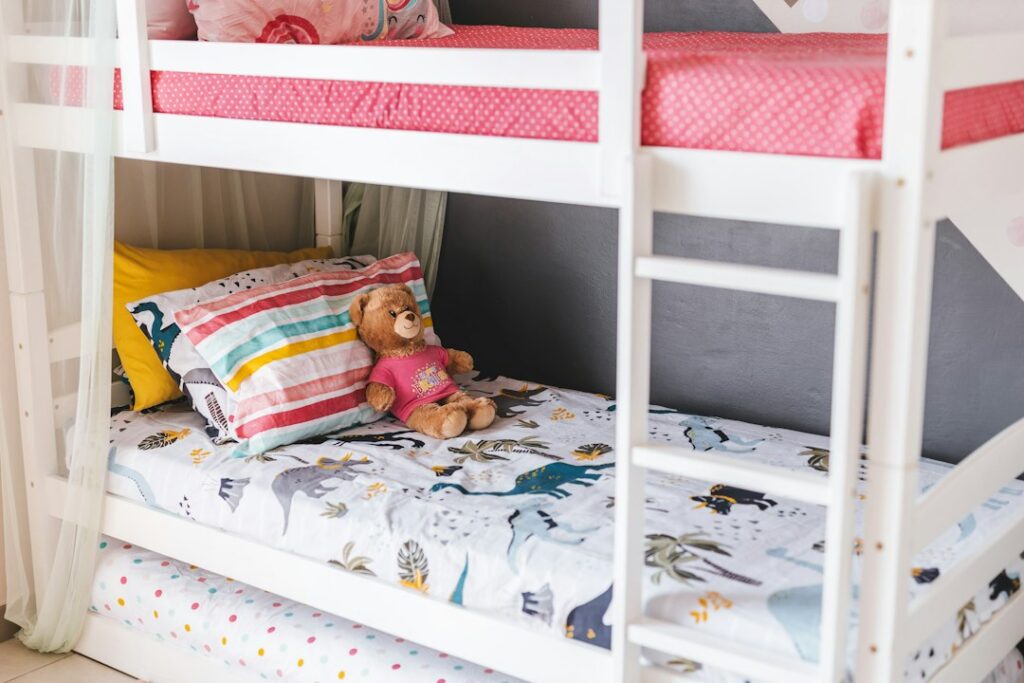
A bunk bed rated for 250 pounds sounds generous until you learn that number may assume a sleeper lying perfectly still. Adults climb, sit up suddenly and roll over hard, and those movements load a frame far more than body weight alone. Heavy duty bunk beds for adults are built around that reality, with thicker steel or hardwood, bolted joinery and published ratings that account for movement, not just a sandbag test.
If you are furnishing a guest room, cabin, rental, dorm or staff housing, the short version is this: look for a per-bunk rating of 400 pounds or more, understand whether that figure is static or dynamic, check the joinery and slat support, and anchor the frame to wall studs. Those four checks separate sturdy bunk beds from ones that wobble within a month.
- How Heavy Duty Bunk Beds for Adults Are Rated
- Frame Materials That Hold 400+ Pounds
- Joinery and Hardware Checks
- Guardrails, Ladder and Headroom Specs
- Tools and Assembly Materials
- Assembling and Anchoring a Sturdy Bunk Bed
- Troubleshooting Wobble and Noise
- General Cost Ranges
- When to Call a Pro
- Frequently Asked Questions
We explain how ratings work, which materials and joints hold up, guardrail and ladder specs, how to assemble and anchor a bed, troubleshooting, general cost ranges, and when to bring in help.
How Heavy Duty Bunk Beds for Adults Are Rated
Weight capacity is the most quoted spec and the least understood. Two very different numbers get printed on listings, and they are not interchangeable.
Static weight capacity
Static capacity is the load a bunk can hold when the weight is evenly distributed and not moving. It is typically measured by loading the mattress platform gradually. Static numbers are larger, so they are often the headline figure in marketing.
Dynamic weight capacity
Dynamic capacity accounts for movement: climbing in, sitting on the edge, rolling over. Motion can briefly multiply the force on the frame, so dynamic ratings are lower, often a fraction of the static figure. For adults, the dynamic number is the one that matters. If a listing does not say which rating it gives, assume static and leave generous headroom.
Per bunk vs total
Check whether the rating is per bunk or for the whole bed. A frame rated for 800 pounds total may only support 400 pounds on the upper bunk. Upper bunks are often rated lower than lower bunks because the load sits on a longer, less supported structure.
A reasonable target for adult use is at least 400 pounds per bunk, with higher ratings for tall or heavier sleepers. Include the mattress weight in your math; a thick foam or hybrid mattress can weigh 50 to 90 pounds.
Frame Materials That Hold 400+ Pounds
Steel
Heavy duty metal bunk beds rely on tube thickness (wall gauge) as much as tube size. A 2-inch square post with thin walls can flex more than a 1.5-inch post with thick walls. Look for published gauge or wall thickness, welded or bolted steel plates at joints, and cross-bracing or a metal grid deck rather than a few thin slats. Powder-coated finishes resist chipping and rust in damp cabins or basements.
Solid hardwood
Solid wood bunk beds for adults are typically made from hardwoods such as maple, oak, birch or rubberwood, or from thick pine. Posts should be at least 3 by 3 inches for adult frames, with bed rails around 1.5 by 5 inches or larger. Avoid particleboard or MDF in structural parts; they are fine for drawers and trim but crush at bolt holes under repeated load.
Slats and deck support
The deck is where many beds fail. Wooden slats should be at least 3/4 inch thick, spaced no more than about 3 inches apart, and supported by a center rail with a floor leg on full and larger sizes. Metal decks should have cross supports every 12 to 18 inches.
Joinery and Hardware Checks
High quality bunk beds for adults are held together by hardware designed for repeated loading:
- Through-bolts with barrel nuts are stronger than wood screws or cam locks, which loosen quickly.
- Metal brackets or plates at rail-to-post joints spread the load and resist racking.
- Four or more bolts per corner is typical of quality frames; two small bolts per corner is a red flag.
- Lock washers or thread-locking nuts reduce loosening from nightly movement.
- Bolted, not stapled, ladders with flat treads at least 3 inches deep are easier on bare feet.
Guardrails, Ladder and Headroom Specs
Guardrails should extend at least 5 inches above the top of the mattress. Many bunk safety standards use that figure, and it assumes the recommended mattress thickness, so a thicker mattress than specified effectively lowers the rail. Check the maximum mattress thickness listed and stick to it. Rails should run along both long sides of the top bunk, with only a gap at the ladder, or along the wall side and most of the open side.
For adults, headroom matters as much as strength. Leave at least 30 to 36 inches between the top of the lower mattress and the underside of the upper deck so an adult can sit up. On the top bunk, aim for at least 30 inches from mattress to ceiling, more for tall sleepers, and keep the top bunk away from ceiling fans. Large bunk beds with full or queen lower bunks need more floor space; measure door swings and window clearances before ordering.
Triple bunks
Heavy duty triple bunk beds for adults stack three levels, so they need taller ceilings (often 9 feet or more) and should always be anchored to the wall. Check that each level has its own published rating and that the top level still meets guardrail and headroom specs.
Tools and Assembly Materials
- Allen keys and wrenches supplied, plus a socket set for final tightening
- Cordless drill/driver with a stud finder
- 4-foot level
- Wall-anchoring brackets and 2.5 to 3 inch structural screws for studs
- Rubber mallet
- A second person for lifting upper rails and decks
- Step ladder in good condition
Assembling and Anchoring a Sturdy Bunk Bed
- Inventory parts. Lay out every part and bolt, and confirm the counts against the manual before starting.
- Assemble on a level floor. Check the floor with a level; shim under legs with hard plastic shims if needed so the frame does not rack.
- Hand-tighten first. Build the full frame with bolts snug but not tight, so parts can align.
- Square and tighten. Measure diagonals across each bunk; equal measurements mean the frame is square. Then tighten all bolts firmly without crushing wood.
- Install slats and deck supports. Screw or lock slats in place so they cannot shift.
- Anchor to the wall. Locate studs with a stud finder and fasten the upper frame to at least two studs with the supplied brackets or heavy-duty L-brackets and structural screws. Drywall anchors alone are not enough.
- Test before use. Push firmly on the upper rail from several directions. Any sway means a loose joint or missing anchor.
- Re-tighten after two weeks. Wood compresses and bolts settle; retighten, then check every few months.
In seismic zones, add a second set of wall anchors, and in rentals with frequent turnover, add a hardware check to your cleaning routine.
Troubleshooting Wobble and Noise
- Frame sways side to side: anchor to wall studs and add diagonal cross-bracing if the design allows.
- Squeaking: tighten bolts, add felt or nylon washers between metal surfaces, and wax wooden slat contact points.
- Sagging deck: add slats, a center support rail and a center leg, or lay a 1/2-inch plywood bunkie board over slats.
- Bolt holes wallowing out: the wood is too soft or the bolts were overtightened. Replace with a frame using metal inserts or barrel nuts.
- Ladder shifting: tighten ladder bolts and confirm hooks fully engage the rail.
General Cost Ranges
Basic metal twin-over-twin frames with modest ratings are the least expensive. Strong bunk beds with thicker steel or solid hardwood and published 400+ pound per-bunk ratings typically cost noticeably more, and twin-over-full or full-over-full designs add further. Commercial-grade frames sold for camps, dorms and workforce housing often cost the most but carry the highest ratings and warranties. Budget separately for mattresses sized to the guardrail limit and for wall-anchoring hardware.
When to Call a Pro
Most homeowners can assemble a bunk bed with a helper. Call a handyman or carpenter if your walls are plaster, masonry or steel stud and you are unsure how to anchor into them, if you want a custom built-in bunk framed into walls, or if you plan triple bunks in a room with borderline ceiling height. Built-in bunks that attach to wall framing or affect egress windows may need to meet local building code for sleeping rooms, so check with your building department. For rental and commercial properties, confirm fire and occupancy rules before adding bunks.
Frequently Asked Questions
What weight capacity should heavy duty bunk beds for adults have?
Aim for at least 400 pounds per bunk, ideally a dynamic rating, and include the mattress weight. Taller or heavier sleepers benefit from even higher ratings.
Is a metal or wood bunk bed stronger for adults?
Both can be strong. Thick-walled steel with bolted plates and solid hardwood with through-bolts both hold adult loads; thin tubing and particleboard do not.
Do adult bunk beds need to be anchored to the wall?
Yes. Anchoring the upper frame to at least two wall studs prevents sway and tipping, especially for tall and triple bunk designs.
How much ceiling height do I need for an adult bunk bed?
Plan for about 30 inches or more from the top mattress to the ceiling. Standard bunks usually fit 8-foot ceilings, while triple bunks often need 9 feet or more.
How high should guardrails be on a top bunk?
Guardrails should sit at least 5 inches above the mattress surface, so use a mattress no thicker than the maximum the manufacturer specifies.