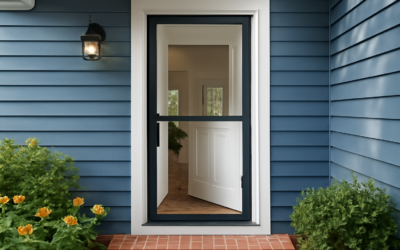
Walk down the storm door aisle and most of what you see is lightweight aluminum that flexes when you push it and rattles in a stiff wind. A true heavy duty storm door is a different animal, built with thicker frames, reinforced corners, and hardware engineered to survive years of slamming, wind loads, and full sun. Whether you want extra security, better insulation, or a door that simply will not warp and sag after a couple of seasons, knowing what actually makes a storm door heavy duty helps you avoid the disappointment of a flimsy unit that fails early. This guide breaks down the construction, features, and choices that matter.
Part of our Windows & Doors guide — explore the full guide →
- What Makes a Storm Door Heavy Duty
- Security-Focused Heavy Duty Doors
- Insulation and Energy Performance
- Glass, Screen, and Ventilation Options
- Hardware That Holds Up
- Sizing and Fit
- Installation Considerations
- Materials: Aluminum, Steel, and Fiberglass
- Color, Finish, and Curb Appeal
- Is It Worth the Upgrade?
What Makes a Storm Door Heavy Duty
The term gets used loosely, so focus on the construction details rather than the marketing. A genuinely heavy duty storm door starts with a thicker frame, typically an aluminum extrusion of 1 to 1.25 inches or more, compared to the flimsy 3/4-inch frames on economy doors. That extra depth resists flexing and holds its shape under wind pressure.
Look also for a full-length or reinforced internal frame, often with a wood or foam core, and corners that are welded or mechanically joined rather than simply screwed. Cheap doors rely on plastic corner keys that loosen over time, letting the door rack and sag. The best units use metal reinforcement at the corners and a Z-bar mounting frame in a heavier gauge that anchors solidly to your door casing.
Security-Focused Heavy Duty Doors
Many people choose a heavy duty storm door specifically for the added security layer it puts in front of the main entry. Security-oriented models bring features you will not find on a basic door:
- Steel or reinforced aluminum frames that resist prying and kicking.
- Multi-point or deadbolt locks instead of a simple hook latch.
- Heavy-gauge grilles or bars on ventilating models that stop intruders while letting air through.
- Non-removable hinge pins and tamper-resistant hardware.
- Laminated or tempered safety glass that is far harder to break through.
A quality security storm door effectively doubles your entry defense, letting you leave the main door open for ventilation while keeping a locked, robust barrier in place. For ground-floor and rental applications, this alone often justifies the upgrade.
Insulation and Energy Performance
Beyond toughness, a heavy duty storm door improves energy efficiency by creating an insulating air pocket between it and your entry door. That buffer reduces drafts and can cut heat loss in winter and heat gain in summer. The insulating value depends on the glass and seals.
Look for low-E coated glass, which reflects radiant heat, and true dual-pane insulated glass on premium models. Full weatherstripping around the perimeter, including a sturdy door sweep at the bottom, is what actually blocks air infiltration. On a well-sealed entry, a good storm door can noticeably improve comfort near the doorway and protect the finish of an expensive wood entry door from sun and rain.
Glass, Screen, and Ventilation Options
How the door handles glass and screens affects both function and durability. The main configurations are:
- Full-view doors with a single large glass panel and interchangeable screen inserts you swap by season.
- Ventilating (high-low) doors with self-storing glass and screen panels that slide, letting you open the top, bottom, or both for airflow without removing anything.
- Retractable screen doors where the screen rolls away into the frame when not needed.
For a heavy duty door, prioritize thick tempered glass and a screen frame that will not bow. Self-storing ventilating models are popular because there is nothing to store in the garage and nothing to lose or damage between seasons.
Hardware That Holds Up
Hardware is where cheap doors reveal themselves fast. A heavy duty storm door should have a solid metal handle set, not hollow plastic, and a robust closer mechanism. Better doors include two hydraulic closers, top and bottom, rather than a single closer, which distributes the load and keeps the door from sagging or slamming.
A wind chain or hold-open washer is essential; it stops a gust from flinging the door open and ripping it off the hinges, a common failure point. Also check the hinge design. A continuous piano-style hinge running the full height of the door spreads stress and prevents the sag that plagues doors hung on just two or three small hinges.
Sizing and Fit
Most storm doors are sold to fit standard openings of 32, 34, and 36 inches wide, with 36 inches being the most common front-door size. Measure the width at the top, middle, and bottom of your existing door frame, and the height on both sides, then use the smallest measurements. Storm doors are often reversible for left or right hinging, which you set during installation to match your door swing.
Confirm your frame is square and solid before ordering, since a heavy door amplifies any problems in a racked or rotted casing. If the trim is damaged, repair it first so the mounting Z-bar has sound wood to bite into.
Installation Considerations
A heavy duty door weighs considerably more than a basic model, so installation deserves care. The mounting frame must be screwed into solid framing, not just the trim, and long screws should reach the underlying structure at the hinge side to carry the weight. Because the door is heavier, having a helper hold it while you set the hinges prevents damage and injury.
Take time to adjust both closers and the sweep so the door shuts fully and seals against the threshold without slamming. A properly hung heavy door should swing smoothly, latch cleanly, and hold open on its wind chain without stressing the frame.
Materials: Aluminum, Steel, and Fiberglass
The frame and skin material shapes both toughness and maintenance. Heavy-gauge aluminum is the most common choice for a durable storm door because it never rusts, resists warping, and comes in a range of baked-on finishes. Look for a thicker extrusion and a foam or wood core inside the frame, which adds rigidity and insulation over hollow economy aluminum.
Steel storm doors sit at the top for security, since steel resists prying and kicking better than any other option. The tradeoff is weight and the need for a quality finish to prevent rust over time, especially in coastal or high-humidity climates. Fiberglass and composite storm doors bridge the gap, offering good strength, excellent weather resistance, and low maintenance without the rust concern of steel. For most homeowners wanting durability without constant upkeep, a heavy-gauge aluminum or fiberglass door hits the sweet spot, while steel makes sense where security is the top priority.
Color, Finish, and Curb Appeal
A heavy duty door does not have to look industrial. Manufacturers offer these doors in a wide range of factory-applied finishes, from classic white and almond to bold black, bronze, and deep reds and greens that make an entry pop. A well-chosen storm door color can complement your entry door or provide a crisp contrast against the siding, adding real curb appeal.
Pay attention to the hardware finish too. Handle sets and closers come in matching or contrasting finishes like oil-rubbed bronze, satin nickel, and matte black, and coordinating them with your entry door hardware pulls the whole entrance together. Baked-on and powder-coat finishes hold their color far better than painted ones under years of sun exposure, so ask about the finish type when comparing models. A quality finish is not just cosmetic; it protects the frame from corrosion and keeps the door looking new for the long haul.
Is It Worth the Upgrade?
Basic storm doors are cheaper up front, but they flex, rattle, sag, and often need replacing within a few years. A well-built heavy duty storm door costs more, generally $250 to $600 or higher for a security model, yet it delivers real returns in durability, energy savings, and protection for your main entry. If your entry faces harsh weather, high traffic, or you want a serious security layer, the tougher construction pays for itself in longevity alone. Focus on frame thickness, reinforced corners, quality hardware, and good glass, and the right heavy duty storm door will guard your entry reliably for a decade or more.