A good front screen door does more than keep bugs out. It lets you open the main door on a mild evening for cross-breeze, adds a layer of daytime security, protects your expensive entry door from weather, and — if you pick the right one — makes the whole front of the house look finished instead of bare.
Part of our Windows & Doors guide — explore the full guide →
The trouble is that “screen door” gets used loosely at the home center to mean everything from a $60 aluminum bug barrier to a $600 full-glass storm door. Knowing which one you actually want saves you a return trip and a lot of frustration.
Screen Door vs. Storm Door: Know the Difference
These two terms get swapped constantly, but they’re different products. A true screen door is a lightweight frame with mesh, built for ventilation in warm weather. A storm door is a heavier unit with interchangeable or self-storing glass and screen panels, built to add insulation and weather protection year-round.
Most homeowners shopping for a “front screen door” today actually end up buying a storm door, because the self-storing style gives you screen in summer and glass in winter without hauling panels to the garage. Pure screen doors still make sense for a shaded porch, a rental, or a budget fix. Screen doors run $60-$200; storm doors run $150-$600 before installation.
Panel Styles and How Much You Ventilate
How the door handles airflow versus glass is the biggest daily-use decision:
- Full-view — one large glass panel you swap for a screen seasonally. Maximum view, but you’re storing the off-season panel somewhere.
- Retractable screen — glass stays in place; a hidden screen rolls down when you open the ventilating glass. The most convenient design, and my usual recommendation.
- Self-storing (triple-track) — glass and screen both live in the door and slide up or down like a double-hung window. Slightly bulkier frame, very practical.
- Ventilating / mid-view — a solid lower panel with glass and screen up top. Kid- and dog-friendly since the bottom won’t get kicked out.
If you have pets or young kids, avoid a full-view screen at the bottom — go with a mid-view or a heavy pet-grade mesh, or you’ll be re-screening it by fall.
Frame Materials Worth Buying
The frame determines both looks and how long the door survives daily slamming:
- Aluminum — the standard. Lightweight, rust-proof, painted or anodized finishes, and priced from budget to premium. A quality aluminum storm door has a thicker frame (1 to 1-1/4 inch) and won’t rack over time.
- Wood — beautiful on a period or craftsman home, but needs a protected opening and regular refinishing. $200-$700+.
- Vinyl / composite — low maintenance and won’t corrode near salt air, though color options are limited.
- Steel — used on security-focused doors; heaviest and strongest but can rust if the finish is scratched.
Cheap doors give themselves away at the corners. Look for a frame with reinforced or interlocking corner joints rather than thin flat brackets, and a full-length piano hinge instead of two or three small ones — it distributes the load and won’t sag.
Measuring for a Correct Fit
Front screen and storm doors are sold to fit standard entry openings, but you have to measure the existing door frame (the brickmold or exterior casing opening), not the door slab. Standard widths are 32, 34, and 36 inches; standard height is 80 inches (81 for some units). Measure the width at top, middle, and bottom and use the smallest number.
Also note your hinge side and whether the door swings against a wall or a light fixture. Most storm doors ship reversible so you can hang them to hinge left or right, but confirm before you buy. If your opening is out of square by more than about 1/4 inch, plan on shimming or an expander sweep to close the gap.
Hardware, Closers, and the Details
The handle set should match or complement your entry door hardware — matte black, oil-rubbed bronze, satin nickel, and brass are the common finishes. Spend a little more for a mortise-style latch over a cheap surface mount; it feels solid and lasts.
Two pieces of hardware make or break daily use. A quality pneumatic closer (ideally two — top and bottom) controls how the door shuts so it doesn’t bang, and a wind chain or hold-open washer keeps a gust from flinging the door back and cracking the glass. A safety chain is cheap insurance; on an exposed front entry a strong gust can rip a door right off its hinges without one.
Security Considerations
A standard front screen door is a convenience item, not a security barrier — the mesh and thin frame won’t stop a determined intruder. That said, it adds a real deterrent layer and lets you keep the main door open for airflow while still latched. If security is a priority, step up to a security screen door with a steel or heavy-aluminum mesh, a reinforced frame, and a deadbolt-compatible lock; those are engineered to resist prying and cutting.
Either way, upgrade the strike screws to 3-inch fasteners that reach the framing behind the jamb, and add a keyed lock cylinder if you want to secure the door when the main entry is open.
Glass Types and Energy Impact
If you go with a storm-style front screen door, the glass panel does real work. A basic single-pane tempered glass panel is fine in a mild climate and keeps the price down. In a cold region, step up to a low-E coated or dual-pane panel — it reflects heat back into the house and can noticeably cut drafts around an older entry door. Homeowners in northern states often report a warmer, less drafty entryway simply from adding an insulating storm door over a leaky main door.
One caution with full-view glass on a sunny, south- or west-facing entry: a storm door can trap heat between itself and the main door, and on a dark-colored steel or fiberglass entry that trapped heat can occasionally damage the finish. If your entry faces strong afternoon sun, choose a ventilating or low-E model, or a light-colored door, to keep temperatures in check.
Color and Curb Appeal
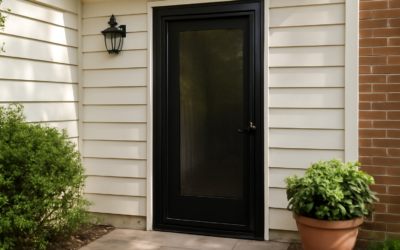
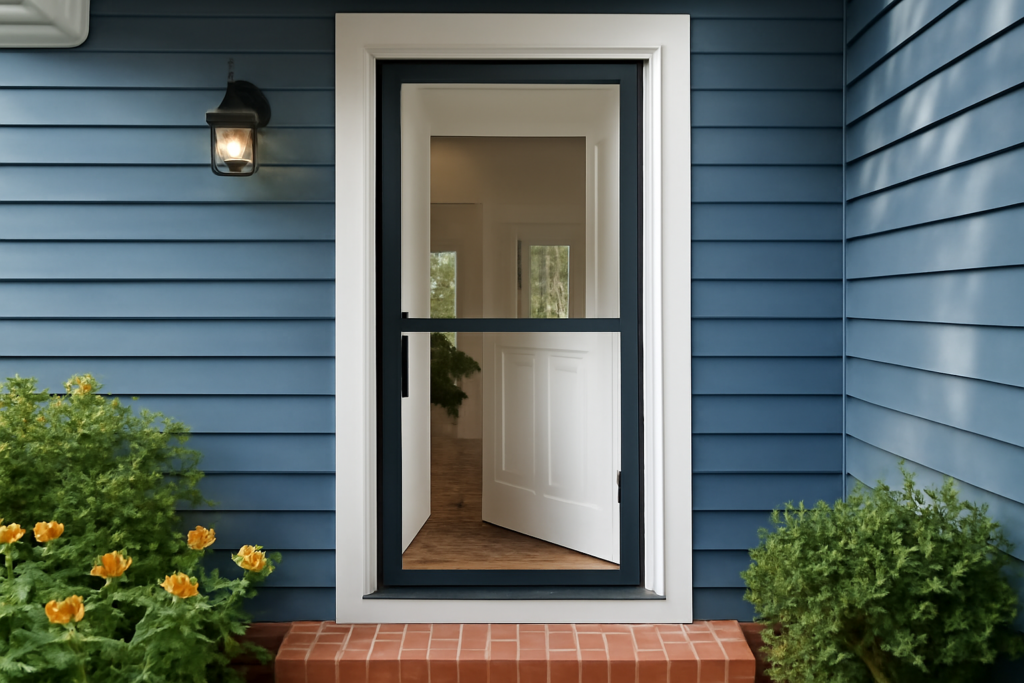
The front screen door sits right on top of your entry, so its color is a curb-appeal decision, not an afterthought. The two safe strategies are to match the storm door frame to your trim color so it disappears, or match it to the entry door so the two read as one unit. White remains the default and blends with most trim, but black, bronze, and almond frames look far more custom and hide dirt better.
Full-view models with minimal frame around the glass keep the focus on your actual front door, which is usually what you want if you spent money on a nice entry. Heavier mid-view frames make more of a statement on their own. Whatever you pick, coordinate the handle finish with your entry hardware, house numbers, and porch light for a pulled-together look.
Installation and Cost
Hanging a pre-hung storm door is one of the more approachable home projects — a couple of hours with a drill, level, hacksaw (to trim the Z-bars and sweep to height), and a helper. The kit includes the mounting rails; you cut them to fit, screw the hinge rail plumb, then hang and align the door so the gaps are even. Budget a half day for your first one.
A few details separate a clean install from a sloppy one: shim the hinge rail so the door is dead plumb, set the sweep at the bottom so it seals to the threshold without dragging, and adjust the closer speed so the door latches without slamming. Take the extra ten minutes on those and the door feels tight for years. If you’d rather not, professional installation runs $100-$300 on top of the door. All in, expect $250-$900 for a solid storm or screen door installed, more for a custom size or a premium retractable-screen model. Get the fit and the closer adjustment right and a good front screen door will serve you for 15 to 20 years.