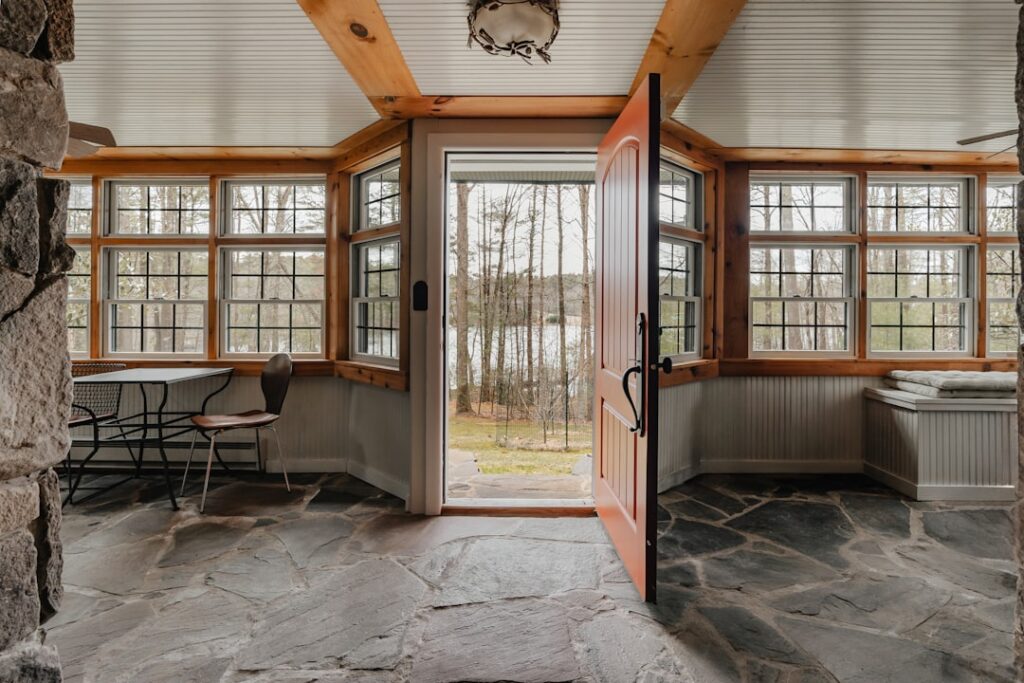
If you’ve invested in a beautiful front door, the last thing you want is to hide it behind a storm door cluttered with metal crossbars. A full view storm door solves that with a single pane of glass that runs nearly edge to edge, showcasing your entry door while still adding weather protection and ventilation. The full view storm door is the most popular style for exactly this reason: it protects and insulates without obscuring the door you chose. This guide covers how they work, the glass-and-screen systems, top brands, sizing, and installation.
Part of our Windows & Doors guide — explore the full guide →
What Sets Full View Apart
Storm doors come in three broad styles: full view, high view, and mid view (also called ventilating). A full view door dedicates almost the entire door frame to a single large glass panel with no horizontal bar splitting it. The result is an unobstructed sightline to your main door.
High-view and mid-view doors place a solid or screened panel across the bottom third, which some homeowners prefer in households with kids and pets that would kick a low glass panel. But for pure curb appeal and light, nothing beats the clean, uninterrupted glass of a full view.
The Interchangeable Screen Question
The biggest practical decision with a full view door is how you switch between glass and screen for the seasons. There are two systems:
- Interchangeable panels: You physically swap a full glass panel for a full screen panel by hand, storing the off-season panel in a closet or garage. More work, but full screen coverage in summer.
- Retractable/self-storing screen: The glass stays in place year-round and a hidden screen rolls down or slides when you open a vent. No panels to store, but the screen typically covers only part of the door.
Retractable systems like Andersen’s are convenient because you never handle a heavy glass panel. Interchangeable systems give you full-height ventilation but require somewhere to stash the spare panel.
Top Brands and Models
A few manufacturers dominate the quality storm door market, and it’s worth buying from one of them for the hardware and warranty.
- Andersen: the 3000 and 4000 series full view doors are premium, with the 4000 offering a low-maintenance finish and heavy 2-inch-thick frame. $300 to $600.
- LARSON: the Tradewinds and Signature lines offer strong value and wide availability. $200 to $450.
- Pella: the Rolscreen full view with a retractable screen is a favorite for convenience. $350 to $600.
- EMCO (now part of Andersen): reliable mid-range full view options.
Spend up for a thicker frame and a solid, tightly closing sweep; the cheap $120 doors flex, leak air, and rattle.
Glass Options That Matter
Not all glass is equal. The type of glass affects insulation, safety, and cleaning.
- Tempered safety glass: standard on quality doors, it crumbles into pebbles rather than shards if broken. Insist on it.
- Low-E glass: a coating that reflects heat, reducing solar gain on the entry door and improving efficiency.
- Beveled or decorative glass: adds a touch of elegance for a higher price.
Full view doors put a lot of glass in the sun, and that trapped heat between the storm and entry door can damage certain finishes. If your entry door faces strong afternoon sun and is a dark color, ask the manufacturer about heat buildup and whether a vented or Low-E option is recommended.
Measuring for the Right Fit
Storm doors come in standard sizes, but you must measure carefully. Full view doors are commonly 32, 34, and 36 inches wide by 80 inches tall.
- Measure the width of the door opening at the top, middle, and bottom inside the exterior trim (the brickmould), and use the smallest number.
- Measure the height on both sides from the sill to the top.
- Note which side your entry door hinges on; storm doors are usually reversible but ship set for one hinge side.
Storm doors mount to the exterior trim, so your trim needs to be sound and at least an inch or so wide to catch the mounting flange.
Installation Basics
Installing a full view storm door is a solid weekend DIY project for a homeowner comfortable with a drill and level. Most quality doors ship pre-hung in a Z-bar frame that simplifies the job.
- Attach the hinge-side Z-bar to the trim first, checking it’s perfectly plumb.
- Set the door and confirm even reveals all around before fastening the top and latch-side rails.
- Install the sweep at the bottom so it seals against the sill without dragging.
- Add the closer and, importantly, the safety chain or wind-gust bracket that keeps a gust from flinging the door open and tearing the closer out.
Plan on two to three hours. Professional installation runs $100 to $250 on top of the door.
Hardware and Closer Options
The hardware makes the daily difference between a door you enjoy and one that annoys you. Pay attention to three components: the handle set, the closer, and the latch.
Handle sets range from basic to keyed deadbolt-equipped for added security. A quality mortise-style handle feels solid and lasts; flimsy surface handles loosen and rattle. The pneumatic closer controls how fast the door shuts, and better doors include two closers (top and bottom) for smooth, controlled action that resists wind. Look for an adjustable closer with a hold-open washer so you can prop the door open while carrying groceries. A tight, adjustable latch and a full-perimeter weatherstrip seal keep out drafts and insects. Spending a little more on hardware pays off every single time you use the door.
Color and Finish Choices
Modern storm doors come in a range of finishes that let you complement or match your entry door and trim. The frame color is a design decision, not just a default.
- White: the classic, blends with most trim
- Almond and sandstone: warm neutrals for beige and earth-toned homes
- Bronze and black: bold, contemporary looks that frame the entry sharply
- Custom colors: some premium lines offer matched or painted finishes
A black or bronze full-view door has become a popular choice because the dark frame nearly disappears against the glass, emphasizing the entry door behind it. Match the frame to your window trim or your entry door hardware for a coordinated look, and choose a finish rated for exterior fading if the door faces strong sun.
Maintenance and Longevity
A full-view storm door is low-maintenance, but a little care keeps it looking sharp and operating smoothly for its 15-to-25-year lifespan. The glass is the main upkeep item, and it stays cleaner than you’d expect since there’s no grille to trap dust.
Clean the glass with standard glass cleaner, and wipe the frame with mild soap and water a couple of times a year. Lubricate the closer pivot and the hinges annually with a silicone spray so the action stays smooth. Inspect the sweep and weatherstripping each fall and replace them when they harden or tear, since a good seal is what earns the door its energy savings. Check that the wind-gust chain or bracket stays connected; that single component prevents a strong gust from ripping the door open and destroying the closer. With that minimal attention, a quality storm door serves reliably for decades.
Is a Full View Right for You?
Choose a full view storm door if you have an attractive entry door worth displaying, you want maximum natural light in the entryway, and curb appeal matters to you. It’s the right pick for the majority of homeowners.
Consider a mid-view or high-view instead if young kids and big dogs will be pushing on the door daily, or if you want the option of a solid kick panel for durability. And whatever you choose, factor in the heat buildup on sun-facing entries. Get the measurements right, buy a door with a thick frame and tempered Low-E glass, and a full view storm door will protect your entry, cut drafts, and let your beautiful front door do exactly what you paid for it to do: be seen.