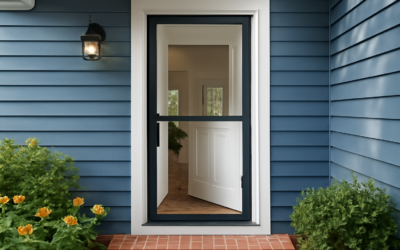
A good storm door pulls double duty in a way few home upgrades can match. A quality storm door with screen and glass lets you swap between a solid glass panel that traps heat in winter and a breezy screen that pulls fresh air through the house in summer, all without buying a second door. That flexibility is exactly why storm doors remain one of the most popular entry upgrades in American homes, protecting the main door while cutting energy bills and boosting curb appeal.
Part of our Windows & Doors guide — explore the full guide →
The catch is that “storm door with screen and glass” describes several very different designs, and picking the wrong style for your climate and habits leads to frustration. Before you shop, it helps to understand how the interchangeable panels actually work and which mechanism fits the way you live.
How Interchangeable Panels Work
The core feature of these doors is the ability to switch between glass and screen. In the classic design, you physically remove the glass panel and slot in a screen panel each season, then store the unused panel in a garage or closet. It is simple and cheap, but it means twice-a-year swaps and a spare panel taking up space.
Modern doors have largely solved that hassle with self-storing and retractable designs. These keep both the glass and the screen permanently in the door frame, letting you slide the glass up or down to expose the screen whenever you want airflow. No panels to remove, no storage headaches, and you can respond to a sudden breezy afternoon in seconds.
Main Types of Storm Doors
Storm doors fall into a few clear categories, and knowing them makes shopping far easier. Each balances ventilation, view, and convenience differently.
- Full-view: a single large glass panel maximizes light and view; screens are swapped in seasonally or via a separate insert
- Self-storing (triple-track): glass and screen both live in the frame; slide the glass to reveal the screen anytime
- Retractable screen: a screen hides in the frame and rolls down only when you slide the glass open; the cleanest look
- Ventilating: top and bottom glass panels operate independently, like a double-hung window, for controlled airflow
For most homeowners who want to switch between glass and screen on a whim, a self-storing or retractable design is worth the extra cost. Full-view doors deliver the best light and view but ask you to handle separate panels.
Energy Efficiency Benefits
A storm door creates an insulating air pocket between itself and your main entry door, much like a storm window. In winter, that buffer of trapped air reduces heat loss through the entry, and the glass panel blocks cold drafts. In summer, closing the glass and drawing shades keeps radiant heat out, while switching to the screen lets you ventilate on mild days without running the air conditioner.
The savings are real but modest. A storm door adds a buffer of still air that cuts drafts and heat loss through an older entry door, and the biggest gains come when your main door is old or poorly sealed. If you already have a new, well-insulated entry door, the energy payback is smaller, and the door’s main value shifts to ventilation and protection.
Glass Options and Low-E Coatings
Not all glass is equal. Standard single-pane glass is the budget choice and does the basic job. For better performance, look for tempered safety glass, which resists breakage and shatters into blunt pieces instead of dangerous shards, an important feature on a door kids and pets bump into daily.
In hot or cold climates, a Low-E coating is worth the upgrade. This nearly invisible metallic layer reflects radiant heat, keeping warmth inside during winter and blocking solar heat gain in summer. Some doors also offer tinted or insulated dual-pane glass for extra performance. Match the glass to your climate: Low-E pays off fastest where you run heating or cooling hard for months at a time.
Frame Materials and Durability
The frame determines how long the door lasts and how much maintenance it demands. Aluminum is the most common, offering good strength, rust resistance, and a paintable surface at a fair price. Aluminum frames wrapped around a wood or foam core add rigidity and insulation.
Vinyl frames resist moisture and never need painting, making them low-maintenance, though they can look less substantial. Fiberglass and steel-reinforced frames sit at the premium end, delivering the best durability and security. For a high-traffic entry or a home in a harsh climate, spending more on a heavier frame pays off in a door that still closes crisply a decade later.
Installation and Measuring Tips
Storm doors come in standard sizes, most commonly 32, 34, and 36 inches wide by 80 inches tall, sized to fit the exterior door frame rather than the door slab. Measure the width at the top, middle, and bottom of the opening and use the smallest number. Measure the height on both sides. Buying the right size the first time avoids gaps that kill the energy benefit.
Installation is a manageable weekend DIY job for someone comfortable with a drill and level, typically taking two to three hours. The keys are getting the door plumb so it closes evenly and sealing the perimeter to block drafts. Pay attention to the closer mechanism and, in windy areas, add a wind chain to keep a gust from flinging the door open and bending the hinges.
Hardware, Closers, and Handles
The hardware often gets overlooked, but it determines how the door feels every single day. The closer is the hydraulic cylinder that pulls the door shut gently instead of letting it slam. Better doors include two closers, one high and one low, for smoother, more controlled operation that resists warping the frame over time. Adjust the closer’s tension screw so the door latches firmly without banging.
Handle sets range from basic to keyed-lock hardware that lets you secure the storm door independently of your main entry. A keyed handle adds convenience on nice days when you want the main door open for airflow but still want the storm door locked. In windy areas, a wind chain is worth adding; this short cable limits how far the door can swing open, preventing a sudden gust from flinging it back and bending the hinges or shattering the glass. It is a small part that saves an expensive repair.
Color, Style, and Curb Appeal
A storm door is one of the first things visitors see, so its color and style shape your home’s first impression. Full-view doors with minimal framing suit modern and traditional homes alike because the large glass keeps the focus on your beautiful main entry door behind it. If you have invested in a striking front door, a full-view storm door shows it off rather than hiding it.
For homes wanting more visual weight, decorative and mid-view styles with a solid lower panel and glass above lend a more substantial, classic look. Many manufacturers offer factory finishes in white, almond, bronze, black, and other colors, and some frames can be painted to match your trim. Coordinating the storm door’s frame color and handle finish with your existing exterior hardware pulls the whole entry together and adds real curb appeal for a relatively small investment.
Maintenance for Long Life
A storm door lasts longest with a little seasonal attention. Wipe down the glass and frame a few times a year, and clean the weatherstripping so it keeps sealing tightly. Lubricate the hinges and closer pivot points annually with a light oil to keep operation smooth and quiet. When you swap panels seasonally, store the unused glass or screen flat and protected so it does not warp or tear before its next use.
A well-chosen storm door with screen and glass is one of the highest-value entry upgrades you can make, blending year-round energy savings, natural ventilation, extra security, and improved curb appeal into a single affordable door. Decide how often you plan to switch between glass and screen, match the frame and glass to your climate, measure carefully, and you will enjoy fresh summer breezes and cozy winter warmth from the same door for years to come.
Frequently Asked Questions
Can you replace the glass in a storm door?
Yes. Most storm door glass panels can be replaced, either with a matching panel ordered from the door maker by model and size, or with a new tempered glass panel cut by a glass shop to fit the existing frame. Storm door glass should always be tempered safety glass. Replacing a cracked panel is far cheaper than a new door when the frame, closer, and hinges are still sound.
How do you replace the screen in a storm door?
For a removable screen insert, pull out the old spline with a pick, lay new screen mesh over the frame, and roll fresh spline into the channel with a spline roller, then trim the excess. Self-storing panels rescreen the same way once the sash is removed. Retractable roll screens usually need a replacement screen cassette from the door maker, matched to the door model.
Can you get a storm door with a pet door?
Yes. Some storm doors come with a built-in pet door in the lower panel, and screen inserts with a pet flap are sold for doors with removable screens. Never cut a pet door into a glass panel, because tempered glass shatters if cut. Choose a door with a solid lower section or a factory pet door option, sized for the animal.
Is a glass storm door bad for a front door in full sun?
It can be. A glass storm door over an entry door that gets strong afternoon sun can trap heat between the two doors, which may fade, warp, or blister the main door’s finish, especially vinyl trim and dark-painted doors. Check the entry door warranty, since some makers limit coverage in this setup. Venting the storm door with its screen, Low-E glass, or a lighter door color all reduce heat buildup.